Tag: Haiku World

  • Editorial Decisions: Cherry and Plum Blossoms

    Editorial Decisions: Cherry and Plum Blossoms

    As I’ve mentioned before, the end goal of this project is to produce a food-related saijiki in the spirit of William J. Higginson’s Haiku World: An International Poetry Almanac. That means producing a print book (and because it’s the 21st century, an ebook) that people can use as a reference to guide their personal haiku practice. Although that end goal is still a long way off, I recently found myself having to make my first major editorial decision.

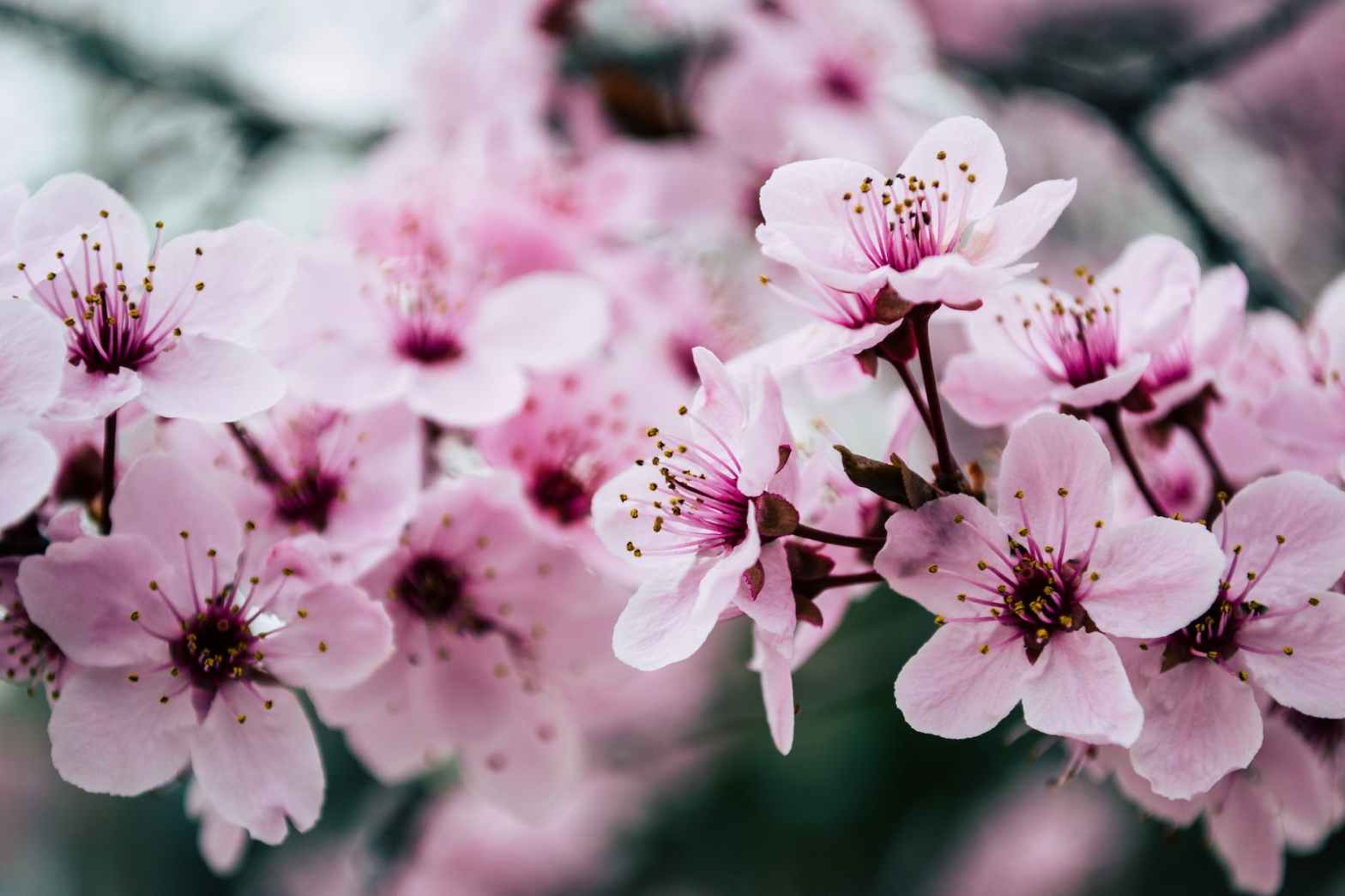
    As I’ve been gathering poems to use for the blog, podcast, and eventual book manuscript, I felt that cherry blossom haiku were getting added in every other entry. It wasn’t long in my collecting before plum blossoms began to follow suit. It got to the point where the issue of balance became a concern. Ultimately, after some research and consideration, I decided to stop collecting cherry and plum blossom references. 

    First, I learned through my research that the fruit on the Japanese cherry tree is so sour that it’s not generally considered edible. Now, with haiku a global poetry phenomenon, it’s reasonable to assume that someone would write about the blossoms of an edible species at some point. But it’s safe to say that much of what has already been written is about a species of tree we cannot eat. If this is a project focused on what is edible, collecting haiku about a fruit generally too sour for human consumption is not a good use of time and energy. If someone is clearly writing about an edible varietal, I can make an exception. While this first point does not apply to plum blossoms, it was nonetheless useful for me to think through when deciding what to include and what to exclude.

    Second, the sheer number of cherry blossom and plum blossom haiku was threatening to overtake all the other categories in the project. If the ultimate goal is to create a manuscript that creates as much balance as possible between seasons, types of food, and world cultures, continuing to add to my already-prodigious blossom collection wasn’t actually going to be helpful. Yes, hard drives are technically limitless at this point, especially for a text-based book project. But there’s no point in collecting something beyond its usefulness. Time is also a factor. I love doing this project. I also work full-time, am trying to build a business, serve on the HSA executive committee, and want to spend time with my partner, my friends, my dog, and my fitness. The time I have during the week to spend on The Culinary Saijiki is precious, and I don’t want to waste it transcribing hundreds of cherry and plum blossom haiku that aren’t going to serve the project as a whole.     

    The completionist in me protests. I’ve obviously not collected every single cherry and plum blossom haiku ever written! How can I claim to be giving a thorough treatment to my subject matter by ignoring such an important group of haiku? And how could I rule out plum blossoms when those are edible?

    Ultimately, trying to collect every single example of something is a fool’s errand. In addition, cherry blossoms and plum blossoms have already been given a thorough treatment in the haiku world. We know what season they signify. I don’t ultimately feel that I have a unique perspective on cherry and plum blossoms. They can stand on their own. They don’t need me. Beyond that, though, the fact remains that I can change my mind. If for some reason I discover that I really need to include plum blossoms (or less likely, cherry blossoms), those haiku aren’t going anywhere. They’ll be easy for me to collect should I find that a necessary endeavor.

  • Episode 8: A Tour of My Favorite Saijiki

    Episode 8: A Tour of My Favorite Saijiki

    Where to Find the Three Saijiki
    Haiku World: An International Poetry Almanac by William J. Higginson can be purchased at many used bookstores, including AbeBooks: https://www.abebooks.com/9784770020901/Haiku-World-International-Poetry-Almanac-4770020902/plp

    The Five Hundred Essential Japanese Season Words by Kenkichi Yamamoto is available at: https://thehaikufoundation.org/omeka/items/show/821

    A Dictionary of Haiku Classified by Season Words with Traditional and Modern Methods by Jane Reichhold is available at: https://thehaikufoundation.org/omeka/items/show/1798

    Join the Conversation
    I’m seeking guests for December! If you’d like to be on the podcast, visit https://culinarysaijiki.com/join-the-conversation/ and fill out the form. My life is a little hectic right now, so if I don’t follow up in a timely manner, send me a reminder.

    Support the Project
    You can make a one-time or recurring donation to the Culinary Saijiki at https://www.buymeacoffee.com/culinarysaijiki. You also can help by sharing this episode with people you think will love it!

    Theme Music
    “J’attendrai” by Django Reinhardt,  performing at Cleveland Music Hall, 1939. This recording is in  the public domain. Hear the whole song at https://clevelandhistorical.org/files/show/6045.

  • Observations Part 2: All-Year Food

    Before diving in, I’d like to thank Geoff M. Pope for being the first supporter of this new project. I’m now officially making progress on my goal of covering website costs for the year. If you would like to support the Culinary Saijiki project, you can visit the Buy Me a Coffee page here: https://www.buymeacoffee.com/culinarysaijiki.

    Second, don’t forget that tonight is the deadline to send your haiku and senryu for the May 31st bonus post. Note that although the deadline is 11:59 p.m. CST, I will be asleep when that passes, so if you slip your haiku in during the wee hours, I’ll still take them! You can find the submission form here: https://forms.gle/wamaaMmoYS88AjXz6

    Notes on All-Year Food

    In my May 10th post, I noted that I have observed three broad categories of food words in haiku:

    1. Food words that are a definite seasonal referent;
    2. Food words that are not a part of any specific season;
    3. Food words that become seasonal with an additional modifying word.

    This week, I’m focused on the second category.

    As of this writing, I’ve collected 125 haiku for the project. Of those, the greatest proportion are all-year words, making up 36% of the current total. Although I haven’t collected statistical data every time I add a haiku to my Scrivener file, I know that when I first started collecting, the all-year food words were an even higher percentage. As I’ve added to the collection, the proportions have evened out somewhat, though the all-year words still come up more frequently. As yet, I don’t have a hypothesis as to why that might be.

    In Haiku World, William J. Higginson identifies the following food-related words in the All Year section of his saijiki:

    • Meal
    • Cooking
    • Beverage
    • Coffee
    • Pots and Pans

    Although I have collected a range of all-season words beyond these five, as a nod to his work, in this post, I’ll discuss the haiku I’ve collected that relate to his original list. None of these appear in Haiku World; they’ve all been published recently.

    Meal

    Breakfast is a common meal that shows up in haiku. Morning and evening seem to be inspiring times of day for haiku poets, and if you have the luck of enjoying peaceful, leisurely breakfasts, I can see how the first meal of the day would lead to inspiration.

    morning meditation;
    thinking about not-thinking
    . . . and breakfast

    Shir Haberman, bottle rockets #46

    rising early . . .
    a half-finished haiku
    for breakfast

    Tony Williams, Failed Haiku #70

    I debated whether classifying Johnette Downing’s lunch haiku as all-year or not. On the one hand, there isn’t a clear seasonal referent. On the other hand, a lunch box implies school. As school runs most of the calendar year, though, I didn’t feel right assigning this haiku to the autumn category. A lunch box could also imply summer camp. Therefore, I designated this one as all-year. If you disagree, let me know in the comments. I’d love to hear your thoughts! (Johnette, if you happen to see this, please do chime in about what you intended!)

    lunch box
    her doll
    a stowaway

    Johnette Downing, bottle rockets #46

    The act of setting the table can be a meditative experience that can yield haiku moments. It doesn’t have to be a formal dinner arrangement; a simple home arrangement for a small family brings new moments of awareness.

    table setting
    for three
    bun in the oven

    Brittney Ritoff, Failed Haiku #70

    Cooking

    A vintage drawing of a blonde woman, with text saying, "I'm just a girl. Standing in front of the fridge. Hoping dinner will make itself."

    At present, I haven’t found much in the way of cooking-related haiku, senryu, or zappai that don’t have an additional seasonal modifier. Ronald K. Craig’s humorous poem reminds me of the pitfalls of having to cook for oneself: not wanting anything you have in the fridge, hoping dinner will cook itself, and trying to talk yourself out of takeout.

    often the fridge door of opportunity opens

    Ronald K. Craig, Failed Haiku #70

    Beverage

    Tea is the most common all-year beverage I’ve collected so far, and ultimately, deserves to be a topic of its own, on par with coffee. That being said, varieties of tea can become season-specific words; a colleague of mine talked about how green tea makes her think of spring. I’m certain that tea will get a post of it’s own in the future!

    teacups filled
    with fallen blossoms
    closing time

    Shiela Sondik, tinywords 18.2

    blue days
    Mom pours what ifs
    from her teapot

    Adele Evershed, Haiku Pea Podcast, Series 5, Episode 6

    Sunday morning
    head bowed, hands clasped
    around my tea

    Kristen Lindquist, Kristen Lindquist, Haiku Pea Podcast, Series 5, Episode 8

    In Gary Hotham’s poem below, the cup could refer to tea, coffee, or something else entirely. The presumably empty beverage vessel connects to rich memory, nostalgia, and perhaps grief. I’m also intrigued by the extent to which mothers come up in the haiku and senryu in this section.

    Mom’s home
    the last cup
    she drank from

    Gary Hotham, Rightsizing the Universe: Haiku Theory, Yiquralo Press, 2019

    Coffee

    Coffee is one of the most popular all-season food words I’ve collected so far. I’m certain that if I went through the list of all the haiku I’ve written, coffee would be the food/beverage word that features most frequently. While coffee can be modified to reflect the season (more about that in June), a hot cup of coffee seems appropriate just about any time of the year. (And if you’re not sensitive to caffeine, it’s appropriate to any time of day!)

    coffee shop date jitters

    Marsh Muirhead, Failed Haiku issue 70

    waiting for your call
    the coffee percolator
    welling up

    David Gale, First Frost #1

    coffee milk cloud
    another day to figure
    out the finances

    Crystal Simone Smith, First Frost #1

    hot black coffee
    ad-just-ing my eye-sight
    between sips

    Paul Callus, Haiku Pea Podcast, Series 5, Episode Episode 8

    Pots and Pans

    As with most of the cooking-specific haiku I’ve collected so far, most of my pots-and-pans haiku have a seasonal modifier, taking them out of the all-year category. However, left to their own devices, this is definitely an all-year word. We have to cook regardless of season!

    our first saucepan cooking for one

    Maurice Nevile, Failed Haiku #70

    silence . . .
    water comes to a boil
    in a silver pot

    Seth Kronick, Haiku Pea Podcast, Series 5, Episode 8

    Do let me know your thoughts in the comments, and don’t forget to send me your bonus post submissions by tonight! I’m already putting it together with the work that has come in so far, and I’m looking forward to sharing it with you.

  • Initial Observations Part 1: Food Kigo

    I’m about seven weeks into my yearlong study of saijiki. While my personal writing practice isn’t centered around food, working with Higginson’s Haiku World, as well as the companion volume The Haiku Seasons, have been invaluable as I also explore the ways in which food and the seasons work in haiku.

    Photo by Josh Hild on Pexels.com

    As of this writing, I have collected 93 haiku that incorporate food in some way. Taking a cue from Haiku World, I am organizing them by season, as well as maintaining an All-Year category. Based on what I have collected so far, I have observed three broad categories:

    1. Food words that are a definite seasonal referent;
    2. Food words that are not a part of any specific season;
    3. Food words that become seasonal with an additional modifying word

    I will focus on the first category in this post, the second category in my May 24th post, and the third category in my June 14th post.

    Some Observations

    At this point in the project, inherently seasonal food words make up the smallest proportion of haiku that I have collected. Most of the poems in my Scrivener file involve all-year food words, or foods that become seasonal through additional modifiers. The greatest proportion of inherently seasonal food words falls into the summer category. Spring and winter have the lowest proportions. However, I have nothing close to a statistically significant sample size, so I won’t be surprised if the proportions change as I go.

    As I’m still early in my journey of collecting haiku, I’m only giving 2-3 examples for each season of food kigo.

    Spring

    As spring is the planting season, seeds are a specific kigo. Even if there is another food referent that might indicate a later season, as in Cherie Hunter Day’s haiku below, the presence of seeds grounds the poem in spring. Seeds speak to the potential food we will eat in the future.

    hidden in the seed packet star songs

    Stuart Barrow, bottle rockets #46

    lockdown
    starting a lemon tree
    from seed

    Cherie Hunter Day, First Frost #1

    The sugar maple is another image of food that is not yet ready for consumption. It also illustrates the challenge of working in two traditions. Sap harvesting season runs 4-6 weeks, and can start as early as February. While that’s still deep winter for those of us working with the Gregorian calendar, in the haiku calendar, it’s spring. There’s also no accounting for climate. You can be well past the spring equinox and still get snow in areas where sugar maples thrive!

    sugar maple
    pressing my tongue
    against the wood

    Genevieve Wynand, Kingfisher #3

    Summer

    The best iced tea is that which has been brewed slowly. Sun tea is a perfect summer beverage, and therefore a summer kigo. The heat of the sun allows for a long, slow infusion of tea leaves. Then, you can pour the tea over ice for a refreshing beverage.

    my writing
    slow as that snail
    sun tea

    John S. Green, First Frost #2

    Tomatoes are one of the quintessential summer foods in the Western hemisphere. I remember that some years, my parents struggled to get theirs to thrive, and other years, we had more tomatoes than we could handle!

    heirloom tomato
    the want ads
    rustle

    Aidan Castle, Kingfisher #3

    Ice cream is a treat best enjoyed in the summer. It’s cold, rich, and a delightful treat during hot weather. I still remember the ice cream socials held in June and July in the town where I grew up.

    maternity dress
    a scoop of homemade
    ice cream

    Deborah P. Kolodji, Kingfisher #3

    Autumn

    Apples are a quintessential autumn fruit. Cultural motifs might include apple picking, pressing cider, making apple pies a Thanksgiving, and bringing an apple for the teacher at the start of the school year.

    cut apple slices
    the star
    in all of us

    Gillen Cox, Haikuniverse, March 27th, 2022

    in the old orchard
    sad apple trees
    concede their mortality

    Phil Huffy, Haikuniverse, April 1st, 2022

    apple blushed and ripe
    I close my eyes with the taste
    yes, Eve, yes

    Ellen Rowland, Kingfisher #3

    Kale is one of the last greens to be harvested in the year. One of the hardiest cruciferous vegetables, it grows late into the season, which makes it a fitting fall vegetable.

    picking kale—
    the darkened veins
    in grandma’s hands

    Jacob Salzer, Kingfisher #3

    Winter

    At first I was undecided about whether to consider sweet potatoes a fall kigo or a winter kigo. While they are harvested just when it’s starting to get cold, they’re stored in root cellars, and eaten during the coldest months. I see sweet potatoes as providing nourishment when the gardens and fields are fallow.

    sweet potato
    the peeling away
    of intimacy

    Joanna Ashwell, First Frost #1

    Even without a seasonal word such as wind chill, like in Lenard D. Moore’s haiku below, the idea of rich, warm hot chocolate as an antidote to the cold makes it a winter kigo.

    wind chill
    the hot chocolate
    still too hot

    Lenard D. Moore, Kingfisher #3

    Tthe gingerbread house, along with other variations of gingerbread, is a winter image, associated with Christmas. (I’m partial to the Kemp’s gingerbread men ice cream sandwiches . . . it’s definitely weird to be eating ice cream in winter, but they are also delicious.)

    a gingerbread house in this economy

    Aaron Barry, Kingfisher #3

    I’d love to hear your thoughts on these first observations in the comments. Also, don’t forget to send me your haiku for the special themed bonus post at the end of May!

  • Groundwork Part 2: Seasonal Inspiration

    In my April 12th post, I talked about how I came to saijiki study, and how I incorporate both the Gregorian seasons and the lunar seasons into my haiku practice. Through my decision to work with a saijiki for a year, I got inspired to think about how we approach food in haiku. Like many of my ideas, it had probably been building for a while, but it seemed to come in a flash. I to create a large-scale project related to haiku, but didn’t feel I had anything specific to talk about over the long haul.

    I decide my saijiki topic or word for the day first thing in the morning. After I brush my teeth, I sit down at my kitchen table with Haiku World and my notebook, skim through the list, and settle on a focal point. Exploring the saijiki right when I get up primes me to pay attention to the world around me as I walk Astrid every morning. Our first stroll of the day lasts around 30 minutes, and usually, I’m able to get at least one haiku related to the theme of the day by the time we come home. I don’t carry a notebook and pen when I write; I have to hold the haiku in my head as we walk, and take care not to let it slip away. Not only does this allow for a fair amount of mental revision before I even sit down at the notebook, but it serves as a sort of meditation. Since I started my saijiki practice over a month ago, I’ve discovered that the amount of time I spend ruminating on the walk has gone down dramatically. My mind is too occupied with haiku to be able to focus on my worries about the day ahead!

    I started my saki study on March 20th, 2022. The idea for the Culinary Saijiki project came to me 24 hours later, as I was taking my dog, Astrid, for her morning walk. The topic I’d chosen for March 21st was the word “March,” and the Haiku World example was a poem from Allan Curry:

    middle of March
    the first lemonade stand
    has a slow day

    Alan Curry, Haiku World (ed. Higginson), p. 45

    In the “March” entry, Higginson notes that the topic of “lemonade stand” is really a summer kigo in the northern hemisphere (p. 45). Allan Curry creates juxtaposition by contrasting the defined spring season with a summer image. (Even in Austin, March is often not ideal lemonade stand weather!)

    A photo of a lemonade stand
    Photo by RODNAE Productions on Pexels.com

    Astrid and I had just stepped off the apartment grounds and into Houston Street. I was pondering the concept of “March,” as well as Allen Curry’s poem. Suddenly, I was reminded of the fact that food is seasonal. Yes, in the United States, we are able to get produce year-round, regardless of whether or not it’s actually in season. But fundamentally, food is connected to the changes of spring (planting), summer (growing), autumn (harvesting), and winter (resting). The agricultural year has a rhythm, and food follows it. I wondered what it would be like to create a saijiki entirely around the concept of food.

    My mind was so captivated by the idea that I barely managed to find a haiku on that dog walk. By the end of the day, I decided to structure the project as a blog, in hopes of fostering discussion and collaboration with other haiku poets. I had also decided a podcast would be a fun complement. I wanted to be able to not just write about my own perceptions of food and haiku, but have direct discussions with others as well. Before I went to bed, I’d bought the website URL and made a to-do list.

    I’ve been slowly building this project for about 5 weeks now. As of this writing, I’ve collected and tagged 65 food-related haiku, just from the print journals I have on-hand, as well as PDF publications in my hard drive. After just one day of struggling to find an organizational system in Microsoft Word that I liked, I jumped ship and bought a copy of Scrivener. I’d attempted to use Scrivener as a budding fiction writer about 12 years ago, but it didn’t resonate with my process. However, I plan to work on the Culinary Saijiki for a while, and the thought of a folder filled with hundreds of Word documents, or one giant Word file of doom, made me feel overwhelmed. I realized that Scrivener’s binder approach would make it easy for me to organize and tag the haiku I collected.

    My current Culinary Saijiki project has a folder for each season, plus an All-Year category. I have a template for typing out the entries, and I tag each one with relevant keywords. I can sort by season, by type of food, or some other aspect. Being able to do so will help me structure future commentary on food-related haiku, and eventually compile a print book (though I don’t plan on that happening for at least two years). At the moment, I’m only adding haiku that I find myself, but stay tuned on the blog. Every now and then, I’ll post calls for themed submissions for special bonus posts, and those will end up in my database as well. (Don’t worry, I’ll be sure to get permission if I want to include them in the book, but that’s still far in the future.)

    A screenshot of a Scrivener project layout
    A screen shot of my Scrivener project

    As for the podcast, I’m launching that in June. I’ve had several blogs over the years, so I was able to get started on that right away. Plus, I consider the blog the foundation of the project, so it made sense to start that first. Finally, since I’ve never produced a podcast before, I needed to give myself time to set up an infrastructure and learn the basics.

    While I’ll be soliciting a few podcast guests, especially as I try to get things up and running, all haiku poets who want to talk about food are welcome to join in. Please fill out the form at the “Join the Conversation” page so I can get to know you and your work a little more.

    In my May 10th post, I’ll be talking about the preliminary ideas I’ve developed in my study of food and haiku so far. If there are other topics you’d like me to cover in the future, please leave a comment!