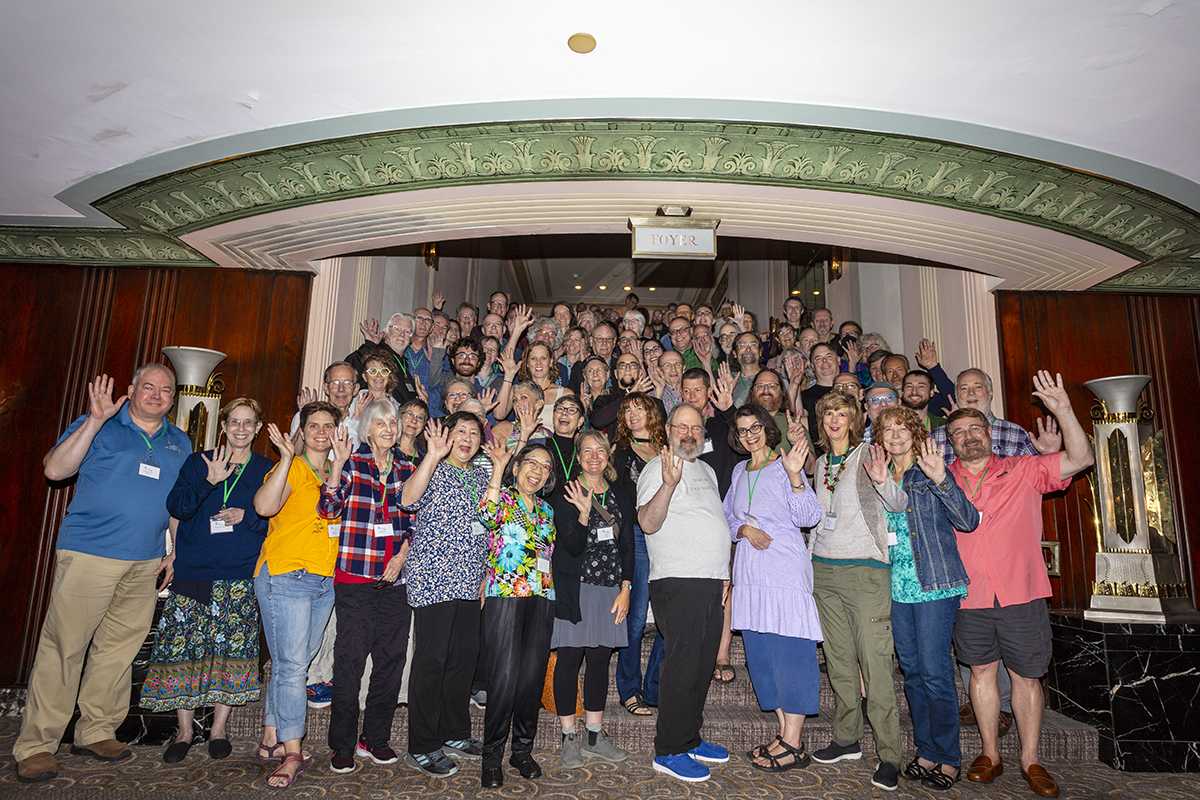
- Attending Haiku North America
- Seeing West Side Story at the Muny
- My first Cardinals game!
- Seeing the corpse flower bloom at the Missouri Botanical Garden
- SerbFest
Category: poetry
-
The Best of It: Summer Events Edition
-
Chapbook Interview: Julie Bloss Kelsey
We’re in the final three days of preorder for the Cuttlefish Books Summer Book Launch! I’m grateful to all of you who have ordered copies so far. Earlier this month, I featured fellow Cuttlefish poet Lenard D. Moore, and today I want to feature the other member of my cohort: Julie Bloss Kelsey.
Julie creates the New to Haiku column for The Haiku Foundation, and also serves as the THF secretary. Her first collection, Grasping the Fading Light: A Journey through PTSD, won the 2021 International Women’s Haiku Contest. Julie is also a freelance writer, environmental scientist, and a mother.
You mentioned on Instagram that After Curfew was inspired by Rowan Beckett’s Hot Girl Haiku. Can you say more about that inspiration, and how it helped you write and shape your collection?
Rowan held an online launch party on Facebook for their book, Hot Girl Haiku, in May 2022. My friend, haiku poet Susan Burch, reminded me to attend. I’d never been to an online launch party. It was fun! Rowan had posts and videos set up on a schedule. One of the prompts was to write our own “hot girl haiku.” It brought me back to that time in early adolescence and young adulthood when I wanted so much to be a “hot girl” but I was more of a “geeky girl.” I wrote this in the comments:
face-first
in a stranger’s lap—
tequila shotsJoshua Gage, of Cuttlefish Books, wrote back that he’d like to hear more of that story. I said there wasn’t much to tell — I didn’t think I had too many “hot girl” moments. But it got me thinking, which led to writing the collection.
On a related note, I read online that you wrote most of After Curfew in one sitting. Do you usually write in big spurts? How was creating this collection similar to or different from your usual process?
I rarely write in big spurts! This was very different than my usual plodding along. I just felt inspired. It was like Rowan gave me permission to write about my past.
What was your editing process like? Did you have to cut any haiku? Was there a point where you found yourself needing to add some to supplement the original poems?
I wrote the poems quickly at first, jotting them down as they came to me. When it came time to order them, I wanted to tell a cohesive story: of first love, of loss, of moving on. When I realized that I really did have a collection, I wrote a few poems to fill gaps in the narrative, and I dropped a few that didn’t fit. Originally, I had a few tanka in there too.
In English-language haiku, poets are often instructed to focus on composing from the present moment. After Curfew is written in the present tense, but concerns the past. Did you make a conscious decision to keep the poems in the present tense? Or did that emerge organically during the writing process?
I think the present tense brings an immediacy to haiku — writing in past tense puts some distance between the reader and the poem. I’d like to say something profound about how I wanted the reader to share in my awkward moments, but the truth is, I was reliving my memories as I wrote them.
What was it like to relive those awkward teenage years in such an immediate and compressed way? Did that awkwardness feel fresh, or has distance lessened it?
Oh my goodness, reliving those years still feels awkward! But I can laugh alongside the discomfort now. I’ve read this collection aloud to friends and most laugh and nod along. We’ve all been there, but when you are living those years, it’s so tough.
Cuttlefish Books has been posting some of my haiku from the book on Instagram. I was really struck by the response to this one:
strangers at the bar
trying to remember
my fake nameTo me, that was a funny memory of getting called out for using a fake name. But when I saw a hashtag about the patriarchy, I realized that’s true as well. I was using a fake name to keep myself safe. That experience was just so normalized for me that I never saw it that way. It adds a whole new dimension to the poem, and to the collection. Rowan wrote an Afterward for me that touches on this.
What level of vulnerability was required to not only write these haiku, but publish them in a collection? Is it similar to, or different than, the levels of vulnerability required in other areas of your work?
I’ve said that my first print collection, Grasping the Fading Light: A Journey through PTSD, was equally embarrassing, but for different reasons. This collection is much easier for me to see in print. I’m not sure I will ever publish anything that makes me feel as vulnerable as my trauma collection does.
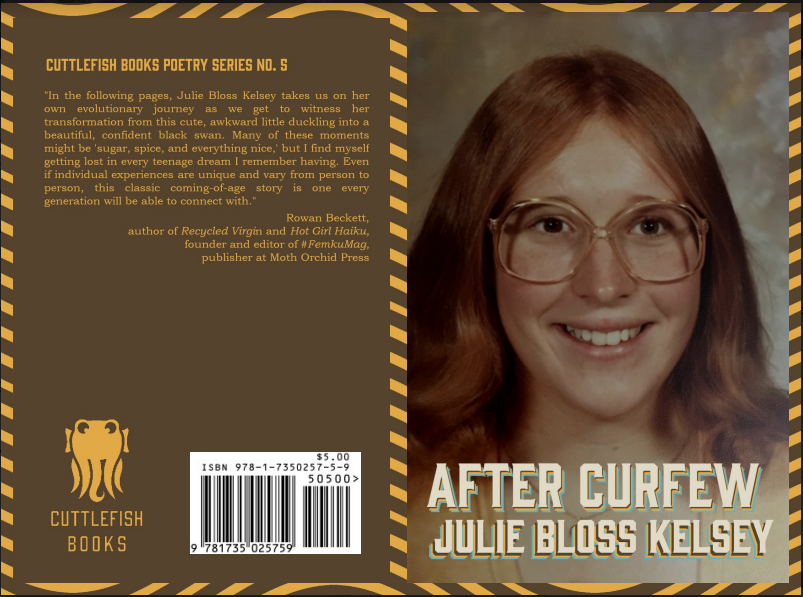
I love that you used your 8th grade class photo as the cover image. What was the thought process that went into your cover design decisions?
My best friend posted that picture of me on Facebook for my birthday one year! I saved it and reposted it to my Facebook wall in December of last year. Joshua Gage, of Cuttlefish Books, noticed it and asked if we could use it for the cover.
Is there anything else I haven’t asked that you’d like to say about After Curfew, or about haiku in general?
Reading over my answers, I realized that Facebook played a huge role in this book coming into existence! Social media, for all of its ills, can be a great tool for poets. I cut my teeth writing haiku on Twitter.
Writing haiku can be isolating. Most of us don’t interact with other haiku poets in person in our daily lives. Helping new haiku poets find connection is a primary goal of my haiku column, New to Haiku, at The Haiku Foundation.
More from Julie Bloss Kelsey
Check out the New to Haiku series at The Haiku Foundation.
Order a copy of Grasping the Fading Light: A Journey Through PTSD.
Read more about Julie’s literary accomplishments in the Poets & Writers Directory.
-

Chapbook Interview: Lenard D. Moore
If you’ve been following any of my social media this month, you know that I’m thrilled to be in the company of Lenard D. Moore as part of the Cuttlefish Books 2023 Summer Book Launch. Lenard is a military veteran, executive chair of the North Carolina Haiku Society, founder and executive chair of the Carolina African American Writers Collective, and the author of several books.
Although Lenard and I only had the chance to meet briefly at HNA, I have long admired the depth, breadth, and skill of his haiku. His attention not just to the details of the present, but also to the stories of the past, reflects a sense of artistic discipline that’s worth emulating. In celebration of his forthcoming chapbook, A Million Shadows at Noon, I wanted to feature him here to learn more about his process with this new collection. Read on for the full interview.
Cuttlefish Books is currently in the preorder period for the summer 2023 chapbook series. You can reserve your copy of Lenard’s book, A Million Shadows at Noon, or buy the whole bundle of three!
AW: What is the thematic focus of A Million Shadows at Noon? What compelled you to create this chapbook?
The thematic focus of A Million Shadows at Noon is brotherhood, family, love and unity. I was compelled to create this project, because I drew inspiration from such a significant historical event. It was so powerful to see so many Black men come together and march for important issues. By now, I hope you know that I am referring to the Million Man March, which will celebrate its thirtieth anniversary in 2025. I wanted to do something innovative with the haiku form or a haiku sequence, an extensive of my poetic risks with my book, Desert Storm. Perhaps, I need to write one more book-length poem, employing the haiku form. To that end, maybe there is a trilogy in the making. Let’s see what happens with my future work.
AW: What are the particular challenges of writing a haiku sequence? On the flip side, what is it about writing sequences that you find inspiring?
The challenges of writing a haiku sequence are varied. Firstly, I had to ensure that all of the haiku resonate as individual poems. Secondly, I had to ensure that I was writing the same poem again and again, if you will, or similar poems. Thirdly, I had to ensure that all of the haiku linked some kind of way. Fourthly, I had to ensure that the poems worked in chronological order. At least, that is the way I saw the sequence developing. Fifthly, I had to ensure that the natural world played a major role in the sequence. Sixthly, I had to ensure that I infused rhythm or musical elements throughout A Million Shadows at Noon. Seventhly, I had to ensure that I employed strong verbs in the haiku sequence. Eighthly, I had to ensure that the contrasts were effective throughout the sequence. Ninthly, I had to ensure that the symbolism worked well. Tenthly, I had to ensure that the poems told a story. Tenthly, I had to ensure that the haiku sequence was original. Eleventhly, I had to ensure that the poems did not reveal everything. Twelfthly, I had to ensure that I employed vivid imagery. Of course, there are other elements and characteristics that I strove to employ in the sequence.
AW: How do you perceive the difference between a structured haiku sequence versus a less structured collection of haiku addressing common themes?
The difference between a structured haiku sequence and a less structured collection of haiku addressing common themes is that the structured haiku sequence unfolds like a novel. It must work as a whole work, reeling in readers and closing with a surprise ending. The sequence should address the five who, what, where, when and why. The less structured collection of haiku does its own thing.
AW: Was this chapbook one you worked on over a period of months or years? Or did it come to you fairly quickly?
A Million Shadows at Noon came to me quite quickly. I think I wrote the poems over a weekend. Of course, I worked on ordering the poem. I am sure I tweaked some of them. Many of the poems originally work, because I felt like I was in a writing zone.
AW: What was your editing process like? If you decided to cut poems, how did you make that choice?
My editing process was to cut out or delete any poems that I was might be weak or did not work with the sequence. I also take a close look at the musical elements and how the poems might do something new.
AW: In the English-language haiku world, we are often taught that haiku should come from a moment in daily life. The emphasis on the haiku moment is often overemphasized, even though both the classical and contemporary editions are filled with counterexamples. I imagine that when working on a narrative sequence, many of these haiku did not come from a specific moment. To what extent was your direct experience relevant to this collection? How did history, or the lives of other people, factor into your writing?
History certainly plays a role. Interviews play a role. What I see plays a role. For my book, Desert Storm, all of those factors played a role. With Desert Storm, photographs also played a role, though interviews mostly worked. Of course, I am a Veteran. To that end, I have had training, too.
AW: What went into the design process for the cover art? How did you use color and shadow to reinforce the thematic focus of the poetry?
The publisher did an excellent job with the design process for the cover art. I thoroughly like the colors red, black and green and what they symbolize. In the 1960s and 1970s, those colors were very important in the Black community. I do not go into what each color symbolizes. Maybe my readers, students and scholars will be inspired to do research. I hope so.
AW: Is there anything I haven’t asked that you would like to say about this book?
I hope the book will garner reviews and trigger discussions of it. I also hope the book sells well. In addition, I hope the book will be taught in classrooms and considered for book clubs and libraries.
More from Lenard D. Moore
Listen to Lenard’s interview as part of Grace Cavalieri’s The Poet and the Poem series: link to mp3.Listen to “Gardening with Poet Lenard Moore” on the 27 Views podcast: episode link.
Read Crystal Simone Smith’s “Mentoring a New Generation of African American Haiku Writers: In Conversation with Lenard D. Moore”: Project MUSE link.
Lenard is the featured guest poet in Upstate Dim Sum Fall 2022. Read more here: issue link.
Read the news article about Lenard’s 1996 collection Forever Home: read here.
-
Now in Preorder: Postcards from Texas
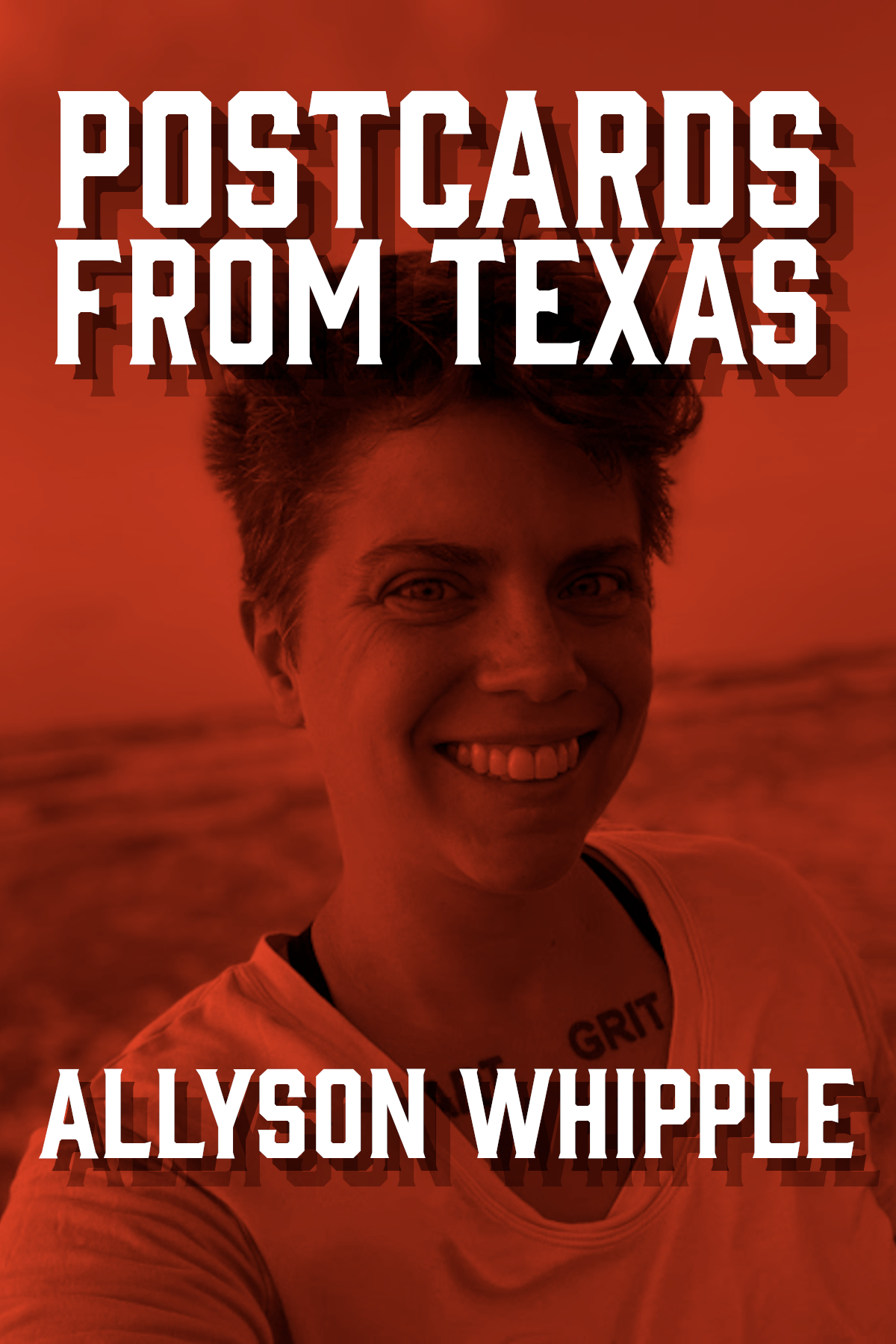
I’m thrilled to announce the forthcoming publication of my third poetry chapbook, Postcards from Texas, now available for preorder from Cuttlefish Books. This chapbook is my first that is devoted exclusively to haiku, and represents the shift in my creative focus since 2020. You can find the preorder link here: https://cuttlefishbooks.wixsite.com/home/2023-summer-book-launch.
The haiku in Postcards from Texas were mostly written in the second half of 2021 and the first half of 2022, the last 12 months I spent living in Austin. A few are older, going as far back as 2018. They were composed on hikes and camping trips, as well as dog walks around the city and picnics in local parks. My haiku address the changing political and physical landscape of a place I lived in, and deeply loved, for 15 years.
I’ve now lived in Missouri for just over a year. I adore the city of St. Louis, I finally found a job I could enjoy, and there are gorgeous landscapes throughout the state. The past year has also been one of grief for a place I still adore with all my heart, a place I thought I’d live until I died. Putting this chapbook together this past spring was a way to find some resolution of those emotions surrounding my move.
Postcards from Texas contains another form of grief as well. In 2015, I reconnected with my maternal grandfather for the first time in 20 years. (The reasons for that separation are complicated, and I have become wary of making family history public.) John and I are avid hikers, and I began sending my grandfather postcards from our hikes and camping trips all over Texas. He loved seeing the places we went. Four and a half years after my grandfather came back into my life, the universe took him from me again. He didn’t die of COVID, but I believe that he was a secondary casualty of the havoc the virus created around the world. There is no way to know fore sure, but I believe that if COVID hadn’t cause so many other problems, he’d still be here. I still feel sad that we didn’t get more time, and heartbroken that COVID protocols kept me from seeing him or even attending his funeral.
Postcards from Texas is dedicated to my maternal grandfather, as well as all the other people I lost my last few years in Texas (all but one of them died before COVID). Putting this book together was a way to continue writing postcards could no longer go to their intended recipient. It’s not just a farewell to a place I loved; it’s a reckoning of the loss that I feel should never have happened when it did.
Not only am I excited to be publishing a book, but I’m thrilled to be in the company of Lenard D. Moore and Julie Bloss Kelsey, the other two Cuttlefish authors included in the summer catalog. While you can preorder my book individually, I encourage you to get the bundle of all three authors. Lenard D. Moore is someone I consider a contemporary haiku master, with an incredible attention to detail. Julie Bloss Kelsey presents a compelling and humorous look at adolescence and the transition into adulthood, all in the short haiku form.
(Note: As of this writing, the preorder site is having some issues on mobile browsers. It’s easier to order from the desktop version of the site. If you are trying to order from a mobile browser and running into issues, email me or send me a DM on Instagram, and I’ll help you out.)
-
Buson Challenge Days 1-12
The Buson Challenge is, in short, an attempt to write 10 haiku a day for 100 days. If you want to know more, view this clip from Mike Rehling’s 2020 talk “Finding Yourself in a Poem,” presented at the 2020 HSA Conference. (In case the link doesn’t work correctly, the part about the Buson Challenge starts at 14:45.) This year is my third go-around, and hopefully my first successful attempt.
At the moment, I can’t locate the spreadsheet where I tracked my initial efforts. Maybe it got deleted somewhere down the line. But either way, I tried in 2020 and 2021, and neither time resulted in me completing the challenge. I don’t think I even got halfway through. Even when you’re giving yourself permission to write downright terrible haiku, it’s not easy to write 10 a day. The first two times, my biggest issue wasn’t getting the haiku down; I gave myself permission to write some truly awful stuff, which meant I could meet the quantity requirement. (Thankfully there is no quality requirement.) My biggest issue was simply remembering to actually get in 10 a day. I might get 3 in one writing session, 4 in another, and then get distracted and forget the rest.
This year, after I announced Haiku Girl Summer (my limited-run online haiku journal), a haiku friend asked me if I’d heard of the Buson Challenge. I had completely forgotten about it! 2022 was a terrible year for my creative life, and writing 10 haiku a day for 100 days was not going to work with everything else I was juggling. But now I’ve settled into a job I like, the house is getting more organized, and I have the brain space to actually write again.
As of this writing, I’ve successfully completed 12/100 days. I’ve definitely written more mediocre and genuinely bad haiku than good, though since most of the haiku are still in my notebook and not typed up, I don’t have sense of the overall proportion so far. But I’m surprising myself; the overall quality each day is better than anticipating. Most days, I manage at least one haiku that has potential.
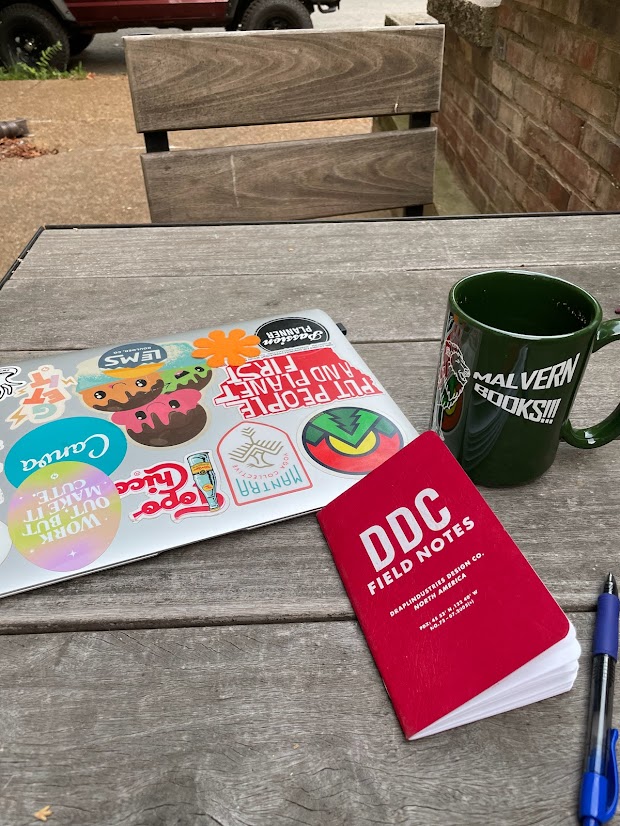
Preferred notebook: Field Notes
Notebooks filled: 1
Places I’ve written:
- My back patio
- My kitchen table
- My neighborhood on dog walks
- Tower Grove Park
- Forest Park
- Soulard Farmer’s Market
- City Coffee and Creperie
- Calypso
- Hammerstone’s
- Mission Taco Joint
- Kampai Sushi Bar
- Goshen Coffee
- Seoul Taco
- Bruja @ Mad Art
- The neighborhoods surrounding my workplace on my lunch walk
So far, I’m having a fantastic time with this challenge, and feel optimistic that I might actually get all the way through!
-

Support the Missouri Haiku Project
I’m excited to help spread the word about the Missouri Haiku Project, an initiative by Maryfrances Wagner, the poet laureate of Missouri. Maryfrances is accepting haiku from poets across the state to share on social media and in public venues. Many poets and teachers are offering workshops as well. The project runs until May of 2023, but why wait? Let’s spend the last of winter and all of spring celebrating haiku! Read on for Maryfrances’ guidelines, as well as all the other ways you can participate!
All information below comes from Maryfrances Wagner. If you want to send her your haiku or contact her about other ways to participate, her address is in the guidelines.


-
Making Room for New Words
While the details are still in progress, I’m excited to announce that I plan to release two new chapbooks in 2023! One will be a self-published collection of free verse, and the other will be my first haiku collection published by Cuttlefish Books, a small press out of my hometown of Cleveland, Ohio. Both chapbooks are devoted to my last few years in Texas, and as I move through the processes for each, I feel more and more each day like I am really closing that chapter in my life.
As I plan for two new releases, and therefore lots of new copies, I want to make some space in my office for the new words coming through. So, for the month of February, you can get my first two chapbooks for just $8.00 each . . . and that price includes shipping!
While I’m definitely not a minimalist, Marie Kondo’s work has always spoken to me. I’ve also always just loved the way it feels to clear out the past to make more space for the present. Even something as simple as zeroing out my inbox leaves me feeling energized and inspired. My first two chapbooks will always be dear to me. I still believe in those poems, and I will always keep copies. Yet this June will be 10 years since the publication of We’re Smaller Than We Think We Are, and seven years since the publication of Come Into the World Like That. So much has changed in that time. Those books represent very different places in my life’s journey. I will always love them; I will always be proud of them. It’s also time to make more room on my shelf for this next phase of my poetic journey.
This sale will only last until February 28th, or until I sell out. So if you’ve always been eyeing a copy of either of these, grab one now!
-
Some Terribly Sentimental Thing
This was one of the last poems I wrote before COVID. I composed it on December 24th, 2019. It previously appeared in the 2020 Poetry at Round Top Anthology. I chose to post it tonight because I’m missing three poetry friends who have died in the past few years, as well as my grandfathers, who both passed in 2020.
Some Terribly Sentimental Thing
This afternoon, while wrapping
gifts, I wept because my Uncle John
died three months before I was born,
and I’ve never heard him sing.The barn cat hunts down the birds
that winter here. His coat spreads ropy
into the air. This year, he circles my legs,
grateful that I no longer have a dog.In my head, we are slow-dancing
to Christmas songs in the kitchen. In reality,
you are cooking dinner, I am writing
at the table, and this is the loneliest I’ve felt all year.Tonight I think of Sandra Cisneros
and Frank O’Hara. Of all the still-loves
lost, and all the flames gone out
while the houses still stand.Persephone is in the underworld now,
but still alive. Sunlight lasted two minutes
longer than yesterday. Solstice always brings
the slow drip of honeyed light.In Franklin, Illinois, the candles burn.
The chicken sizzles in cast iron.
Our ghosts stand steadfast
around the tree, and they love us. -
Introducing the Culinary Saijiki
As they say in the current parlance, it’s been a minute. Last summer, after the writing intensive I was part of wrapped up, I just felt a need to stop. Stop pushing, stop trying so hard. Just be quiet and see what happens.
And quite a bit happened. I earned my Level 1 comprehensive teacher certification from Peak Pilates. In the interest of diversifying my skill set, I also got a certification from POP Pilates. (So much for doing less . . .) In February, I started teaching Pilates part-time on the regular. And the biggest change is that my partner and I decided to leave Austin and move to St. Louis, Missouri. As of this writing, I’ll only be in town for about six more weeks, and I’m doing my best to soak up everything I love about Texas.
While I was excited to focus on my movement practice after spending so much time on writing, and while I am also looking forward to a new city, my poetry life had gotten a little stagnant. I was still writing, submitting, and publishing haiku, and became an active member of the Austin Haiku Study Group. But I was looking for more.

Cornmeal whole-wheat waffles. Definitely poetry-worthy. About a month ago, my waiting paid off. I got the idea for a new project: The Culinary Saijiki. As most people who read this blog probably know, I’m a big fan of food (eating more so than cooking). I’m also interested in the ways in which English-language haiku practitioners approach the seasons in their haiku practice. I realized that food is one way in which people can connect to the seasons, and decided I wanted to go deeper into exploring that connection. I launched the first blog post earlier in April. (I planned to announce it here that same week, but hey . . . I’m moving and wrapping up the semester. Things are a bit hectic.)
In addition to the blog, I’ve also decided to start a companion podcast, where I talk to haiku practitioners about the ways in which food shows up in their work. I’m already in the process of sorting out my first guests, but I’d love to hear from the rest of the haiku community. If you are a haiku poet, or know a haiku poet, who might like to have a conversation with me, the Join the Conversation page has the information you need to get started. The podcast launches in June, and I’d love to have a few conversations recorded in advance so I can sustain momentum in the midst of my big move.
I’m excited for this new facet of my creative life. I still prefer to keep this site more general, so I’ll only crosspost when I have major announcements. If you want to stay updated, head over to The Culinary Saijiki and subscribe!
-
June Poetry Contest

Photo by Michelle Leman on Pexels.com “Do you always watch for the longest day of the year and then miss it? I always watch for the longest day of the year and then miss it.”
Daisy Buchanan, The Great Gatsby by F. Scott Fitzgerald
Let’s try not to miss the summer solstice this year! In honor of the official transition into summer, write a poem on the theme of daylight. Let your poem span at least one entire page.
Email your poem to allyson@allysonwhipple.com by 11:59 pm on June 20th (the summer solstice!). The winner will receive a gift certificate to the independent bookstore of their choice, or I will make a donation in their honor to a nonprofit.
View past contest winners here.