If you would like a copy of Elliot’s chapbook weathered clapboard, you can email him at elliotnicely [at] yahoo [dot] com. This is a limited print run, so get yours today!
One of the research questions that surfaced for me earlier this year was when the presence of an animal in haiku meant that it was a food poem, and that I should add it to my collection. I wrote an initial post about meat in haiku during Season 1 of this project, but that question hadn’t occurred to me at the time.
Through reading and reflection, I’ve established some guidelines to help me decide whether or not an animal haiku is also a food haiku. Before I get into that, though, I feel the need to establish that these guidelines only apply to animals that are commonly used as food. I realize that to some degree, what constitutes an edible animal is culturally specific (such as crickets, guinea pigs, or the ortolan bunting), and I do my best through research to avoid my own cultural biases. However, there are certain animals that we rarely (if ever) see used as food. For example, eagles, hawks, and vultures are not likely to wind up on a rotisserie. Some animals simply do not need to be considered, and if I did find a haiku in which a skunk was roasting on a spit, I would certainly add it to my collection, if for no reason other than novelty.
Here are my criteria for when an animal could be considered meat:
The haiku also references hunting, trapping, or fishing.
If the animals are in captivity, they are on a farm or ranch, with the implication that they are being raised for food.
The haiku references cleaning or butchering an animal, the initial stages of preparation for food.
The haiku references cooking or preserving the animal.
The above criteria all indicate the intent to eat the animal, in one way or another. Even if the poet won’t necessarily be the one eating, the reader understands that the animal in the poem is one likely to be consumed by someone.
Next I’ll discuss six example haiku: three that indicate the animal is meat, and three that do not. All of these classical examples are translated by R.H. Blyth, and I found them in the haiku anthology from the Everyman’s Library Pocket Poets series.
The octopus trap: Fleeting dreams Under the summer moon.
Bashō
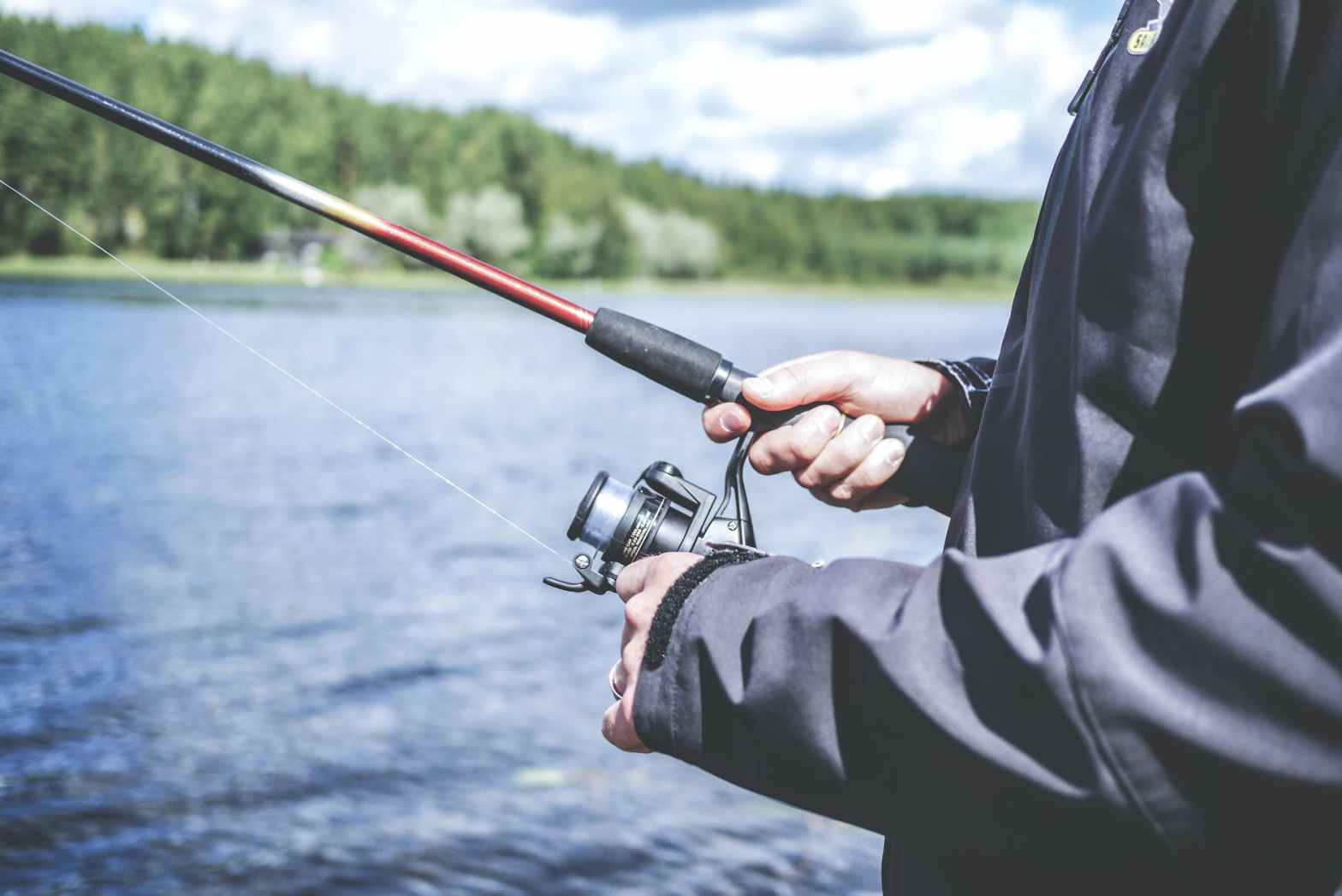
The above haiku starts with the image of an octopus trap. In Japan, these traps are called takotsubo; they are traditionally ceramic vessels attached on a rope and cast into the ocean. Octopi hide in the pots, or use them as nests, making them easy to capture. Since this haiku describes a form of fishing, with the intent of eating the octopus, I consider this a food haiku.
(Although takoyaki is my favorite Japanese street food, I admit that the thought of an octopus thinking it was getting a nest and then being turned into food makes me want to not order it for a while!)
A woman Under the azaleas placed in the pot, Tearing up dried cod.
Bashō
In this haiku, the fish is caught and dried. It’s long dead, and has been preserved for the future. In fact, this one might be a debatable food haiku because the woman mentioned in the first line appears to be using the dried fish as azalea fertilizer rather than food! (Azaleas are also toxic to humans; the poem does not reference the fish being used for garden fertilizer.) However, since dried cod could be used as food, I’m including it here.
In the fisherman’s house The smell of dried fish And the heat.
Shiki
In Shiki’s haiku, we don’t see the dried fish, but we smell them; one can only imagine how the summer heat makes that more intense. The first line references a fisherman, someone who’s job it is to catch food not just for himself, but for others as well. The scent of his trade permeates his whole life, including his dwelling space. Since this is a haiku that is again about the catching and processing of fish, it is a food haiku.
A school of trout Passed by: The colour of the water
Shiki
In contrast to Shiki’s other haiku in this post, here, the trout simply swim by. Although trout is a common sight at grocery counters and on restaurant menus, here, there is no indication that the speaker of the poem is doing any fishing. We do not see an attempt to lure or trap them. The speaker is sitting by a river, but the fish are simply there, and then they are not. To that end, I cannot consider this a food haiku.
A trout leaps; Clouds are moving In the bed of the stream
Onitsura
Again, we have a trout, which we can consider a food source. However, as in the previous haiku, Onitsura presents the trout as leaping while clouds move overhead. We do not see anyone, either the speaker or an observed third party, doing any fishing. There is no sense that the trout is leaping toward its doom. Instead, we have the haiku moment of the interplay between water and sky. Once again, it’s not a culinary poem.
In an old well A fish leaps up at a gnat: The sound of water is dark
Buson
Finally, we have a haiku from Buson in which the fish is the one doing the hunting. While we don’t know whether the fish was successful in catching the gnat, we do see it in action on its own quest for sustenance. Since no human is in pursuit of this fish, it’s not a culinary haiku.
I’m interested in hearing your thoughts. Do you agree or disagree? Let me know in the comments below!
“J’attendrai” by Django Reinhardt, performing at Cleveland Music Hall, 1939. This recording is in the public domain. Hear the whole song at https://clevelandhistorical.org/files/show/6045.
As I’ve mentioned before, the end goal of this project is to produce a food-related saijiki in the spirit of William J. Higginson’s Haiku World: An International Poetry Almanac. That means producing a print book (and because it’s the 21st century, an ebook) that people can use as a reference to guide their personal haiku practice. Although that end goal is still a long way off, I recently found myself having to make my first major editorial decision.
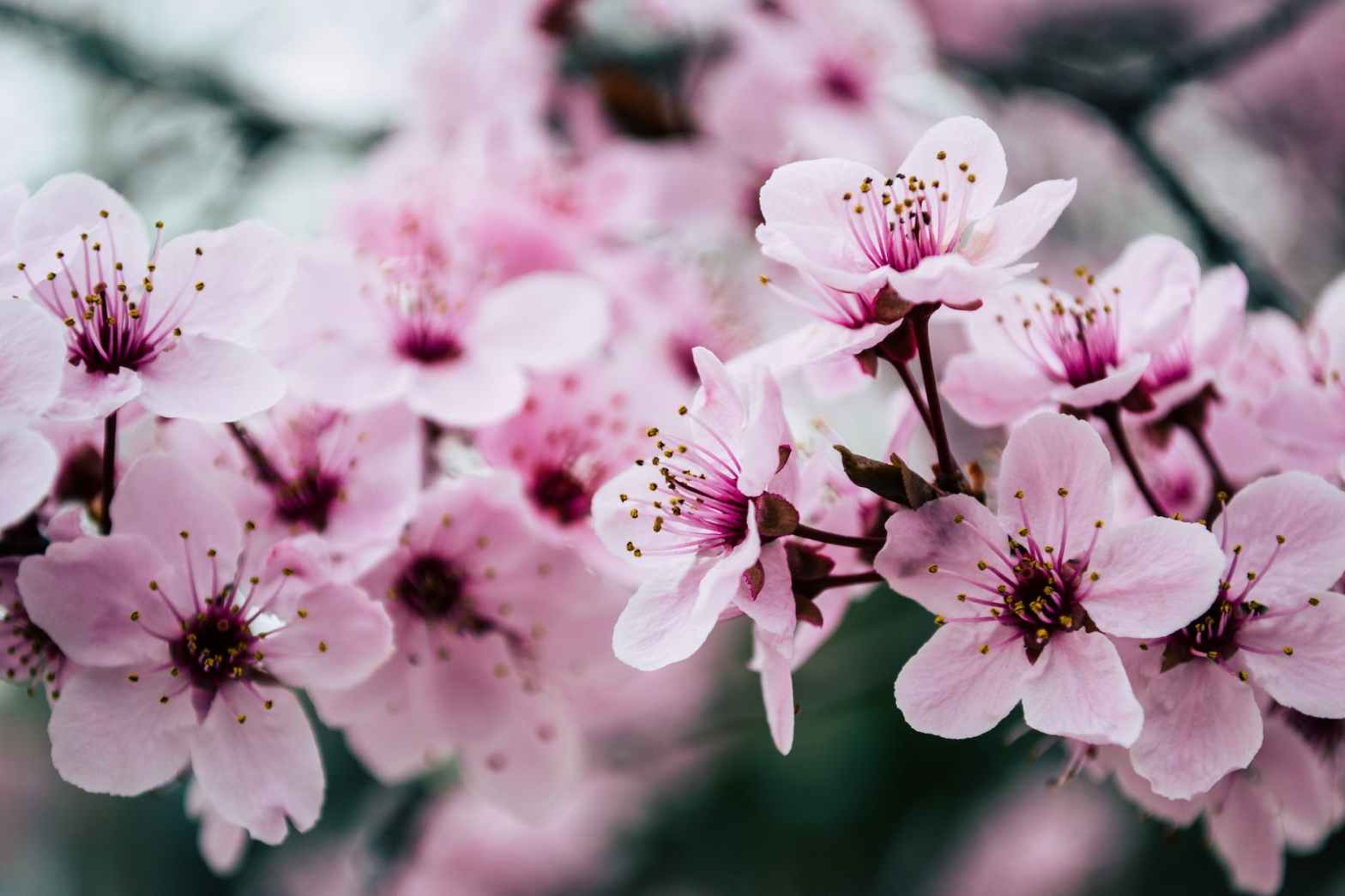
As I’ve been gathering poems to use for the blog, podcast, and eventual book manuscript, I felt that cherry blossom haiku were getting added in every other entry. It wasn’t long in my collecting before plum blossoms began to follow suit. It got to the point where the issue of balance became a concern. Ultimately, after some research and consideration, I decided to stop collecting cherry and plum blossom references.
First, I learned through my research that the fruit on the Japanese cherry tree is so sour that it’s not generally considered edible. Now, with haiku a global poetry phenomenon, it’s reasonable to assume that someone would write about the blossoms of an edible species at some point. But it’s safe to say that much of what has already been written is about a species of tree we cannot eat. If this is a project focused on what is edible, collecting haiku about a fruit generally too sour for human consumption is not a good use of time and energy. If someone is clearly writing about an edible varietal, I can make an exception. While this first point does not apply to plum blossoms, it was nonetheless useful for me to think through when deciding what to include and what to exclude.
Second, the sheer number of cherry blossom and plum blossom haiku was threatening to overtake all the other categories in the project. If the ultimate goal is to create a manuscript that creates as much balance as possible between seasons, types of food, and world cultures, continuing to add to my already-prodigious blossom collection wasn’t actually going to be helpful. Yes, hard drives are technically limitless at this point, especially for a text-based book project. But there’s no point in collecting something beyond its usefulness. Time is also a factor. I love doing this project. I also work full-time, am trying to build a business, serve on the HSA executive committee, and want to spend time with my partner, my friends, my dog, and my fitness. The time I have during the week to spend on The Culinary Saijiki is precious, and I don’t want to waste it transcribing hundreds of cherry and plum blossom haiku that aren’t going to serve the project as a whole.
The completionist in me protests. I’ve obviously not collected every single cherry and plum blossom haiku ever written! How can I claim to be giving a thorough treatment to my subject matter by ignoring such an important group of haiku? And how could I rule out plum blossoms when those are edible?
Ultimately, trying to collect every single example of something is a fool’s errand. In addition, cherry blossoms and plum blossoms have already been given a thorough treatment in the haiku world. We know what season they signify. I don’t ultimately feel that I have a unique perspective on cherry and plum blossoms. They can stand on their own. They don’t need me. Beyond that, though, the fact remains that I can change my mind. If for some reason I discover that I really need to include plum blossoms (or less likely, cherry blossoms), those haiku aren’t going anywhere. They’ll be easy for me to collect should I find that a necessary endeavor.
Support the ProjectBuy me a coffee at https://www.buymeacoffee.com/culinarysaijiki. You can also help by sharing this podcast with anyone who you think might appreciate it.Theme Music“J’attendrai” by Django Reinhardt, performing at Cleveland Music Hall, 1939. This recording is in the public domain. Hear the whole song at https://clevelandhistorical.org/files/show/6045.
“The seasons don’t ever divide themselves neatly,” writes Joshua McFadden in the opening of the Early Summer chapter of Six Seasons: A New Way with Vegetables. “Spring flows into early summer in fits and starts. A week of T-shirt weather may be followed by a string of cool gray days challenging our optimism about summer’s arrival.”
Almost as soon as I began working with saijiki in my haiku practice, I struggled with the definition of seasons. The lunar-based haiku seasons didn’t correspond neatly with the Gregorian calendar under which I lived. I was living in Texas, where the seasonal expression is quite different from where I live now. And it’s true that the Earth doesn’t give us neat divisions. In the Gregorian calendar, summer has just started. In the haiku calendar, we’re in the middle of it. Two weeks ago, the last time I went to the farmer’s market, I saw an abundance of early summer (beets, potatoes) vegetables and midsummer vegetables (broccoli, cauliflower). But the early summer fennel and celery were out of season, and the summer squashes hadn’t arrived yet. I have started learning to live in the liminal space of seasons, and this book is an excellent guide for that.
Six Seasons includes the standard spring, autumn, and winter. Summer, however, is divided into three sections: early, mid, and late. Each chapter contains a few key vegetables as the centerpiece, and McFadden details how their flavors and textures change throughout the season. Not only do seasons not divide themselves evenly, but vegetables are not the same through their entire growing range. What is sweet enough to eat raw one week might be moving toward bitterness a week later, and would benefit from cooking. It might be an insult to the carrot to cook it early in the season, but doing so toward the end of its peak enhances the flavors that are starting to fade. There is no one right way to eat or cook a vegetable; that depends as much on time of year as anything else.
Over on the podcast, I’ve raved about the salad recipes I’ve tried from this book. Ultimately, though, there are two components of Six Seasons that make it more than a standard-issue cookbook:
1. It focuses on techniques and practices. To be clear, it’s not a textbook; you won’t learn fancy knife skills (and that’s probably not really something best taught in a book anyway). But McFadden sprinkles in small things that make a big difference. For example, I’ve learned that if you’re making pasta with broccoli, the best way to cook the broccoli is to throw it in for the last few minutes of the pasta cook time. That way, it gets infused with the salted, starchy water, amping up the flavor. (I also swear it makes the broccoli come out brighter, but maybe that’s a placebo effect.)
2. It reminds me that eating seasonally means surrendering control and will. For example, I’m writing this at the end of June. No matter how much I might hypothetically be craving butternut squash (really, I could just go for a good breakfast taco), there’s no way I’m going to find the requisite ingredients at the peak of freshness. Sure, I could go to a supermarket and there would probably be a butternut squash there, given the world we live in. But that doesn’t mean the squash is in great condition. If I wanted a savory squash dish, zucchini boats stuffed with sausage, cheese, and Italian seasoning would be a better menu option.
That doesn’t mean you have to somehow align your cravings with the seasons, though I think most of us do to some degree (I want more salads in the middle of summer than I do in the middle of winter). That doesn’t mean that if you indulge the hankering for the comfort of an out-of-season dish, you’re a morally inferior person. It doesn’t mean you can’t make a smoothie out of frozen berries in January, if that’s what you’re into.
What it does mean, though, is that if you really want to get in tune with the seasons, you have to relinquish expectation. Maybe you can’t wait to make roasted beets. But maybe the week you’re expecting to find them at the farmer’s market, they’re not there. Maybe three weeks goes by before they’re finally ready. Frustrating? Sure. But the fact is that we’ve been trying to bend the world to human whim for a long time now, and it’s clearly not going well.
To eat seasonally means that you can’t plan too hard. As someone who likes to rigidly plan out all her meals for the week and go shopping in one fell swoop, this was a tough lesson to learn. The farms aren’t going to yield to what my mind has decided is the most efficient or delicious. I can either change my plan on the fly, or I can make that dreaded second stop to another store to buy what I want, even if it’s not quite ripe.
To eat seasonally is to recognize that the world is so much bigger than your individual wants, and so beyond your individual control. That, I think, is the greatest lesson of Six Seasons, even if it’s not made explicit. Rather, if you make the book a guide to how you approach vegetables generally, that lesson will reveal itself over and over. Which is good, because if you’re anything like me, you’re going to need a reminder.
In Gratitude Thank you to Peg Cherrin-Myers and Kimberly Kuchar for the coffees they bought me this month. I am now 80% of the way to covering my hosting costs!
Join the Conversation Season 2 will focus on food as it appears on classical haiku. If you would like to be on a Season 2 podcast episode, or write a guest post on this topic, contact me at allyson@allysonwhipple.com.
Theme Music “J’attendrai” by Django Reinhardt, performing at Cleveland Music Hall, 1939. This recording is in the public domain. Hear the whole song at https://clevelandhistorical.org/files/show/6045.
Talk about a cornucopia of poetry! For this bonus post, people took me up on my offer of multiple forms. I received not only haiku, but also tanka and tan-renga, and submissions came from three different continents!
It was a delight to put this post together over the course of a cold winter afternoon, drinking multiple cups of tea. I hope you enjoy the creative bounty as much as I did.
Haiku
In Deb Koen’s first haiku, the second and third lines display a masterful example of double meaning, reinforcing the sense of abundance that comes from a harvest. The produce features an array of colors; each of these colors was produced by, and harvested from, the planet itself. The second sense of meaning comes from the range of colors available at a produce market. The color range among the harvested crops is expansive; every shade of the planet is represented here. We have not just an abundance of physical nourishment, but a feast of delights for the eyes as well.
farmstand every color from earth
Deb Koen, USA. This haiku originally appeared in Haiku Canad Review, Winter 2020.
In the second haiku, Koen associates the comfort that both food and music can provide. For most people, comfort foods are rich and hearty. What makes them comforting is not just their heartiness. but also their familiarity. Just as delicious food prepared with care gets passed around a holiday table, an LP of comforting music rotates not just in physical space, but in and out of the listener’s consciousness. In this haiku I see abundance (hearty comfort food) and celebration (food being passed around the table), but I also wonder if this poem is about a meal taking place after a funeral: the food comforts the grieving, and the music brings back good memories of the departed loved one.
comfort food circling the table a Beatles LP
Deb Koen, USA. This haiku originally appeared in Frogpond 44:2.
Tanka
Hassane Zemmouri’s first tanka gives us an image of a child’s joy at harvesting berries. There are two bounties: the fruit off the vine, and the experience of watching a child’s face light up. This poem reinforces the concept that food is not just physical nourishment. The connections we make to the land, and to each other, through the processes of harvesting, cooking, and eating, shine through in this brief work.
picking season- the full basket doesn’t accommodate the girl’s joy her smile more delicious than the expected jam
Arabic translation:
Hassane Zemmouri, Algeria. This tanka originally appeared in Take5, Issue 3.
Hassane’s second tanka reminds me of picking apples with my nephew this fall. Our neighbors have an apple tree, but weren’t interested in harvesting the fruit. My nephew and I went out with an apple picker and got as many as we could. When he was concerned about bruised or spotted apples, I reminded him of what his great-grandmother believed: that the ugly apples make the best applesauce. After harvesting the apples, my partner turned them into applesauce, and saved the peels to make jelly. I appreciate Hassane’s tanka because it illustrates so well how a short poem can awaken a beloved memory in a stranger half a world away.
end of picking- the mother chooses the bruised apples for jam children dream of candy apples
French translation:
fin de cueillette- la mère choisit les pommes meurtries pour la confiture les enfants rêvent de pommes d’amour
Arabic translation:
Hassane Zemmouri, Algeria
Tan-Renga
In their first tan-renga, Christina Chin and Uchechukwu Onyedikam magnify the sense of celebration that often comes at harvest time. Glass Gem corn originates in Oklahoma, and was developed by a farmer named Carl Barnes. It took him many years to collect the seeds and cross-breed the corn he found to create the vivid, translucent kernels we see today. It’s a rare breed of corn, and in this tanka, I see a celebration of the ingenuity and patience required to cultivate heirloom stock. Because rainbows are also associated with the queer community, I think that this tanka implies the marriage of queer farmers, a portion of the population that often gets overlooked. (You can read more about that at NPR.)
stripping husks from glass gem corn an heirloom of rainbow colours farmer kisses farmer
Christina Chin, Malaysia, and Uchechukwu Onyedikam, Nigeria
The New Yam Festival is a celebration that takes place in Kogi state, Nigeria. It celebrates the farming season, as well as community and culture of of the Igbo people. It typically falls at the end of August or beginning of September, depending on when the first new yams appear. This tan-renga reminds me that while many holidays and festivals have set dates, the Earth does not follow the human-made calendar to the exact day. The world releases its bounty on its own time.
New Yam Festival the Igbo people dig into the ridges end of rainy season
Uchechukwu Onyedikam, Nigeria and Christina Chin, Malaysia
In their first tan-renga, Christina Chin and Linda Ludwig present a wintry scene warmed by delicious food and intimacy. While crabbing season varies by region, in much of the world, it starts in late autumn and ends in mid to late winter. While moonless nights happen all year long, there’s something about the darkness of winter that makes the lack of moon in this poem feel more potent. Yet the crabs, being in season, are juicy and delicious. I interpret a sensuality in this poem not just from the word “succulent,” but also because in some parts of the world, shellfish are considered an aphrodisiac. Regardless of whether or not I’m correct, there is still a delightful coziness in this tan-renga.
the traps heavy with crabs river with no moon succulent dinner for two
Christina Chin, Malaysia, and Linda Ludwig, USA
This final tan-renga contains historical allusions, illustrating the ways in which food is bound up in culture both past and present. The Silk Road existed as a network for traders exchanging goods between Asia and Europe, between 130 B.C.E. and 1453 C.E. Commodities included textiles, animals, and of course, foods and spices. The gogi berry comes from a shrub native to China, and long been used in both Chinese and Korean cooking and medicine. Today, people in the western world can find gogi berry tea sold as an alternative health product. What started as an indigenous ingredient is now a decontextualized commodity. Nonetheless, we can connect to the image of gogi berry and ginger blended into a simple tea, and imagine the connection the drinker might feel to generations past.
the silk road old world treasures chi tea a hot concoction of goji berry ginger
Linda Ludwig, USA and Christina Chin, Malaysia
****
Thanks to everyone who contributed poems to this special post. I look forward to blogging again in 2023! For now, may you have a peaceful close of the year.
In Gratitude Thanks to Peter Schmidt for buying me 5 coffees this month! I’m now 48% of the way to having my web hosting covered for the year. If you want to contribute financially, visit https://www.buymeacoffee.com/culinarysaijiki. Contributors get a bonus recipe every month!
November Community Blog Post I’m putting together another community blog post (view the May community post here). Theme: Harvest Deadline: 11:59 p.m. CST on Wednesday, November 23rd Submission Form: https://forms.gle/TxZWqf3zbfi1i9uR8 Notes: Haiku in languages other than English are welcome; please provide a translation. Experimental haiku are also welcome. If sending previously published haiku, remember to provide publication credit.
Theme Music “J’attendrai” by Django Reinhardt, performing at Cleveland Music Hall, 1939. This recording is in the public domain. Hear the whole song at https://clevelandhistorical.org/files/show/6045.