Tag: meat

  • Classifying Animals as Meat

    Classifying Animals as Meat

    One of the research questions that surfaced for me earlier this year was when the presence of an animal in haiku meant that it was a food poem, and that I should add it to my collection. I wrote an initial post about meat in haiku during Season 1 of this project, but that question hadn’t occurred to me at the time.

    Through reading and reflection, I’ve established some guidelines to help me decide whether or not an animal haiku is also a food haiku. Before I get into that, though, I feel the need to establish that these guidelines only apply to animals that are commonly used as food. I realize that to some degree, what constitutes an edible animal is culturally specific (such as crickets, guinea pigs, or the ortolan bunting), and I do my best through research to avoid my own cultural biases. However, there are certain animals that we rarely (if ever) see used as food. For example, eagles, hawks, and vultures are not likely to wind up on a rotisserie. Some animals simply do not need to be considered, and if I did find a haiku in which a skunk was roasting on a spit, I would certainly add it to my collection, if for no reason other than novelty.

    Here are my criteria for when an animal could be considered meat:

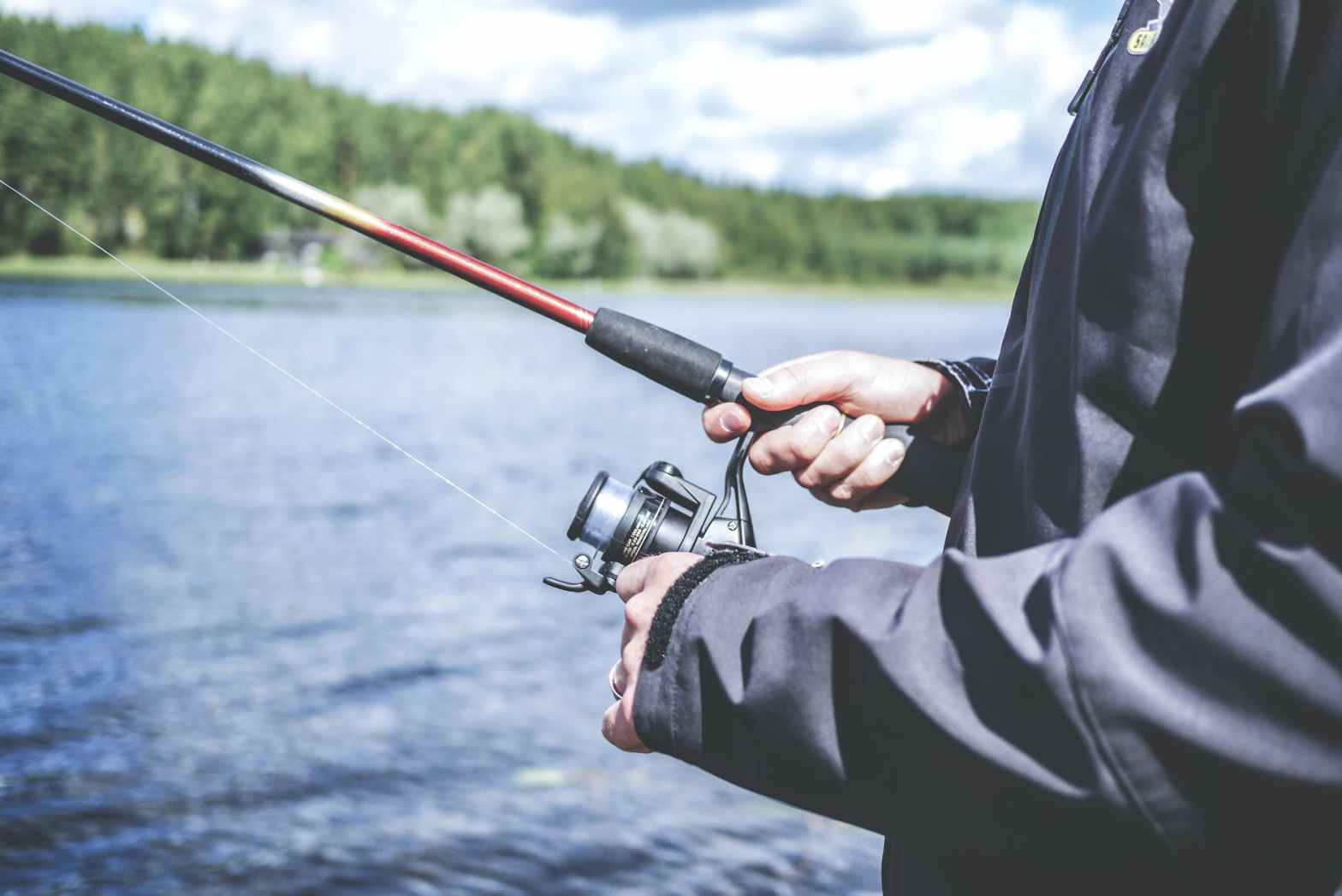
    1. The haiku also references hunting, trapping, or fishing.
    2. If the animals are in captivity, they are on a farm or ranch, with the implication that they are being raised for food.
    3. The haiku references cleaning or butchering an animal, the initial stages of preparation for food.
    4. The haiku references cooking or preserving the animal.

    The above criteria all indicate the intent to eat the animal, in one way or another. Even if the poet won’t necessarily be the one eating, the reader understands that the animal in the poem is one likely to be consumed by someone.

    Next I’ll discuss six example haiku: three that indicate the animal is meat, and three that do not. All of these classical examples are translated by R.H. Blyth, and I found them in the haiku anthology from the Everyman’s Library Pocket Poets series.

    The octopus trap:
    Fleeting dreams
    Under the summer moon.

    Bashō

    The above haiku starts with the image of an octopus trap. In Japan, these traps are called takotsubo; they are traditionally ceramic vessels attached on a rope and cast into the ocean. Octopi hide in the pots, or use them as nests, making them easy to capture. Since this haiku describes a form of fishing, with the intent of eating the octopus, I consider this a food haiku.

    (Although takoyaki is my favorite Japanese street food, I admit that the thought of an octopus thinking it was getting a nest and then being turned into food makes me want to not order it for a while!)

    A woman
    Under the azaleas placed in the pot,
    Tearing up dried cod.

    Bashō

    In this haiku, the fish is caught and dried. It’s long dead, and has been preserved for the future. In fact, this one might be a debatable food haiku because the woman mentioned in the first line appears to be using the dried fish as azalea fertilizer rather than food! (Azaleas are also toxic to humans; the poem does not reference the fish being used for garden fertilizer.) However, since dried cod could be used as food, I’m including it here.

    In the fisherman’s house
    The smell of dried fish
    And the heat.

    Shiki

    In Shiki’s haiku, we don’t see the dried fish, but we smell them; one can only imagine how the summer heat makes that more intense. The first line references a fisherman, someone who’s job it is to catch food not just for himself, but for others as well. The scent of his trade permeates his whole life, including his dwelling space. Since this is a haiku that is again about the catching and processing of fish, it is a food haiku.

    A school of trout
    Passed by:
    The colour of the water

    Shiki

    In contrast to Shiki’s other haiku in this post, here, the trout simply swim by. Although trout is a common sight at grocery counters and on restaurant menus, here, there is no indication that the speaker of the poem is doing any fishing. We do not see an attempt to lure or trap them. The speaker is sitting by a river, but the fish are simply there, and then they are not. To that end, I cannot consider this a food haiku.

    A trout leaps;
    Clouds are moving
    In the bed of the stream

    Onitsura

    Again, we have a trout, which we can consider a food source. However, as in the previous haiku, Onitsura presents the trout as leaping while clouds move overhead. We do not see anyone, either the speaker or an observed third party, doing any fishing. There is no sense that the trout is leaping toward its doom. Instead, we have the haiku moment of the interplay between water and sky. Once again, it’s not a culinary poem.

    In an old well
    A fish leaps up at a gnat:
    The sound of water is dark

    Buson

    Finally, we have a haiku from Buson in which the fish is the one doing the hunting. While we don’t know whether the fish was successful in catching the gnat, we do see it in action on its own quest for sustenance. Since no human is in pursuit of this fish, it’s not a culinary haiku.

    I’m interested in hearing your thoughts. Do you agree or disagree? Let me know in the comments below!

    By the way, I am happy to announce that the podcast is FINALLY available via Apple Podcasts! So if that’s your preferred player, you can find that link here: https://podcasts.apple.com/us/podcast/the-culinary-saijiki/id1632986084
  • Meat in Haiku

    Meat in Haiku

    Thank you to the anonymous donor for another three coffees! I’m now 20% of the way toward my goal of covering this year’s website costs. Readers and listeners can support The Culinary Saijiki by buying a coffee at https://www.buymeacoffee.com/culinarysaijiki.

    Remember to send me your recordings for the August 30th bonus podcast open mic! Please review the guidelines here: https://culinarysaijiki.com/2022/08/08/podcast-community-open-mic-on-8-30/. The deadline is Saturday, August 28th at 11:59 p.m. CST. Record your haiku at https://anchor.fm/culinarysaijiki/message, and please contact me if you run into issues.

    Of the 212 haiku and senryu I’ve collected so far, I only have five that mention meat. Of course, I know that there are more out there. Still, I find it interesting that on the whole, meat does not seem to show up as frequently as vegetables, fruit, eggs, coffee, tea, or sweets. While I know my fair share of haijin who are vegetarians or vegans, many of us eat meat as well. Even those of use who avoid meat in adulthood were raised with it as the foundation of the main meal. I don’t have any compelling theories as to why meat doesn’t seem to show up in haiku as often. In addition, who knows what the proportion of meat haiku will be once I have collected 1,000 poems, which is my goal.

    Another thing I have noticed in my initial work is that meat appears to be an all-year word. However, historically, meat consumption is tied to the seasons. My partner, John, grew up on a farm, and I asked him to clarify the seasonal nature of slaughtering and eating meat. Pigs and cattle are normally slaughtered in autumn, after the summer heat has broken, but before winter has set in. Hunting seasons generally occur in autumn. Even freshwater fish and seafood have their ideal harvesting seasons, ranging from late spring to late autumn, depending on the species. Chickens are a bit different; you don’t slaughter a chicken and cure it to last through the winter. Poultry is more likely to be slaughtered and eaten throughout the year, though again, autumn was often a more advantageous time than others. John also noted that, in prior generations, it was common to eat a quasi-vegetarian diet (excluding rendered animal fat) for at least part of the year, usually in spring and sometimes into summer, when the previous year’s meat stores had been depleted.

    Of course, thanks to refrigeration, industrial farming practices, and global trade, all types of meat are available year-round in much of the world, meaning our meat consumption is divorced from any sense of the seasons. While that’s true of produce as well, I think fruits and vegetables still retain more of a seasonal rhythm. Even if you live in a city, you can probably manage some sort of small-scale garden, which tunes you in to the seasonal nature of produce. It’s not feasible to keep a pig or cow in an urban or suburban back yard. Even those city dwellers who are able to keep chickens usually have them just for eggs. Plus, I know more than a few people who eat meat, but would prefer not to think about where it comes from. It’s easy to see how meat gets divorced from the seasons not just at the industrial level, but on a personal level as well.

    cholesterol a steak through the heart

    Keith Evetts, Failed Haiku Issue 70

    Keith Evetts’ humorous poem relies on the pun of steak and stake, and though cholesterol and heart disease are serious issues, this piece makes me chuckle every time I see it. Perhaps the pun puts the haiku in autumn, referencing Halloween, but based on my limited knowledge of vampire fiction, they exist year-round. This is an effective senryu (or could possibly be classified as zappai), but there isn’t a clear seasonal referent.

    shallow focus photography of meat dish and leaves
    Photo by Valeria Boltneva on Pexels.com

    steak night
    I ask about
    the vegan options

    Louise Hopewell, Failed Haiku Issue 76

    Louise Hopewell’s senryu provides a sense of juxtaposition, between a meat-eater and their vegan dining companion. However, this doesn’t take place in a specific season. I’ve had steaks grilled outdoors in the summer, cooked in an oven in winter, and fried in a skillet just about any time of year. In fact, the method of preparation might influence the sense of a season rather than meat itself.

    fish and chips
    in yesterday’s news
    yesterday’s news

    Susan Spooner, Charlotte DiGregorio’s Writer’s Blog, May 28, 2022

    Historically, fish and chips were wrapped in newspaper. I’ve personally never experienced this, and ostensibly, the practice has died out for hygienic reasons. Still, Susan Spooner’s poem makes excellent use of the cultural knowledge of fish and chips, and I find the repetition of the phrase “yesterday’s news” to be effective and engaging. While the cod that usually comprises fish and chips peaks in winter (Pacific Ocean) or summer (Atlantic Ocean), the dish is available year-round, and so again, given the nature of modern life, we don’t have a clear seasonal referent here.

    close up photography of french fries with cream
    Photo by Gustav Lundborg on Pexels.com

    Cat dreaming of man,
    Man dreaming of cat, both
    Craving fish fillet

    Debbie Walker-Lass, Haikuniverse, May 9, 2022

    Even if fish were only available at certain times of the year, you can dream about them in any season. Debbie Walker-Lass’ emphasis on dreaming takes the poem out of reality and into the world of the subconscious. You can also have a craving at any point during the year. Even if something is out of season and unavailable, you might desire it. This senryu, focused on dreams and desire, is applicable as an all-year poem.

    Mother’s Day
    the smell of bacon
    from each apartment

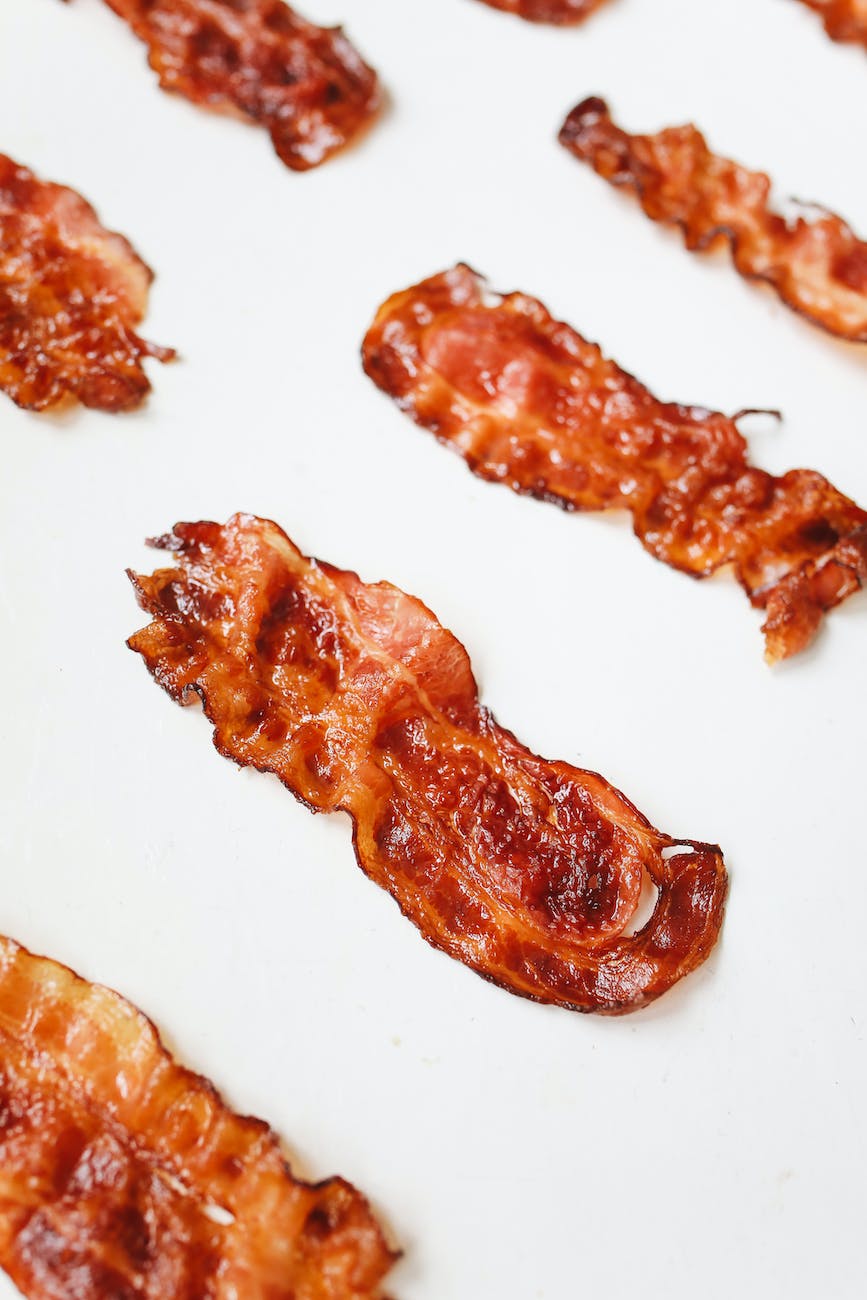
    Bob Redmond, bottle rockets Issue 46

    Bob Redmond’s haiku is the only one I have collected so far that has a clear seasonal referent, but it doesn’t come from food. Redmond mentions the Mother’s Day holiday, which occurs in May, making it a spring haiku in the Gregorian calendar and a summer haiku in the lunar calendar. In this poem, multiple families are cooking bacon in celebration of the holiday, at a time of year when, historically, bacon might not have been available. Reading Redmond’s haiku in that light, a layer of profundity emerges. How amazing that we can honor our mothers with bacon . . . and, given the state of the world, let’s consider ourselves fortunate, because that might not always be the case.

    As I reach the end of this post, I realize that this topic points me in a new direction for research: the ways in which certain words might once have been seasonal, but due to changes in human activity, are no longer connected to seasons. I welcome your thoughts on that!