For the past decade, my relationship to New Orleans has been complicated. My ex-husband is from there, and in the wake of my less-than-amicable divorce, I wasn’t keen on visiting the city ever again. But after nearly two years living in one of its sister cities, and after 10 years of time and distance, it seemed like it was time to revisit the place.
There were a few other factors as well. John loves New Orleans, and it had been over a decade since his last visit as well. Plus, there was one restaurant in particular I was dying to try (more on that in the Day 2 section). It was also about to be my birthday, and while neither of us could take time off work for an international trip, New Orleans is pretty much a straight shot down I-55 (I hate to fly and if I have the opportunity to drive, will always choose to do so). With that, it was time to put bad memories aside and start fresh with New Orleans.
And while we did more than just eat . . . let’s be honest, that was a big component. So without further ado, the exhaustive culinary list of my birthday road trip (including Mississippi and St. Louis).
The Drive Out: Local Eats
While most of our travel day involved eating outside of New Orleans, that food was nonetheless part of the culinary journey! From my favorite breakfast sandwich to my first taste of Memphis barbecue to our arrival at a standard New Orleans tourist destination, it was a delicious drive. (Even though it rained the entire length of 55 South.)
Cafe Miami (St. Louis)
I believe in a fortifying breakfast before a long road trip, so before leaving Soulard, we stopped at Cafe Miami, which I think has the best breakfast sandwiches in the neighborhood. I got the Everything Breakfast, which is my favorite, while John got the Breakfast Chopped Cheese. We’d already had a pot of coffee before getting on the road, so we just got food this time around (though they do source their coffee from Dubuque Coffee Company, which I love). After that, it was time to hit the road for real!

Coleman’s Bar-B-Q (Mississippi)
It might be difficult to believe, but until last week, I’d only ever eaten Texas barbecue. Since barbecue is a geographically-dependent food, not all styles are the same. Coleman’s Bar-B-Q is in Mississippi, less than an hour from Memphis, and it was my first experience with Southern barbecue.
However, I was unprepared for the differences between Southern and Texas style. Mainly, that there is only one meat, and it is pulled pork. I have no problem with pulled pork, but just imagine that after 15 years of eating only Texas barbecue, to be confronted with a menu that just said things like “barbecue sandwich,” and “barbecue plate,” I was confused. We’d also been on the road for a solid four hours at that point, and I was wrestling with the inevitable disorientation that comes from travel.
In spite of all that, I enjoyed my lunch, and would stop by again if I was in the area. I got the small sandwich, plus onion rings and potato salad. It was a delicious meal that had me fortified for another 6ish hours of driving.

Cafe du Monde
We arrived in New Orleans around 8:00 pm. We’d been on the road roughly 10 hours, and though we weren’t ravenous, we both felt peckish, and wanted to walk around a bit after spending the whole day sitting in the car. So our first official New Orleans culinary stop was Cafe du Monde for evening beignets and coffee. (Yes, we drank coffee at 9:00 pm . . . Since they serve chicory coffee, the cafe au lait there is lower in caffeine. Plus, there is no amount of caffeine that could override how tired I was after that road trip.)
John believes that the best time to go to Cafe du Monde is at night. This was my first time going there after dark, and I have to say that I agree with him. For one thing, it’s less crowded. But beyond that, the cafe is lovely at night, with romantic lighting. There is truly something special about beignets after dark.

Day 1: My Birthday
Day 1 set the culinary tone for the trip: a mix of classic restaurants and new, innovative places. In between food stops we walked extensively around the Garden District, Irish Channel, and French Quarter, visiting art galleries, bookstores, and tea shops.
Molly’s Rise and Shine
Molly’s Rise and Shine was the second-highest food priority for this New Orleans trip. (If you know anything about this place and their sister restaurant, you have probably guessed my highest priority . . . which I saved for Day 2.) Since we had a huge dinner planned, we wanted to start the day with something hearty so we wouldn’t be tempted to overdo it at lunch. (Sometimes you have to eat strategically.)
Our trip to Molly’s Rise and Shine was the only time we took a Lyft; we had plans to meet a friend who then had to go to work after breakfast, so we didn’t want to worry about dealing with public transit delays. Our Lyft driver was excited that we were going there, and told us we had to get the hash browns. He was absolutely right about that! There was also a sign out front that said, “Don’t sleep on the carrot yogurt.” I’d never heard of carrot yogurt, and was intrigued . . . but I’m also disinclined to order a yogurt bowl from a restaurant, as I make one for myself most days of the week.
That being said, curiosity got the better of me, and I did order the carrot yogurt, along with the special hashbrown (topped with salmon cream cheese, chives, and roe). John got biscuits and gravy, scrambled eggs, and plain hashbrowns. Not only were both the plain and fancy hash browns excellent (seriously, get them), but I am so glad I ordered the carrot yogurt. The bowl is topped with carrot marmalade, granola, and whatever fresh fruit is available. And the miso in the biscuit gravy brings an innovative take on a classic dish.

Banh Mi Boys
Unfortunately, we didn’t actually eat here. After spending our post-breakfast morning walking around the Garden District, we were hot, thirsty, and needed to sit for a bit. And while we probably both could have eaten, we both wanted to be hungry for my birthday dinner. The food looked fantastic, but it looked like the kind of place where I filled up on lunch and been set for the rest of the day. So we stuck to cold drinks. John had a Vietnamese Iced Coffee and I ordered the Mint Soda Limeade. Both of our beverages were perfectly refreshing. I’ll be adding Banh Mi Boys to my to-try list for next time.
Lucky Dog
Late in the afternoon, hunger did start to get the better of us. (We walked a total of 7.2 miles on that first day, so it’s no wonder.) We were standing in Jackson Square, pondering our options, when a Lucky Dogs cart came into view. Though Lucky Dogs are a New Orleans institution, I’d never had one before! I got mine with chili and mustard, and it was a perfect snack to carry me through to our dinner reservation. While I prefer all-beef hot dogs, the pork-based Lucky Dog had an excellent texture and great flavor. The bun was soft yet sturdy. I’m glad I finally tried one of these.
Tujague’s
Tujague’s is one of the historic Creole restaurants in the quarter. I’d never been (my former MIL had a strong preference for one of the other big four), and when perusing the various menus of the nicer establishments, I decided this was the one that interested me the most.
Although the entire Tujague’s menu is now a la carte, they still offer the table d’hôte with full table participation. The current version of this is similar to prix fixe, except you get to select your entree. While I hadn’t intended to go with the table d’hôte, at the last minute, I decided to go for it. After all, I’m terrible at making decisions in restaurants, so why not just reduce the number of decisions I had to make?
I am so glad we went with the table d’hôte. All of the food was wonderful, and I really feel like I got to sample the best of what Tujague’s had to offer. (They were also gracious about accommodating John’s shellfish allergy.) For entrees, I got the scallops with peas and risotto, while John had the steak. I think the current iteration of table d’hôte captures the essence of a fixed menu, while also allowing individual diners to get exactly what they want.


Day 2: Some New Orleans Classics, Old and New
After ending my birthday with a very heavy dinner, we kept things a little lighter the next day. Well, as light as you can keep it in New Orleans. We also walked 9 miles that day, so we were bound to get pretty hungry eventually. I have left one thing out in this section, but that’s because only John ate there on Day 2. I’ve included the write-up for that spot in Day 3, when we both went there.
Turkey and the Wolf
Turkey and the Wolf was my culinary priority for this trip. After being introduced to some of the food through Sandwiches of History and getting the cookbook for Christmas, I would have considered the trip incomplete if we didn’t make it there. So after skipping breakfast (John is generally not a breakfast person, and I needed to finish digesting dinner), we made our way back to the Garden District and arrived at Turkey and the Wolf just after they opened.
The line was already out the door, and you could tell there was a mixture of locals and tourists there. As we waited, I was torn on what to order. My initial impulse had been to order the collard melt, as that’s something John would never want to eat if I made it at home (there’s a recipe for it in the cookbook). But after seeing plate after plate of The Bologna come out, I changed my mind. Even John ordered it, and he’s not a fan of bologna in general. I also got the frozen margarita, which I might have skipped if my friend Nate hadn’t sold me on it . . . it’s made with Mountain Dew, which does not sound appetizing (at least to me), but it actually worked.
The sandwiches were fantastic, and the fries were excellent as well. I will definitely visit the next time I’m in town, and hopefully The Tomato will be in season the next time I’m here.


PJ’s Coffee of New Orleans
Walking around the French Quarter after lunch, the heat and crowds started to get overwhelming. French Quarter Fest happened to coincide with the trip, and while we did enjoy the free music options, there were definitely more people there than we expected. My one complaint about the French Quarter is that there isn’t much café culture . . . there’s bar culture for sure, but if you want to take a break, sit down, and have some coffee, tea, or a soft drink, your options are pretty limited.
Fortunately, when we needed a break, we were able to duck into PJ’s Coffee for some iced teas. We even managed to find a shaded bench to sit on, despite the crush of people like us who were seeking a little relief. John got a standard iced tea, while I went for the Green Tea Mojito Tea Mixer, because I wanted something refreshing but festive. However, the tea ended up being too sweet for my preference. I did finish it, but I wouldn’t get it again. There are probably plenty of people out there who enjoy a sweeter green tea, and they would probably like this. But it wasn’t my favorite.
Luke
Raw oysters are not really a thing to eat in Missouri. So I wasn’t going to miss the chance while in New Orleans! By the time I was in the mood to eat again, it was late afternoon, and the Quarter was super crowded due to the festival. I was tired of being around lots of people, so I ended up at Luke, which was across from our hotel.
Luke is a lovely brasserie that has been open since 2008. We happened to arrive at happy hour, and the special price on Gulf oysters was so good that I got a full dozen. I also enjoyed my oysters with two glasses of sparkling rosé, which was the perfect companion. (Sparkling water is not covered by happy hour, so John’s sparkling water was ironically as expensive as my wine!!)
Lukey was a lovely dining experience, and the oysters were of top quality. That dozen was some of the best I’ve ever had. I would recommend making reservations, especially during the weekend. We were lucky to get seated, and if we’d been there for a full meal, we would have been out of luck.

We finished our second day with the late show at Preservation Hall, after which we weren’t ready to turn in. So we walked to the Sazerac Bar for a nightcap. The bar was quite crowded, probably due to the conference in the Roosevelt Hotel more so than the French Quarter Festival. Somehow, we managed to find seats, and we ordered the eponymous cocktail. We also ended up chatting with a lawyer who was in the hotel for a conference.
The Sazerac Bar
I enjoyed my Sazerac, but it had been so long since he’d ordered one that John forgot he wasn’t a fan. He had a Vieux Carre for his second round, but was ultimately unimpressed. Ultimately, he felt that the Sazerac Bar has such a captive audience (hotel guests) that it doesn’t have to work as hard to make quality drinks. Still, we came there in part for the impressive interior design; the paneling is made out of a single tree. It’s gorgeous, and worth stopping in even to just have a look at the stunning space.
Day 3: Feeling Adventurous
Our final day in New Orleans started with two well-regarded places that were safe best. We finished the day with some food experiences that were either more contemporary or, depending on your constitution, simply required an adventurous nature.
Croissant d’Or Pâtisserie
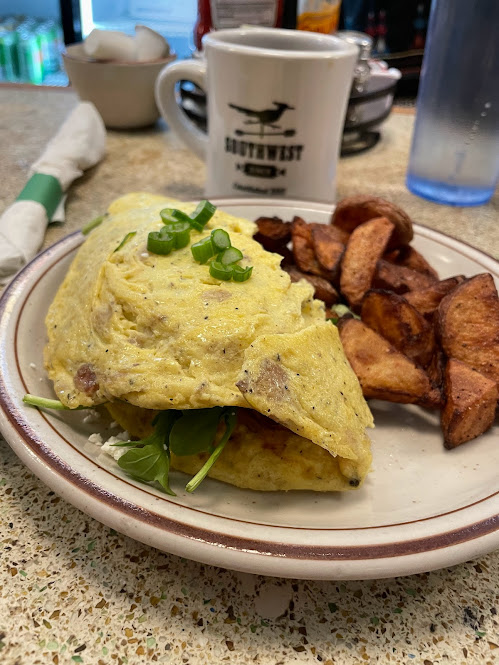
We started off with omelettes and croissants from Croissant d’Or Pâtisserie. John also bought a pain chocolate for us to split; I’m not a big fan of them, but he was convinced if I had one from this shop that I’d change my mind. (He was correct.) I ordered the ratatouille omelette, and while that is not something I would have thought to make on my own, I would definitely try to recreate it in my own kitchen. The already-cooked vegetables make a perfect omelette filling. There was no cheese, but honestly, it wasn’t necessary. (And that is not a thing I am normally inclined to say.) I enjoyed my meal so much that on the morning of our departure, we stopped in for a light breakfast and some croissants for the road.

Carousel Bar
Our one mistake of the trip was waiting until Saturday afternoon (of a festival weekend, no less) to visit the Carousel Bar. We should have gone on our first full day, before my birthday dinner. If you didn’t know, this bar has a functional carousel in the middle of it, that does a full rotation approximately every 15 minutes. As you can imagine, it draws a crowd, and it’s difficult to get a spot on the carousel itself.
When we arrived, the place was pretty much full. We did manage to snag a small table. John got the Viex Carre, which was invented at the Carousel. I ordered the Oaxacan Midnight. While in theory I want to order the drink the bar is known for, something about the Oaxacan Midnight sounded so enticing that I just had to order it.
Some spots opened up at the bar not long after we got our drinks, but we hesitated a second too long (yes, spots can go that fast), and missed out. I was a little heartbroken but trying not to make a big deal about it. Then a single seat opened up. John told me to grab it, and he just walked behind me for a while. The carousel moves slow enough that it’s a reasonable thing to do. Finally, a seat next to me opened up so John could sit by me.
We did one turn of the carousel and then called it good. I got the experience I came for, and there were a lot of other people hoping for seats, so I didn’t want to sit forever and keep other people from enjoying the ride. Plus, one drink was plenty. I was three days into New Orleans without a single hangover, and I wasn’t about to break that streak.
Eat-Well Food Mart
John really wanted to try banh mi in New Orleans. Between the sizeable Vietnamese population, the abundance of French bread, and the existing sandwich culture (poboys and muffalettas), it’s a city poised to have excellent banh mi. He put a lot of thought into which place we chose, and eventually settled on Eat-Well Food Mart. The rationale was that it was easily reachable via streetcar (although we did a road trip down, we avoided driving in New Orleans once we were there), it had good reviews, and a convenience store was not likely to be overrun with tourists.
I’m glad we ended up there. It was a nice break from the crowds, and the experience gave me a sentimental feeling of getting Chinese food from Wok ‘N Express back in Austin.
We each ordered the regular banh mi, and John also got an order of the yaka-mein, a New Orleans-specific noodle dish. We both enjoyed the banh mi. The bread was fantastic, of course. I loved the combination of pork and meatballs, and we both appreciated that pate was available to add to the sandwich. While they weren’t our favorite banh mi ever, most of our quibbles can be boiled down to personal preference. John would have liked a greater proportion of fresh veggies, and we both found the sandwich filling a little dry. (But the latter issue was resolved with the addition of sriracha.) However, there are a number of ways to approach banh mi, so our dislikes might be something you really love.


CC’s Coffee House
After lunch, we decided to walk along the river. French Quarter Fest was in full gear, and there was plenty of music and sunshine to enjoy. Between the sun and the crowds, we started to overheat, and fortunately found CC’s Coffee House to sit down and recharge.
Their iced tea menu is simple: black, green, herbal. True to form, John got black tea and I got green tea. While my iced beverage wasn’t anything special, it was refreshing. Honestly, with all the novelty of the French Quarter (and the novelty of the seasonal coffee drinks on the CC’s menu), it was nice to sit down in the air conditioning with just the basic teas to choose from. Not everything needs to be a culinary spectacle.
Copper Monkey
Before we went on our trip, some friends said we absolutely had to try the monkey buns at Copper Monkey Bar & Grill. Monkey buns are banana-stuffed beignets, topped with banana syrup and powdered sugar. Although I like bananas, I often don’t care for banana-based desserts, but I also figured my friends wouldn’t steer me wrong.
I’m glad we made time to stop by and get an order; they were excellent! John said that they were even better than the beignets at Cafe du Monde. Honestly, I want to say that as well, but it’s hard to put anything above such a classic. But maybe monkey buns should be a new classic. Seriously, if you’re in the French Quarter, make a point to stop in and order some. (I recommend pairing with an Abita Lager, if you’re so inclined.)


Verti Marte
Verti Marte is a deli and convenience store that serves giant sandwiches and a range of sides. My friend Geoff, a lifelong local, describes Verti Marte as, “The best table in the Quarter.” Here’s the thing: there are no tables. The interior is cramped and there are no chairs, tables, or even a bench outside to sit and eat. If you’re staying somewhere nearby, you can walk back and eat in the comfort of your hotel room. There’s also a park a few blocks away, but even that is a bit of a hike. If you want to ensure your sandwich and/or side dishes are enjoyed hot (as they should be), the table in question is . . . the top of a nearby trash can.
Some of you are absolutely horrified that I would say this. And in fact, when John went there the night before for his own dinner, I was horrified to see him spread his sandwich wrapper over the rain guard covering the trash can on the corner and dig in. (He didn’t get sick, for what it’s worth. And no, he hadn’t had anything to drink at that point in the day. The meal was enjoyed stone-cold sober.)
When you enjoy the full Verti Marte dining experience, fellow tourists will give you weird looks. After all, you are using the rain cover of a trash can as a table. But locals? Locals will look at you and say things like, “That’s what’s up.” Because when there are lines out the door at every other restaurant, or when it’s an odd hour of the day, you can count that Verti Marte will be open, serving good food . . . and you probably don’t have to wait for a table.
Sure, you could sit on the ground. But as John points out, the covers on those trash cans are too high up for anyone to pee on. The sidewalk, on the other hand . . .
When we went on the last night of our trip, John got the same sandwich he’d had the night before. I just ordered a side of macaroni and cheese, and that side dish was definitely a meal unto itself. It might be the best macaroni and cheese I’ve ever had; I’m still thinking about it nearly a week later. And yes, we got some weird looks. But we also got a “Heck yeah” from someone who knows the joy of a Verti Marte meal. Because if you’re going on a city vacation, sometimes, you have to make it a little bit like camping.
(But next time, I’ll bring Clorox wipes and disinfect the trash can lid.)

The Drive Back: Whataburger (Mississippi)
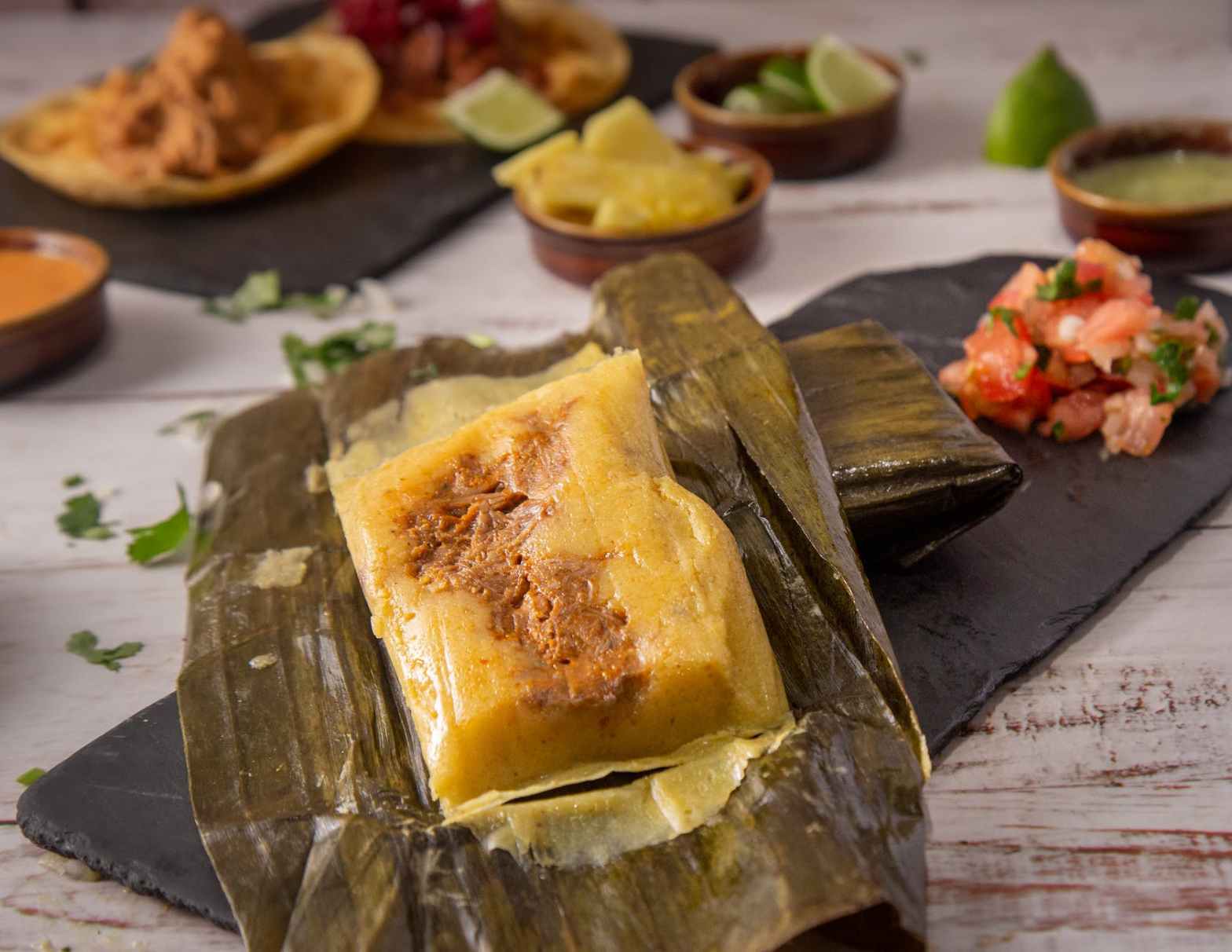
On the way back, we saw a Whataburger in Jackson, Mississippi. Since the franchise hasn’t expanded to St. Louis yet, that was where we stopped for lunch. (The original plan had been Delta tamales, but all of the locations on our route were closed on Sundays.)
Given that my opportunities for Whataburger are now few and far between, I ordered my favorite: the honey barbecue chicken strip sandwich. And yes, it was as good as I remembered. Although Whataburger is a Texas chain, getting to enjoy some true nostalgia food was a nice way to wrap up our adventure.
The trip was in part about getting to make new memories in a place that felt complicated. The Gin Blossoms’ line, “The past is going but something might be found to take its place” has been bouncing in my head all week. I can have fresh experiences in New Orleans that have nothing to do with the mistakes of my youth, and even though I moved away from a place I love, there are still ways to keep the good memories and experiences in my life.