In Gratitude Thank you to M.A. Dubbs, who bought me three coffees in August! I’m now 35% of the way toward my goal of covering website costs for the year. Those who want to support the podcast financially can do so at: https://www.buymeacoffee.com/culinarysaijiki/.
November Community Blog Post I’m putting together another community blog post (view the May community post here). Theme: Harvest Deadline: 11:59 p.m. CST on Wednesday, November 23rd Submission Form: https://forms.gle/TxZWqf3zbfi1i9uR8 Notes: Haiku in languages other than English are welcome; please provide a translation. Experimental haiku are also welcome. If sending previously published haiku, remember to provide publication credit.
Theme Music “J’attendrai” by Django Reinhardt, performing at Cleveland Music Hall, 1939. This recording is in the public domain. Hear the whole song at https://clevelandhistorical.org/files/show/6045.
More from Jennifer Hambrick You can order Jennifer’s haibun collection, Joyride (Red Moon Press, 2021) and her newest collection, In the High Weeds (National Federation of State Poetry Societies, 2022) from her website: https://jenniferhambrick.com/order/
Join the Conversation I’m seeking guests for October, November, and December! If you’d like to be on the podcast, visit https://culinarysaijiki.com/join-the-conversation/ and fill out the form. My life is a little hectic right now, so if I don’t follow up in a timely manner, send me a reminder.
Support the Project You can make a one-time or recurring donation to the Culinary Saijiki at https://www.buymeacoffee.com/culinarysaijiki. You also can help by sharing this episode with people you think will love it!
Theme Music “J’attendrai” by Django Reinhardt, performing at Cleveland Music Hall, 1939. This recording is in the public domain. Hear the whole song at https://clevelandhistorical.org/files/show/6045.
While saijiki generally focus on contemporary haiku, I also felt called to take a look at classical haiku to see how poets of the past incorporated food into their work. Since I have to rely on translation, and no two translations are the same, I plan to revisit this topic from time to time, exploring different translations of the same poem when I can. For this post, all poems come from The Sound of Water (Shambhala Centaur Editions, 2000), which is Sam Hamill’s collection of classical haiku translations.
Earlier this year, I wrote about how I detected three primary ways that food relates to haiku seasons:
Food words that are a definite seasonal referent;
Food words that are not part of any specific season;
Food words that become seasonal with an additional modifying word
In The Sound of Water, most of the haiku I found fit into the first two categories. I also found that most of the poems connected to food were summer poems. Of course, this is just one small book, so I’m not making definitive statements yet. At the very least, it was interesting to see what turned up in the context of this anthology.
Summer
Breakfast enjoyed in the fine company of morning glories
Matsuo Bashō
I begin each day with breakfast greens and tea and morning glories
Takarai Kikaku
Breakfast is an all-year word. You either eat breakfast, or you don’t. While the Muslim observance of Ramadan requires fasting during the day, this holy period isn’t tied to a specific season. Even the image of “breakfast greens” in Kikaku’s poem doesn’t inherently create a specific season; there are bitter herbs in spring, abundant greens in summer, and hardy greens in autumn. Only in winter is it tough to find fresh greens. Even then, the poem might be referring to pickled greens. It’s the word morning glories in each poem that signify summer.
Wet with morning dew and splotched with mud, the melon looks especially cool
Matsuo Bashō
All by itself, that beautiful melon, entirely self-sufficient
Hattori Ransetsu
Melon is generally a summer kigo. While there can be some early spring melons, and some that appear in autumn as well (you could get a decent cantaloupe shockingly late in Texas), they are generally at their best in the summer. These 17th-century haiku have a timeless feel to them. While there are some stylistic elements that indicate they are classical rather than contemporary, they don’t seem stodgy or old. I love that haiku poets have been writing about cool, beautiful melons for centuries. The above poems show me how food really does connect us to ancestors, whether they be family members, or our artistic lineage.
Singing, planting rice, village songs more lovely than famous city poems
Matsuo Bashō
With the noon conch blown those old rice-planting songs are suddenly gone
Yosa Buson
My noontime nap disrupted by voices singing rice-planting songs
Kobayashi Issa
For rice-planting women there’s nothing left unsoiled but their song
Konishi Raizan
Rice was the food I found referenced the most in The Sound of Water, yet in this collection, poems about it are entirely related to agriculture. Many poets wrote specifically about rice-planting, and about the songs that the field workers sang. (I’m sure it’s an effect of the translation, but Bashō’s rice-planting poem has a certain Whitmanesque quality to it . . . or perhaps “Song of Myself” has a certain Bashōesque aspect.) These poems also illustrate the value of not just having a saijiki, but having a few different ones on hand! It’s easy to make assumptions about a time of year based on your own experience, which is necessarily limited. I associate planting of all kinds with spring, which isn’t even accurate in the United States! There are a number of crops and flowers that get planted in the fall to winter over, and bloom in spring. At first, I was putting these classical rice-planting haiku in the spring category. Then, however, I consulted with Yamamoto Kenkichi’s The Five Hundred Essential Japanese Season Words. There, I found that rice-planting related to summer! It would have been so easy for me to assume these were spring haiku, and I’m glad I had reference material on hand to guide me in the right direction.
Without a sound, munching young rice-plant stalks, a caterpillar dines
Hattori Ransetsu
The only haiku I found related to eating rice didn’t involve humans, nor the grains of rice that make up a staple of the human diet. Rather, a caterpillar is dining on the fresh, young stalks. The young stalks, as well as the caterpillar that is not yet a butterfly, ground us in summer.
When the wild turnip burst into full blossom a skylark sang
Kobayashi Issa
While I’ve never seen a wild turnip in real life, Issa’s haiku reminded me of the giant squash blossoms that appear in the summer, and how glorious they are. Whether in a domestic garden, or something you might forage, the vibrancy of summer is something that endures over the centuries in the haiku tradition.
Autumn
Autumn breezes spin small fish hung to dry from beach house eaves
Yosa Buson
While certain species of fish are best harvested at certain times of the year, that level of specificity doesn’t appear in Buson’s haiku. Rather, the direct naming of the season tells us where we are in the year. The general concept of fish is an all-year term, but the seasonal referent can lend clues to what type of fish they might be. Perhaps Buson is referring to sardines, which are in season late summer and through the fall. The image of the drying fish also reminds the reader that this is the time to preserve food for the long winter ahead.
In this mountain village, shining in my soup bowl, the bright moon arrives
Kobayashi Issa
Here in Shinano are famous moons, and buddhas, and our good noodles
Kobayashi Issa
Neither soup nor noodles are inherently seasonal. As with fish, specific types of soup or noodles better correspond to certain parts in the year. A chilled soup is more appropriate in the summer. Soba noodles are part of the New Year’s ritual. Yet the words “soup” and “noodles” in and of themselves need modifiers. I place these two haiku in autumn because of the presence of the moon, an autumn kigo.
Spring
Plum blossoms in bloom in a Kitano teahouse, the master of sumo
Yosa Buson
As I mentioned in my June post “The Seasons of Tea,” people consume tea year-round. In formal tea ceremony, the dishes you serve varies from season to season. The presence of plum blossoms in Buson’s haiku indicate that we’re at a teahouse in springtime.
Only the shoots of new green leaves, white water, and yellow barley
Yosa Buson
The shoots of young plants, whether leaves or grasses, is a common spring kigo. None of the plants are fully formed. The water is frothy with melted snow and spring rain. There is nothing yet to harvest, whether that be mature barley or fruit from the tree. Yet this haiku points to the sheer amount of potential inherent in springtime.
People, more people scurrying through spring breezes along the rice-field dikes
Ichihara Tayo-Jo
Rice fields once again appear in spring. Here, the emphasis is on humans coming and going on their journeys, walking along the fields that grow their food. The verb “scurrying” suggests that these people are busy, inattentive, perhaps not even noticing that the source of a staple crop is all around them. It turns out it’s not only the modern age that takes people out of the present moment!
Winter
Through frozen rice fields moving slowly on horseback, my shadow creeps by
Matsuo Bashō
One of the things I found interesting while rereading The Sound of Water is the extent to which rice fields can appear in all seasons, but no haiku about people eating rice. That’s not to say those types of haiku don’t exist in the classical tradition; they just didn’t make their way into this book. I’m curious to reread more classical anthologies to see what differences I find. The above haiku also points to how a rice field in and of itself isn’t inherently seasonal; it’s other words, such as frozen, that ground us in a specific time of year.
Walking on dishes the rat’s feet make the music of the shivering cold
Yosa Buson
Maybe the dishes are lying dirty in a basin, because it’s so cold, nobody wants to deal with them. Or maybe the dishes are clean and put away, but the rat is rattling around on them, looking for some warmth. While my mind initially went to the first interpretation, the second is just as valid. Either way, I delight in this haiku because it reminds me that something as simple as doing the dishes are worthy of poetic moments.
In Gratitude Thank you to our anonymous donor who bought me a total of six coffees in August! I’m now 20% of the way toward my goal of covering website costs for the year. Those who want to support the podcast financially can do so at: https://www.buymeacoffee.com/culinarysaijiki/.
Join the Conversation I’m seeking guests for October, November, and December! If you’d like to be on the podcast, visit https://culinarysaijiki.com/join-the-conversation/ and fill out the form. My life is a little hectic right now, so if I don’t follow up in a timely manner, send me a reminder.
Theme Music “J’attendrai” by Django Reinhardt, performing at Cleveland Music Hall, 1939. This recording is in the public domain. Hear the whole song at https://clevelandhistorical.org/files/show/6045.
I move to the St. Louis area this past June. For the final four-and-a-half months, I chronicled the restaurants, coffee shops, parks, and stores I loved, as I visited them for the last time. I posted these under the hashtag #texasfarewelltour on Instagram. One poetry friend from San Antonio commented on a restaurant post that he was using this farewell list as a way to keep track of places to eat at when he was in town. That comment inspired me to combine my final Austin food journey in one place, for others who might also consider it a must-do list.
Most of these restaurants are either local to Austin, or are regional chains. However, I have also included a few restaurants that are part of national chains, but do not have a presence anywhere in the state of Missouri. This list is organized in the order I visited each restaurant.
Whataburger has actually made its way to Kansas City . . . but that’s on the other end of the state! For my last visit, I enjoyed the seasonal Buffalo Ranch Chicken Strip Sandwich, along with a Dr. Pepper shake.
Billy’s on Burnet has the best bar burger in Austin. Their patty melt is in my top 5. The onion rings and cheese curds are also excellent. Plus, they’ve always had fantastic vegetarian options.
A glorious burger at Billy’s
Oh-K-Dog currently does not exist in Missouri, but I hope it does someday! I love the Korean version of a corn dog (I love Korean street food in general, really . . . Okay, Korean food might be my favorite cuisine on the planet). The assortment of condiments makes it easy to shake up your order.
Ichiban was a monthly payday treat during my last few years in Austin. Not only is their sushi some of the best in town, but they also have an extensive Korean menu, which meant John could go with me sometimes (he has a severe shellfish allergy and avoids all sushi). I was glad to live in their delivery radius during the roughest months of the pandemic, but I always loved dining in the restaurant, especially in one of the booths.
There are a few Cooper’s Pit Barbecue locations around Texas, but my standby has always been the one in Llano. I loved having the opportunity to eat there after a hike in the Hill Country. The meat was excellent, but they were my favorite because of the side dishes. Their macaroni and cheese was the best, and their potato salad and cole slaw were also top-notch.
Monument Cafe is inextricably tied into my poetry life. I remember getting delicious lunches and dinners there during the Georgetown Poetry Festival. Although I didn’t get a chance to attend this year’s festival, I’m glad that John and I made the trip to Georgetown for one last brunch.
Grits and eggs benedict at Monument Cafe
Thundercloud Subs is the iconic Austin sub chain. Of all the establishments that make vegetarian subs, Thundercloud is my favorite. Their chicken salad and egg salad are also excellent. And they always have a fantastic soup selection.
Biscuits and Groovy is an iconic breakfast trailer specializing in (obviously) biscuits and gravy. The bacon is always thick and perfectly cooked, the sausage is always well-seasoned, and the gravy is always peppery. Plus, everything can be made vegetarian or vegan.
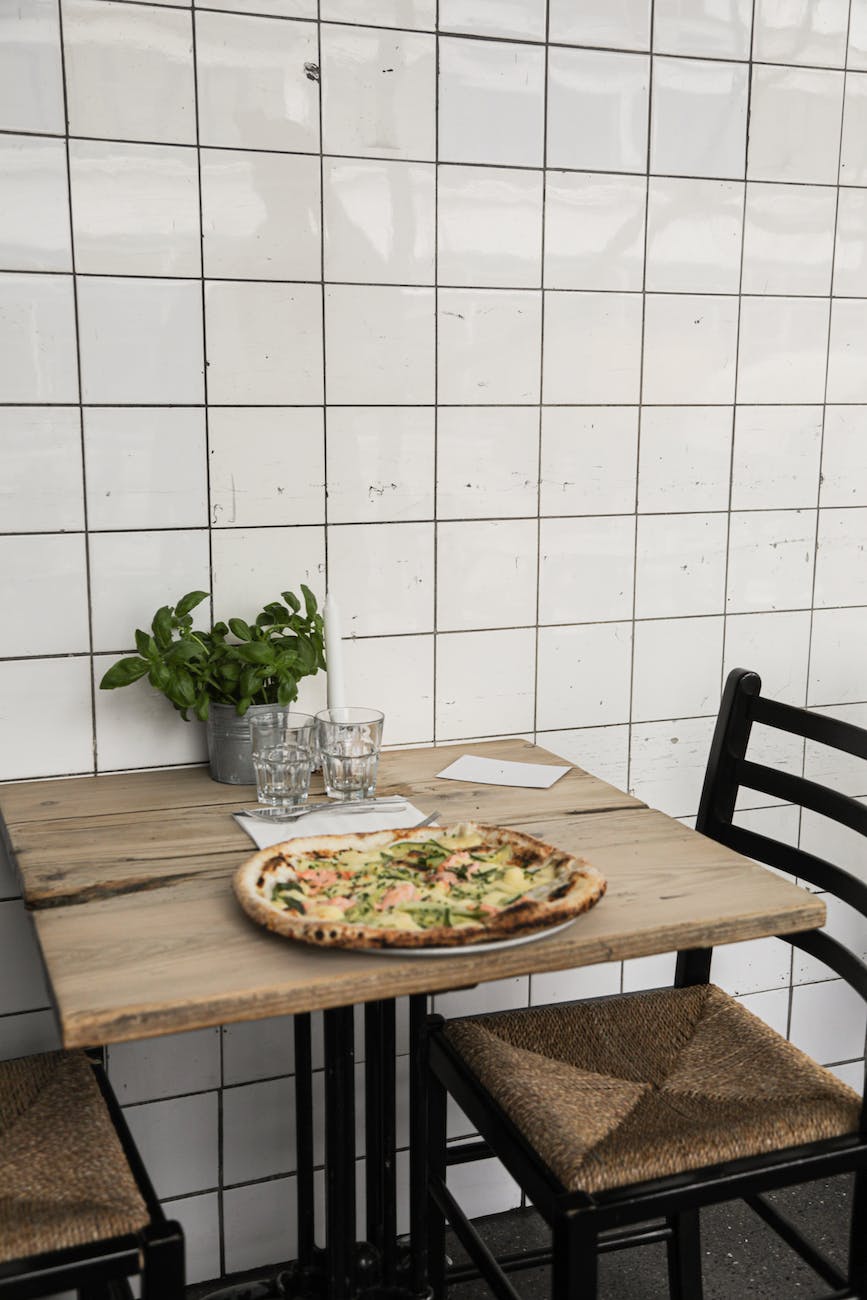
Homeslice Pizza was the first place I ate when I moved to Austin. I always loved their white clam pizza, but I was pretty much the only person in my social circle who did. When John and I ordered from there, we did a custom pizza with hot cherry peppers, fresh basil, sausage, and extra cheese.
Kura Revolving Sushi Bar is another chain restaurant that doesn’t have locations in Missouri. It was the first (and so far, only) conveyor belt sushi restaurant I’ve been to, and I always had fun eating there. I was bummed that COVID kept me away from it for so long (it is always so crowded that it took me a long time to get back there), but I’m glad I got one last visit with one of my regular sushi buddies.
I remember when P. Terry’s was a single drive-thru establishment in South Austin. I used to grab a burger and fries there between my Saturday morning shift at BookWoman and my Saturday afternoon dance rehearsals. Their veggie burger is so good that I still ordered it, even after I gave up vegetarianism. The root beer milkshake was also a must-have.
Phil’s Ice House is another great burger joint. My favorite thing was to get an assortment of sliders with a side of sweet potato fries. I also think their chili cheese dog is the best in town.
Slider trio at Phil’s Ice House
I went to Amy’s Ice Creams as often as I possibly could before leaving. Amy’s is another place inextricably linked to my poetry life. The hosts of the I Scream Social Reading series (2015-2020) at Malvern Books served Amy’s flavors at every event. For my final visit, just a week before I left Austin, I met my friend Hector there, and I got a waffle cone with dark chocolate and popcorn ice cream flavors. It was quite the culinary send-off!
Salt Lick barbecue plate. I loved the potato salad and the slaw!
The Salt Lick is a Texas barbecue institution. The original Driftwood location is the place to be on a nice afternoon. I was supposed to have my birthday there in 2019, but that got rained out . . . and then COVID happened . . . but while the pandemic is still happening, we made the trip to the Salt Lick for my final Texas birthday. We got there early, staked out a spot away from the crowds, and I had a perfect afternoon hanging out with some of my dearest friends.
Nervous Charlie’s has the best bagels in Austin. They opened shortly before the pandemic, and I’m glad they were able to weather the chaos. Their bagel sandwiches are delicious, but my favorite thing was to simply get a dozen, and two containers of cream cheese (one garlic, one spicy). The pumpernickel was always my favorite flavor, but you really couldn’t go wrong with anything they served.
Cacio e pepe at Patrizi’s
Good Italian food is difficult to find in Texas. Patrizi’s gets it right, so it’s no wonder that they end up with 90-minute lines on weekends. John took me here for a beautiful dinner to celebrate me getting hired at St. Charles Community College.
Whether getting pizza, salad, or sandwiches, you can’t go wrong at Little Deli. It was a perfect place for when John and I were feeling indecisive about what to do for lunch. When I worked as the admin at Master Gohring’s Tai Chi & Kung Fu, I would come in nearly every Wednesday to find a Little Deli roast beef and cheddar waiting for me. My other enduring favorite was their muffuletta.
Fish taco plate from El Mercado
El Mercado was one of our breakfast standbys for years, but it also makes a great lunch and dinner option. Their fish tacos were my favorite in all of Austin. They offered fairly standard Tex-Mex fare, but it was always delicious. Whenever I went to El Mercado, I knew what to expect. It was a real comfort food place for me.
I thought I didn’t like thin crust pizza. Then I had East Side Pies. I loved the range of toppings, sauces, and cheeses that you could get. I think they have some of the most inventive combinations in town. When I lived on the east side, I was in their delivery radius, and pretty much every time I came home from a long trip, I would settle in by ordering a large pie from East Side.
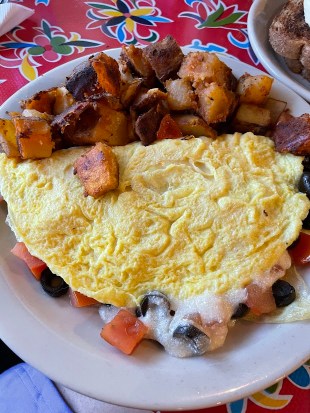
Black olive omelet and home fries at the Omelettry.
I have so many fond breakfast memories of the Omelettry. It’s hard to pick a single favorite omelet, but my regular favorites were the black olive, the guacamole, the chili con queso, and the broccoli sour cream. I’ve always been grateful that they survived their move from Burnet Road to Airport Boulevard, and I wish them many good years in the future.
El Caribe was the first place I tried queso flameado, which was a game-changer for me. They have great breakfast options, but this place really was a lunch and dinner stand-by for me. The pollo relleno was my favorite, but if I was craving something lighter, the flautas were my go-to.
Jim’s is a Texas chain, and I feel nostalgic for it on Sunday mornings. We’ve been going to Waffle House while staying in the St. Louis suburbs, and while I enjoy eating there, it’s just not the same. Jim’s had some of the best breakfast options; my favorite was the chili and eggs. It was also the kind of place where, if you had a hankering for a breakfast cheeseburger, you could get a breakfast cheeseburger. I usually finished my meal too full for dessert, but I always grabbed a slice of pie to take home.
The South First Special at Little Mexico
Little Mexico doesn’t have a website. The restaurant is staying strong on the rapidly-gentrifying South 1st Street. Their migas plate is among my top three favorites. For lunch or dinner, my favorite thing to order was the South First Special: a loaded burrito smothered with queso. John always loved that they serve regional dishes, such as carne asada, that aren’t always the norm at other places.
Taco Deli‘s Otto taco is one of my all-time favorites. The combination of refried black beans, avocado, jack cheese, and bacon, is perfect. Plus, their salsa options have a great range of heat, as well as delicious flavors. My only regret is that I wasn’t able to find one of their avocado and garlic t-shirts in my size before I left.
Quality Seafood is a market, oyster bar, and restaurant. The crab cakes are divine. The macaroni and cheese is some of the best in Austin. If you want a decent po’boy in Central Texas, this is the place to be.
Tam’s Deli is one of the best Vietnamese places I’ve ever been to. I sadly didn’t discover it until I was near the end of my time in Austin. Our favorite bahn mi trailer had closed, and we were looking for something else close by. Tam’s saved the day! In addition to excellent bahn mi, they serve a variety of Vietnamese crepes. If you’re an egg person like me, you will love these!
Black’s Barbecue is another place I love primarily because the side dishes are so delicious. (Let’s face it; I’m all about the sides.) It’s great to get out to the original Lockhart location if you can, but I can attest that the food is equally good no matter where you are. It’s one of the big three Lockhart institutions. I was sad I didn’t have time to visit all three of them. If you have time for just one, I vote for Black’s.
The Bastrop Burger in all its glory
Workhorse Bar makes my most favorite burger in all of Austin. Their Bastrop Burger is my one true favorite. It’s thick, cooked to perfection, and has tons of flavor. This is also the place where John and I met, and where we had our last Austin meal together before he headed out to teach study abroad this summer.
The first place I had kimchi was on the Chi’Lantro kimchi fries. I was hooked! I remember when Chi’Lantro was only a food truck, and then saw its enterprise expand. When I lived in my last Austin neighborhood, there was a location in walking distance. The kimchi fries were always my favorite, but I also loved their burritos.
A republican taco and a fried avocado taco from Torchy’s
At one point in my Austin life, Torchy’s Tacos was part of my routine. My then-husband and I went virtually every Sunday. After my divorce, I sort of gave up eating there unless other people wanted to go. But I’ve always loved their fried avocado taco; none of the imitations out there can compare. So of course I had to make one last stop, for old time’s sake.
The last time I saw my friend Melanie, we met at Tiny Pies. There wasn’t anywhere to sit (we thought there had been a picnic table at one point, but it had disappeared), so we sat on the shaded steps of a law office across the street, ate pie, and talked. My only regret is that I only ate one pie. I could easily have had seconds.
The Steeping Room was my absolute favorite place to eat in Austin. I used to plan my blood donations for days they were open, so I’d have an excuse to stop by for a delicious lunch or scone. Of course, I’d have to pick up some loose-leaf tea to take home. I could always count on getting a delicious meal, whether I was craving comfort food, or something light and refreshing. The jasmine lemonade also is a must-drink. Once I’m finally settled in my own kitchen, I’m going to start trying to re-create their breakfast menu items at home. (But here’s hoping they maybe just decide to do a cookbook.)
As you might have guessed from the name, Padre Island Burger Company is not in Austin. But it is my favorite burger place in the entire state of Texas. Right before moving, I snuck in a three-day trip to the gulf coast entirely for the purpose of getting to eat here one last time. If Bob Belcher ran a burger joint that was also a bar on the Texas coast, it would be this place.
Kick Butt Coffee is another Austin establishment deeply rooted in my personal history. I attended numerous fusion and blues dances there. It was one of the main venues for the Austin International Poetry Festival, and also boasts a long-running poetry and music open mic. Kick Butt is also where I first tried my hand at stand-up comedy (a phase that lasted all of a month before I realized I was not cut out for it). Plus, it’s owned by Thomas Gohring, of Master Gohring’s Tai Chi and Kung Fu, where I trained and worked. I ended up doing a bit of behind-the-scenes work for Kick Butt as well. The day I stopped in was a busy one, just three days before I left, and I was hurrying to get important errands done. I had the good fortune to drink a quick espresso with my old boss, and say goodbye. I got a mocha to go, plus a chicken wrap and cookie for later. It was tough to bid farewell to so much personal history.
Mi Madre’s makes my favorite migas plate. To my mind, there is no better one anywhere in the city. They are also the only place in town I found that makes cafe de olla, a sweet coffee brewed with cinammon and anise. There dinner offerings are fantastic as well. When John and I got sick of cooking from home during lockdown, we’d order the family fajita feast for pickup. It was a ton of food for just the two of us, but we made it last for days.
Before I left, I made a date with one of my sushi buddies to go to Uchiko. We gave ourselves permission to go all-out, getting whatever we wanted. Over the course of a three-hour dinner, we sampled a variety of fish and vegetarian delicacies, including dessert. Of course, one of the most magical meals of my life, and I didn’t take a single photo until dessert. I just didn’t think about it. But I suppose that it’s better to be fully present at such times, anyway.
A chicken salad plate at Nancy’s sky garden
It’s honestly hard for me to describe Nancy’s Sky Garden. When I am there, I feel like I am eating something straight from the page of a food magazine. I’ve never enjoyed produce so fresh, and never had a plate so colorful. Now that I have to pack a lunch for the first time in many years, I take inspiration from the delightful plate at Nancy’s to fuel my afternoon.
The first time I went to Michi Ramen was also the first time I tried takoyaki, and a lifelong love was born. A few months later, I tried mochi ice cream there for the first time. Their dipping ramen was always my favorite, but the jungle ramen came in close second. While there are a number of great ramen places in Austin, Michi Ramen was always near and dear to my heart.
Juan in a Million has the best refried beans in town. I’ve lived in north Austin for most of my life, so never got to eat here as much as I would have liked, especially with how popular it is on weekends. But on moving weekend, Linda and I ended up having to drive to Kyle (a south suburb) to get the U-Haul . . . and while that wasn’t an ideal situation, it gave us an excuse to go to Juan in a Million on the way back! Of course, I ordered the Don Juan El Taco Grande, which at $6.95, is well worth the price. It’s basically three tacos in one. You pretty much have to eat it with a fork. I was certainly well-fueled for a day of moving!
Sausage, olive, and mushroom pizza from The Parlor
After a long day of loading my stuff into the U-Haul (according to my FitBit, I took 30,000 steps and walked 15 miles!), Linda and I wanted pizza. I decided on The Parlor as my final meal in Austin. I love their crust; it’s thick and soft, without being too doughy. They have excellent toppings, and I love that you can order a side of spicy ranch for dipping (I’m a Midwesterner, after all). Our sausage, olive, and mushroom pizza was a perfect last meal to cap off my Austin years.
Even though I wasn’t hungry when I left Austin early the next morning, I of course had to eat on my way out of Texas! I stopped at Buc-ee’s not once, but twice. I arrived at the location between Austin and Waco mid-morning, where I got kolaches and coffee. Then I stopped at the location just outside Dallas for . . . kolaches and coffee. They have a lot of great food there, but honestly, it was my last chance for those kolaches. I regret nothing. (But I am sad that both locations were out of stock of cherry sours. And also, they have Buc-ee’s locations in Tennessee and Kentucky but not Missouri??? What a world!)
In Gratitude Thank you to our anonymous donor who bought me three coffees this month! I’m now 20% of the way toward my goal of covering website costs for the year. Those who want to support the podcast financially can do so at: https://www.buymeacoffee.com/culinarysaijiki/.
Join the Conversation If you’d like to be on the podcast, visit https://culinarysaijiki.com/join-the-conversation/ and fill out the form. My life is a little hectic right now, so if I don’t follow up in a timely manner, send me a reminder.
Theme Music “J’attendrai” by Django Reinhardt, performing at Cleveland Music Hall, 1939. This recording is in the public domain. Hear the whole song at https://clevelandhistorical.org/files/show/6045.
Thank you to the anonymous donor for another three coffees! I’m now 20% of the way toward my goal of covering this year’s website costs. Readers and listeners can support The Culinary Saijiki by buying a coffee at https://www.buymeacoffee.com/culinarysaijiki.
Of the 212 haiku and senryu I’ve collected so far, I only have five that mention meat. Of course, I know that there are more out there. Still, I find it interesting that on the whole, meat does not seem to show up as frequently as vegetables, fruit, eggs, coffee, tea, or sweets. While I know my fair share of haijin who are vegetarians or vegans, many of us eat meat as well. Even those of use who avoid meat in adulthood were raised with it as the foundation of the main meal. I don’t have any compelling theories as to why meat doesn’t seem to show up in haiku as often. In addition, who knows what the proportion of meat haiku will be once I have collected 1,000 poems, which is my goal.
Another thing I have noticed in my initial work is that meat appears to be an all-year word. However, historically, meat consumption is tied to the seasons. My partner, John, grew up on a farm, and I asked him to clarify the seasonal nature of slaughtering and eating meat. Pigs and cattle are normally slaughtered in autumn, after the summer heat has broken, but before winter has set in. Hunting seasons generally occur in autumn. Even freshwater fish and seafood have their ideal harvesting seasons, ranging from late spring to late autumn, depending on the species. Chickens are a bit different; you don’t slaughter a chicken and cure it to last through the winter. Poultry is more likely to be slaughtered and eaten throughout the year, though again, autumn was often a more advantageous time than others. John also noted that, in prior generations, it was common to eat a quasi-vegetarian diet (excluding rendered animal fat) for at least part of the year, usually in spring and sometimes into summer, when the previous year’s meat stores had been depleted.
Of course, thanks to refrigeration, industrial farming practices, and global trade, all types of meat are available year-round in much of the world, meaning our meat consumption is divorced from any sense of the seasons. While that’s true of produce as well, I think fruits and vegetables still retain more of a seasonal rhythm. Even if you live in a city, you can probably manage some sort of small-scale garden, which tunes you in to the seasonal nature of produce. It’s not feasible to keep a pig or cow in an urban or suburban back yard. Even those city dwellers who are able to keep chickens usually have them just for eggs. Plus, I know more than a few people who eat meat, but would prefer not to think about where it comes from. It’s easy to see how meat gets divorced from the seasons not just at the industrial level, but on a personal level as well.
cholesterol a steak through the heart
Keith Evetts, Failed Haiku Issue 70
Keith Evetts’ humorous poem relies on the pun of steak and stake, and though cholesterol and heart disease are serious issues, this piece makes me chuckle every time I see it. Perhaps the pun puts the haiku in autumn, referencing Halloween, but based on my limited knowledge of vampire fiction, they exist year-round. This is an effective senryu (or could possibly be classified as zappai), but there isn’t a clear seasonal referent.
Louise Hopewell’s senryu provides a sense of juxtaposition, between a meat-eater and their vegan dining companion. However, this doesn’t take place in a specific season. I’ve had steaks grilled outdoors in the summer, cooked in an oven in winter, and fried in a skillet just about any time of year. In fact, the method of preparation might influence the sense of a season rather than meat itself.
fish and chips in yesterday’s news yesterday’s news
Susan Spooner, Charlotte DiGregorio’s Writer’s Blog, May 28, 2022
Historically, fish and chips were wrapped in newspaper. I’ve personally never experienced this, and ostensibly, the practice has died out for hygienic reasons. Still, Susan Spooner’s poem makes excellent use of the cultural knowledge of fish and chips, and I find the repetition of the phrase “yesterday’s news” to be effective and engaging. While the cod that usually comprises fish and chips peaks in winter (Pacific Ocean) or summer (Atlantic Ocean), the dish is available year-round, and so again, given the nature of modern life, we don’t have a clear seasonal referent here.
Cat dreaming of man, Man dreaming of cat, both Craving fish fillet
Debbie Walker-Lass, Haikuniverse, May 9, 2022
Even if fish were only available at certain times of the year, you can dream about them in any season. Debbie Walker-Lass’ emphasis on dreaming takes the poem out of reality and into the world of the subconscious. You can also have a craving at any point during the year. Even if something is out of season and unavailable, you might desire it. This senryu, focused on dreams and desire, is applicable as an all-year poem.
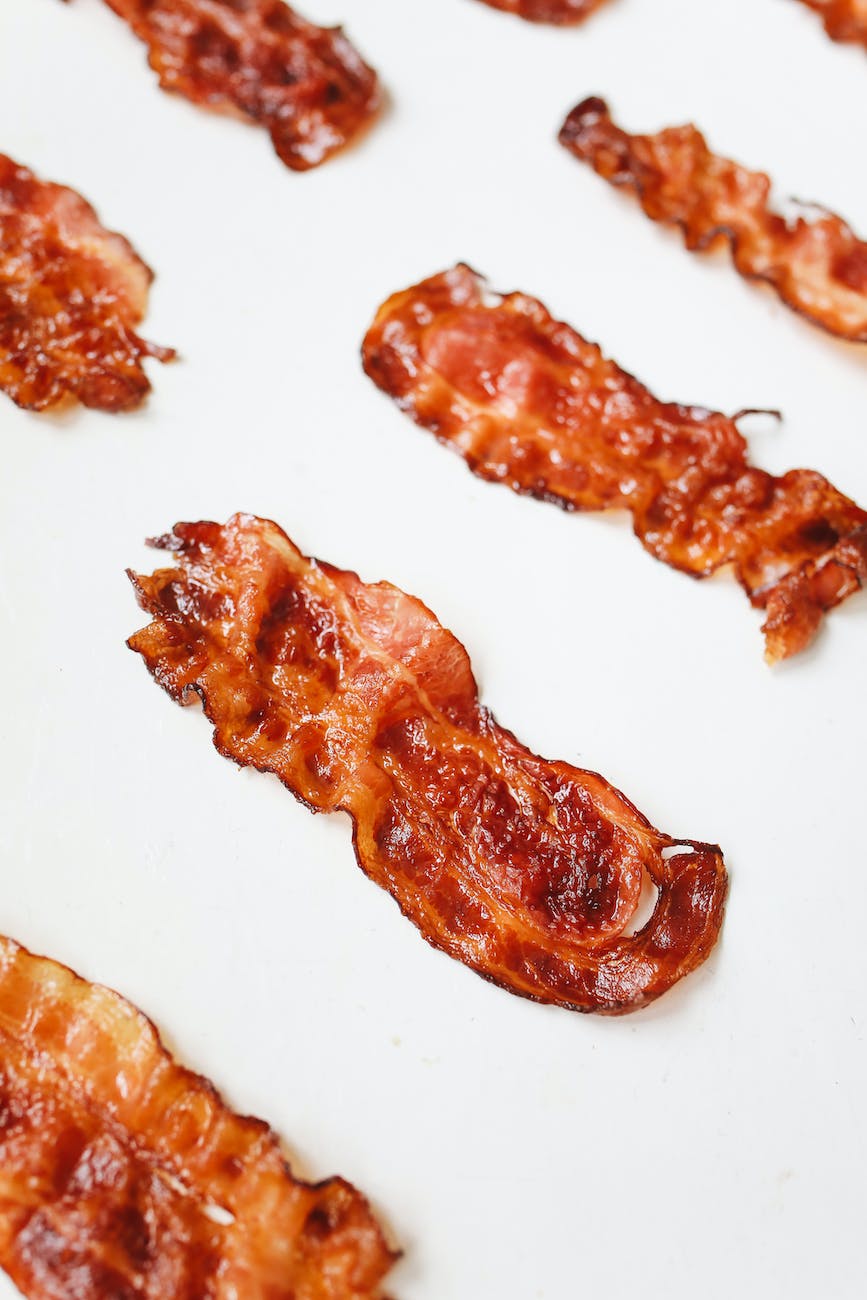
Mother’s Day the smell of bacon from each apartment
Bob Redmond, bottle rockets Issue 46
Bob Redmond’s haiku is the only one I have collected so far that has a clear seasonal referent, but it doesn’t come from food. Redmond mentions the Mother’s Day holiday, which occurs in May, making it a spring haiku in the Gregorian calendar and a summer haiku in the lunar calendar. In this poem, multiple families are cooking bacon in celebration of the holiday, at a time of year when, historically, bacon might not have been available. Reading Redmond’s haiku in that light, a layer of profundity emerges. How amazing that we can honor our mothers with bacon . . . and, given the state of the world, let’s consider ourselves fortunate, because that might not always be the case.
As I reach the end of this post, I realize that this topic points me in a new direction for research: the ways in which certain words might once have been seasonal, but due to changes in human activity, are no longer connected to seasons. I welcome your thoughts on that!
In Gratitude Thank you to our anonymous donor who bought me three coffees this month! I’m now 13% of the way toward my goal of covering website costs for the year. Those who want to support the podcast financially can do so at: https://www.buymeacoffee.com/culinarysaijiki/.
August Open Mic Bonus Episode To participate in the August 30th open mic bonus episode, click this link: https://anchor.fm/culinarysaijiki/message. Recordings must be received by Friday, August 28th at 11:59 pm CST.
Guidelines:
Each poet is limited to two haiku
Before reading your haiku, please say your name or pen name and, if comfortable, where you’re writing from
Please read each haiku twice
Haiku should mention food, and connect to the transitional aspect of seasons, with an emphasis on autumn
Submissions that do not follow these guidelines will be disqualified
Join the Conversation If you’d like to be on the podcast, visit https://culinarysaijiki.com/join-the-conversation/ and fill out the form. My life is a little hectic right now, so if I don’t follow up in a timely manner, send me a reminder.
Theme Music “J’attendrai” by Django Reinhardt, performing at Cleveland Music Hall, 1939. This recording is in the public domain. Hear the whole song at https://clevelandhistorical.org/files/show/6045.
First, thank you to the anonymous person who bought me three coffees this month! I appreciate your support of the project, and especially for covering this year’s website costs. I’m now 13% of the way toward my goal.
This week, I got inspired to explore the connection between region and food in haiku. When I wrote primarily free verse, I loved writing about the landscapes of Texas, and I also enjoy exploring the ways in which landscape connects to food. I decided to start with the Southwest in part because that is one of two regions (the other being the Midwest) where I have lived the longest, and have detailed understanding of regional food. I’d also been rereading Lifting the Seasons: Southwestern Haiku & Haiga, and had added a number of the haiku to my Culinary Saijiki database. I decided to use it as my initial source text in my exploration of Southwestern food haiku. (There are a number of other good anthologies out there, but I didn’t have access to them this week . . . but that just means I’ll have to return to this topic again!)
As it turns out, I ran into a number of challenges with this post! I thought I was going to have any easy time talking about Southwestern food in haiku, but in fact, this was the most difficult entry I’ve done so far, which is all the more reason I’ll want to return to this topic.
1. The southwest is not a clearly delineated space. Arizona and New Mexico are the only definitive Southwest states, but parts of Texas, Oklahoma, Utah, Colorado, Nevada, and Oklahoma also get included. However, there isn’t a definitive map that delineates which portions of each state get included. For example, San Antonio is closer to Louisiana than it is to New Mexico, but the city seems more a part of the Southwest than the South. There’s a great deal of culturally and geographically liminal space that’s difficult to account for.
2. Southwestern food is not a clearly delineatedcategory. While some foods, like nopales and tamales, are clearly Southwestern, I found myself struggling with many of the crops. For example, Texas has its own types of melon and peaches, but the places where those crops are grown appear in that liminal space. In addition, changes in farming practices over the years mean that produce I didn’t initially think belonged in the Southwest does grow there. I ended up pouring a great deal of research into produce to place poems accurately!
3. Disagreeing with some of the placements of these poems.Lifting the Seasons editors Scott Wiggerman and Constance Campbell worked hard to place the poems in this anthology, and I consider Scott one of my poetry mentors. So I didn’t feel great when I came upon a poem in a certain season and found myself disagreeing with its placement. I made notes in my saijiki database about why I disagreed, and tagged the poem with both seasons. I’ve also chosen to make note of my disagreements in this post, because I don’t want to mislead people who might have already read the collection and wonder why I deviated from the original placement. Ultimately, I hope these disagreements come across as respectful. There is always debate within the haiku community; not all saijiki align with each other. Disagreement is part of the process.
4. No autumn food kigo I hadn’t already used. I prefer to not use the same haiku in multiple blog posts. When going through my database, I’d already used the best examples of Southwestern autumn food elsewhere on the blog, so I don’t have any autumn entries this week.
For more information on Lifting the Seasons: Southwestern Haiku & Haiga, visit the Dos Gatos Press website: http://dosgatospress.org/.
Spring
prickly pear salad nopales skinned and shredded— thornless spring
Katherine Durham Oldmixon, Lifting the Sky: Southwestern Haiku and Haiga, ed. Scott Wiggerman and Constance Campbell. Dos Gatos Press, 2013.
Nopales are the pads of a nopal, commonly referred to as a prickly pear. There are over 100 species of nopal in Mexico and the southwestern United States, and are a common cooking ingredient. However, the tiny spines must be removed first, and while experienced cooks can probably complete the process efficiently, many of us home cooks prefer to buy our nopales pre-skinned from Mexican grocery stores.While nopales can be in season for much of the year, spring is when they first peak. When other crops have just been planted, and the abundance of summer produce is a way off, nopales are a way to enjoy something fresh.
A nopal in Austin, Texas
across asphalt truck tires scatter grit and white pear blossoms
Sandra D. Lynn, Lifting the Sky: Southwestern Haiku and Haiga, ed. Scott Wiggerman and Constance Campbell. Dos Gatos Press, 2013.
Fruits were one of the primary challenges for me in putting together this entry. I hadn’t revisited this anthology in a number of years. I was surprised to find two haiku about pears in a book focused on the American Southwest! However, after doing some digging, I discovered that Southern California is a peach-growing region, and while the official states of the Southwest are Arizona and New Mexico, Southern California is also frequently included. I think that this haiku points to one of the challenges that practitioners and editors come across: geographical boundaries are not as well-defined as we might like. In addition, due to the ways in which humans have traveled, colonized, and globalized, a European fruit will thrive in a place not originally its home, complicating our understanding of what an appropriate kigo might be.
the pear tree’s hesitant buds— February
Sally Clark, Lifting the Sky: Southwestern Haiku and Haiga, ed. Scott Wiggerman and Constance Campbell. Dos Gatos Press, 2013.
Sally Clark’s haiku also presented me with a familiar challenge that I have not yet figured out how to reconcile: what it means to be a haiku practitioner writing in the age of the Gregorian calendar. Her haiku appears in the winter section of the anthology, which certainly makes sense for editors working in the United States. However, February is considered spring in the haiku calendar, and the image of actual buds on the tree further reinforces the spring image. Because of the presence of buds, rather than bare branches, I chose to place this haiku in the spring section.
Summer
what’s left of the moon— a slice—ripe cantaloupe— set on a chilled glass plate
Robert A. Ayers, Lifting the Sky: Southwestern Haiku and Haiga, ed. Scott Wiggerman and Constance Campbell. Dos Gatos Press, 2013.
This is the first haiku where I found myself disagreeing with the editors regarding placement. In Lifting the Sky, this haiku appears in the Winter section. However, cantaloupe is at its peak in summer, so for the purposes of this project, I have placed there. Various melons are popular in summer dishes, and make excellent agua frescas (refreshing fruit drinks) during the hottest months.
below the peach tree flipping pages in a book hummingbird flutter
Ellaraine Lockie, Lifting the Sky: Southwestern Haiku and Haiga, ed. Scott Wiggerman and Constance Campbell. Dos Gatos Press, 2013.
I spent a few hours mulling over Ellaraine Lockie’s haiku, and what season I felt it best represented. In Lifting the Sky, this haiku appears in the Spring section. Since we don’t know what state the peach tree is in, I understand the editors’ decision. However, depending on what saijiki you are using, hummingbirds are listed as either a spring or summer kigo. In my lived experience, hummingbirds tend to be more visible in the summer. In addition, unless a poet mentions blossoms or a bare tree, I picture it covered with fruit, which in that case, would make summer more appropriate.
Chris Ellery, Lifting the Sky: Southwestern Haiku and Haiga, ed. Scott Wiggerman and Constance Campbell. Dos Gatos Press, 2013.
While I debated a bit as to whether or not to keep this haiku in the winter category, as it appears in lifting the sky, a careful bit of research led me to agree that it was a winter poem. While in much of the United States, the first frost is likely to happen in autumn, in most of the Southwest, the first frost is not likely to happen until winter.
winter sunlight our neighbors bring us homemade tamales
Lynn Edge, Lifting the Sky: Southwestern Haiku and Haiga, ed. Scott Wiggerman and Constance Campbell. Dos Gatos Press, 2013.
When I lived in Texas, I knew Christmas was getting close, because people who made tamales would start taking pre-orders. Even grocery stores would do big tamale sales at Christmas! While tamales aren’t inherently a winter food (more on that below), they’re certainly a hallmark of the holiday season in the Southwest. While a Southwestern reader might not need the phrase “winter sunlight” to place the season, someone who has lived their whole life in Canada might not be aware of how tamales connect to the seasons, so I think Lynn made a good choice setting the poem explicitly in winter. Working on this project reminded me the extent to which much of haiku relies on shared cultural knowledge, and how we can’t expect every reader to have the same understanding of the world. I also don’t think that’s a bad thing. We can’t spend our whole lives limiting our writing to what we think people will understand. If haiku is the poetry of the moment, we have to write from our experience, without worrying whether or not a reader from the other side of the world will get it.
Mama’s gifts filled, wrapped, tied with care— tamales
Christine Wenk-Harrison, Lifting the Sky: Southwestern Haiku and Haiga, ed. Scott Wiggerman and Constance Campbell. Dos Gatos Press, 2013.
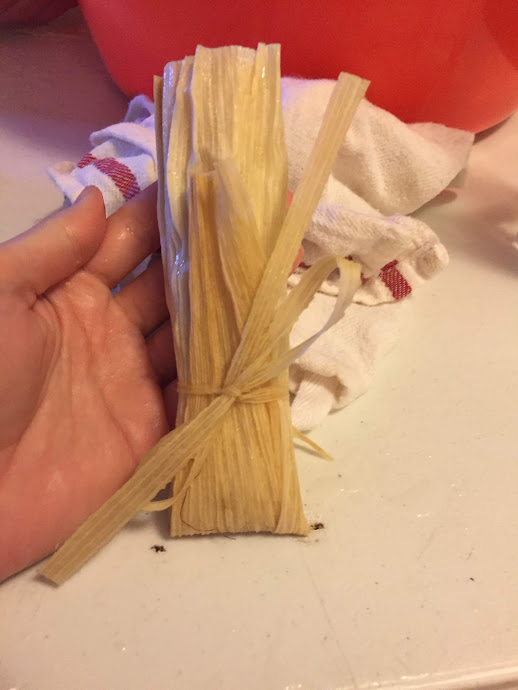
Tamales don’t have to just be a winter food. However, the labor-intensive process means that if you’re going to make them at home, they’re a special-occasion food . . . and a dish best made as a group. The last Christmas before COVID, John and I hosted a tamale-making party, and it remains one of my happiest holiday memories. I’m still sad I never had one more opportunity to host a Christmas tamale gathering in Texas. I associate tamales with winter holidays more than any other, and they are a gift that can last for months. With the filling wrapped in corn husks, they can be frozen and easily re-steamed (or microwaved) for a delicious meal in those last days of winter and earliest days of spring, when the holidays are long gone but things feel a little bleak.
The fruits of our labor, Christmas 2019
Cheshire cat grin between bare pecan branches— the waxing moon
Sandra Cobb, Lifting the Sky: Southwestern Haiku and Haiga, ed. Scott Wiggerman and Constance Campbell. Dos Gatos Press, 2013.
Note: In Lifting the Sky, this haiku appears in the Spring section. However, I interpret bare branches as a winter kigo, and thus have placed it as such.
Although I encountered a number of challenges while working on this post, I feel inspired to keep going with the regional theme. However, I can’t possibly be an expert on all geography-specific foods, even in my own country! If you’re interested in putting together a guest post similar to what I’ve done here, please contact me. I’ll also put up a post with formal guidelines sometime in the next week or so.
Before reading your haiku, please say your name or pen name and, if comfortable, where you’re writing from
Please read each haiku twice
Haiku should mention food, and connect to the transitional aspect of seasons, with an emphasis on autumn
Submissions that do not follow these guidelines will be disqualified
In Gratitude Thanks to the anonymous doner who bought me three coffees this weekend! They donated after I sent the podcast to be mixed and edited, so I couldn’t thank them at the top of the episode, but I will for the next one!
I forgot to mention in the intro, but this month, project supporters will get a recipe for Christine’s Mango Trio Pie.
On the blog Visit https://culinarysaijiki.com/ for long-form essays and commentary on food haiku. The most recent post is about debatable food season words. Please join the conversation and offer your insight!
Join the conversation I’m excited about the requests coming in to join the podcast! If you want to record a conversation, go to the form on the website: https://culinarysaijiki.com/join-the-conversation/