Category: writing

  • Chapbook Interview: Lenard D. Moore

    Chapbook Interview: Lenard D. Moore

    If you’ve been following any of my social media this month, you know that I’m thrilled to be in the company of Lenard D. Moore as part of the Cuttlefish Books 2023 Summer Book Launch. Lenard is a military veteran, executive chair of the North Carolina Haiku Society, founder and executive chair of the Carolina African American Writers Collective, and the author of several books.

    Although Lenard and I only had the chance to meet briefly at HNA, I have long admired the depth, breadth, and skill of his haiku. His attention not just to the details of the present, but also to the stories of the past, reflects a sense of artistic discipline that’s worth emulating. In celebration of his forthcoming chapbook, A Million Shadows at Noon, I wanted to feature him here to learn more about his process with this new collection. Read on for the full interview.

    Cuttlefish Books is currently in the preorder period for the summer 2023 chapbook series. You can reserve your copy of Lenard’s book, A Million Shadows at Noon, or buy the whole bundle of three!

    AW: What is the thematic focus of A Million Shadows at Noon? What compelled you to create this chapbook?

    The thematic focus of A Million Shadows at Noon is brotherhood, family, love and unity. I was compelled to create this project, because I drew inspiration from such a significant historical event. It was so powerful to see so many Black men come together and march for important issues. By now, I hope you know that I am referring to the Million Man March, which will celebrate its thirtieth anniversary in 2025. I wanted to do something innovative with the haiku form or a haiku sequence, an extensive of my poetic risks with my book, Desert Storm. Perhaps, I need to write one more book-length poem, employing the haiku form. To that end, maybe there is a trilogy in the making. Let’s see what happens with my future work.

    AW: What are the particular challenges of writing a haiku sequence? On the flip side, what is it about writing sequences that you find inspiring?

    The challenges of writing a haiku sequence are varied. Firstly, I had to ensure that all of the haiku resonate as individual poems. Secondly, I had to ensure that I was writing the same poem again and again, if you will, or similar poems. Thirdly, I had to ensure that all of the haiku linked some kind of way. Fourthly, I had to ensure that the poems worked in chronological order. At least, that is the way I saw the sequence developing. Fifthly, I had to ensure that the natural world played a major role in the sequence. Sixthly, I had to ensure that I infused rhythm or musical elements throughout A Million Shadows at Noon. Seventhly, I had to ensure that I employed strong verbs in the haiku sequence. Eighthly, I had to ensure that the contrasts were effective throughout the sequence. Ninthly, I had to ensure that the symbolism worked well. Tenthly, I had to ensure that the poems told a story. Tenthly, I had to ensure that the haiku sequence was original. Eleventhly, I had to ensure that the poems did not reveal everything. Twelfthly, I had to ensure that I employed vivid imagery. Of course, there are other elements and characteristics that I strove to employ in the sequence.

    AW: How do you perceive the difference between a structured haiku sequence versus a less structured collection of haiku addressing common themes?

    The difference between a structured haiku sequence and a less structured collection of haiku addressing common themes is that the structured haiku sequence unfolds like a novel. It must work as a whole work, reeling in readers and closing with a surprise ending. The sequence should address the five who, what, where, when and why. The less structured collection of haiku does its own thing.

    AW: Was this chapbook one you worked on over a period of months or years? Or did it come to you fairly quickly?

    A Million Shadows at Noon came to me quite quickly. I think I wrote the poems over a weekend. Of course, I worked on ordering the poem. I am sure I tweaked some of them. Many of the poems originally work, because I felt like I was in a writing zone.

    AW: What was your editing process like? If you decided to cut poems, how did you make that choice?

    My editing process was to cut out or delete any poems that I was might be weak or did not work with the sequence. I also take a close look at the musical elements and how the poems might do something new.

    AW: In the English-language haiku world, we are often taught that haiku should come from a moment in daily life. The emphasis on the haiku moment is often overemphasized, even though both the classical and contemporary editions are filled with counterexamples. I imagine that when working on a narrative sequence, many of these haiku did not come from a specific moment. To what extent was your direct experience relevant to this collection? How did history, or the lives of other people, factor into your writing?

    History certainly plays a role. Interviews play a role. What I see plays a role. For my book, Desert Storm, all of those factors played a role. With Desert Storm, photographs also played a role, though interviews mostly worked. Of course, I am a Veteran. To that end, I have had training, too.

    AW: What went into the design process for the cover art? How did you use color and shadow to reinforce the thematic focus of the poetry?

    The publisher did an excellent job with the design process for the cover art. I thoroughly like the colors red, black and green and what they symbolize. In the 1960s and 1970s, those colors were very important in the Black community. I do not go into what each color symbolizes. Maybe my readers, students and scholars will be inspired to do research. I hope so.

    AW: Is there anything I haven’t asked that you would like to say about this book?

    I hope the book will garner reviews and trigger discussions of it. I also hope the book sells well. In addition, I hope the book will be taught in classrooms and considered for book clubs and libraries.

    More from Lenard D. Moore
    Listen to Lenard’s interview as part of Grace Cavalieri’s The Poet and the Poem series: link to mp3.

    Listen to “Gardening with Poet Lenard Moore” on the 27 Views podcast: episode link.

    Read Crystal Simone Smith’s “Mentoring a New Generation of African American Haiku Writers: In Conversation with Lenard D. Moore”: Project MUSE link.

    Lenard is the featured guest poet in Upstate Dim Sum Fall 2022. Read more here: issue link.

    Read the news article about Lenard’s 1996 collection Forever Home: read here.
  • Now in Preorder: Postcards from Texas

    Now in Preorder: Postcards from Texas

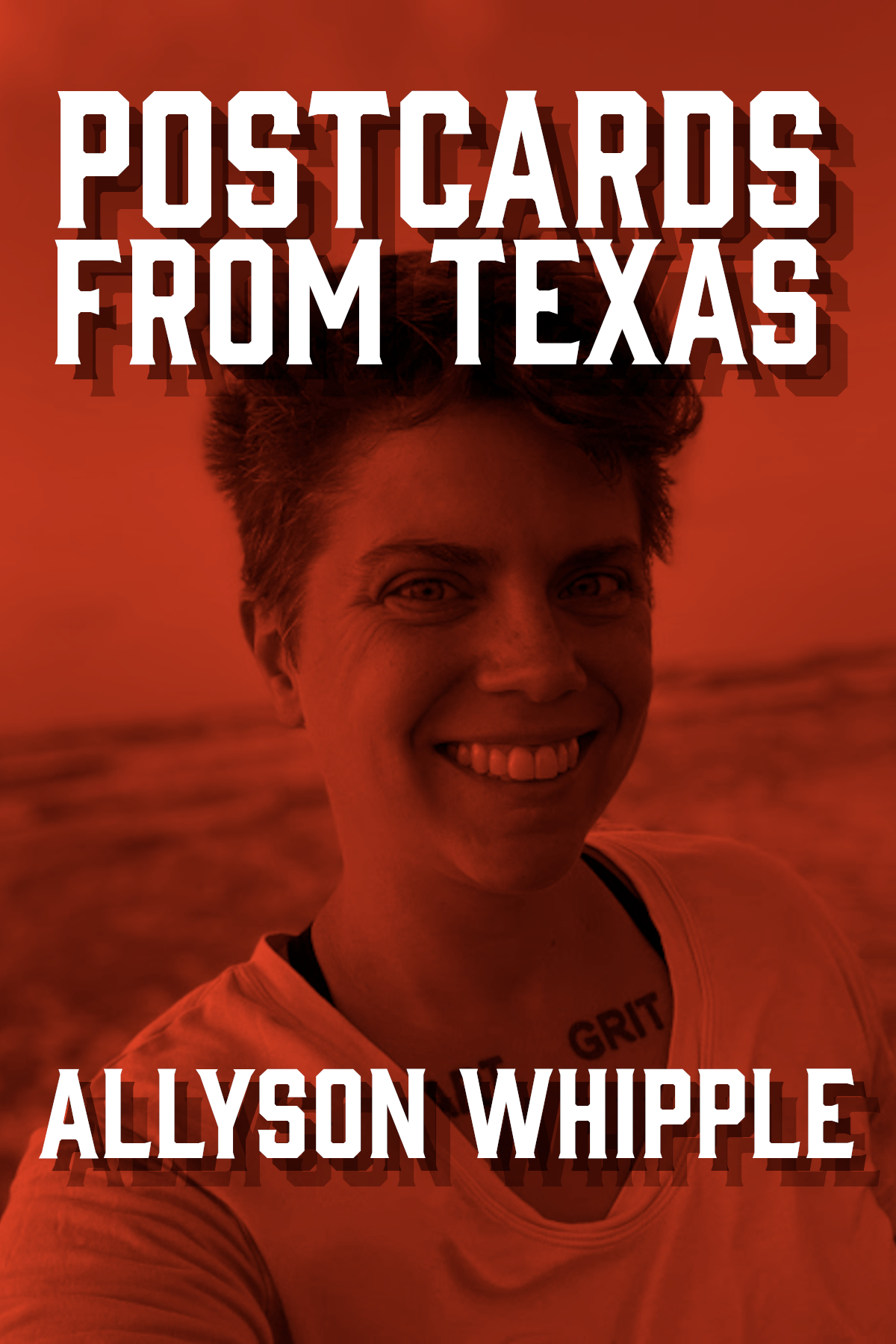
    I’m thrilled to announce the forthcoming publication of my third poetry chapbook, Postcards from Texas, now available for preorder from Cuttlefish Books. This chapbook is my first that is devoted exclusively to haiku, and represents the shift in my creative focus since 2020. You can find the preorder link here: https://cuttlefishbooks.wixsite.com/home/2023-summer-book-launch.

    The haiku in Postcards from Texas were mostly written in the second half of 2021 and the first half of 2022, the last 12 months I spent living in Austin. A few are older, going as far back as 2018. They were composed on hikes and camping trips, as well as dog walks around the city and picnics in local parks. My haiku address the changing political and physical landscape of a place I lived in, and deeply loved, for 15 years.

    I’ve now lived in Missouri for just over a year. I adore the city of St. Louis, I finally found a job I could enjoy, and there are gorgeous landscapes throughout the state. The past year has also been one of grief for a place I still adore with all my heart, a place I thought I’d live until I died. Putting this chapbook together this past spring was a way to find some resolution of those emotions surrounding my move.

    Postcards from Texas contains another form of grief as well. In 2015, I reconnected with my maternal grandfather for the first time in 20 years. (The reasons for that separation are complicated, and I have become wary of making family history public.) John and I are avid hikers, and I began sending my grandfather postcards from our hikes and camping trips all over Texas. He loved seeing the places we went. Four and a half years after my grandfather came back into my life, the universe took him from me again. He didn’t die of COVID, but I believe that he was a secondary casualty of the havoc the virus created around the world. There is no way to know fore sure, but I believe that if COVID hadn’t cause so many other problems, he’d still be here. I still feel sad that we didn’t get more time, and heartbroken that COVID protocols kept me from seeing him or even attending his funeral.

    Postcards from Texas is dedicated to my maternal grandfather, as well as all the other people I lost my last few years in Texas (all but one of them died before COVID). Putting this book together was a way to continue writing postcards could no longer go to their intended recipient. It’s not just a farewell to a place I loved; it’s a reckoning of the loss that I feel should never have happened when it did.

    Not only am I excited to be publishing a book, but I’m thrilled to be in the company of Lenard D. Moore and Julie Bloss Kelsey, the other two Cuttlefish authors included in the summer catalog. While you can preorder my book individually, I encourage you to get the bundle of all three authors. Lenard D. Moore is someone I consider a contemporary haiku master, with an incredible attention to detail. Julie Bloss Kelsey presents a compelling and humorous look at adolescence and the transition into adulthood, all in the short haiku form.

    (Note: As of this writing, the preorder site is having some issues on mobile browsers. It’s easier to order from the desktop version of the site. If you are trying to order from a mobile browser and running into issues, email me or send me a DM on Instagram, and I’ll help you out.)

  • Buson Challenge Days 1-12

    Buson Challenge Days 1-12

    The Buson Challenge is, in short, an attempt to write 10 haiku a day for 100 days. If you want to know more, view this clip from Mike Rehling’s 2020 talk “Finding Yourself in a Poem,” presented at the 2020 HSA Conference. (In case the link doesn’t work correctly, the part about the Buson Challenge starts at 14:45.) This year is my third go-around, and hopefully my first successful attempt.

    At the moment, I can’t locate the spreadsheet where I tracked my initial efforts. Maybe it got deleted somewhere down the line. But either way, I tried in 2020 and 2021, and neither time resulted in me completing the challenge. I don’t think I even got halfway through. Even when you’re giving yourself permission to write downright terrible haiku, it’s not easy to write 10 a day. The first two times, my biggest issue wasn’t getting the haiku down; I gave myself permission to write some truly awful stuff, which meant I could meet the quantity requirement. (Thankfully there is no quality requirement.) My biggest issue was simply remembering to actually get in 10 a day. I might get 3 in one writing session, 4 in another, and then get distracted and forget the rest.

    This year, after I announced Haiku Girl Summer (my limited-run online haiku journal), a haiku friend asked me if I’d heard of the Buson Challenge. I had completely forgotten about it! 2022 was a terrible year for my creative life, and writing 10 haiku a day for 100 days was not going to work with everything else I was juggling. But now I’ve settled into a job I like, the house is getting more organized, and I have the brain space to actually write again.

    As of this writing, I’ve successfully completed 12/100 days. I’ve definitely written more mediocre and genuinely bad haiku than good, though since most of the haiku are still in my notebook and not typed up, I don’t have sense of the overall proportion so far. But I’m surprising myself; the overall quality each day is better than anticipating. Most days, I manage at least one haiku that has potential.

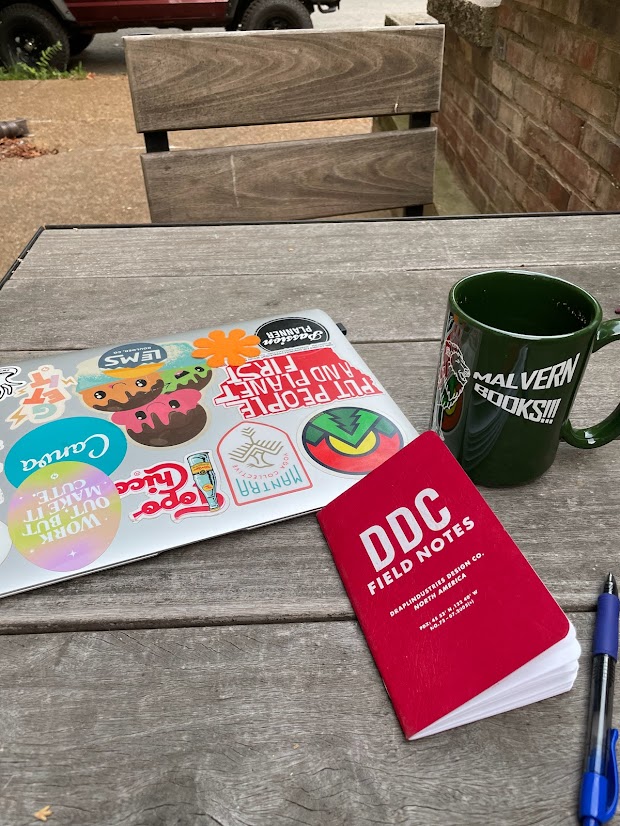
    Preferred notebook: Field Notes

    Notebooks filled: 1

    Places I’ve written:

    So far, I’m having a fantastic time with this challenge, and feel optimistic that I might actually get all the way through!

  • Support the Missouri Haiku Project

    Support the Missouri Haiku Project

    I’m excited to help spread the word about the Missouri Haiku Project, an initiative by Maryfrances Wagner, the poet laureate of Missouri. Maryfrances is accepting haiku from poets across the state to share on social media and in public venues. Many poets and teachers are offering workshops as well. The project runs until May of 2023, but why wait? Let’s spend the last of winter and all of spring celebrating haiku! Read on for Maryfrances’ guidelines, as well as all the other ways you can participate!

    All information below comes from Maryfrances Wagner. If you want to send her your haiku or contact her about other ways to participate, her address is in the guidelines.

  • Making Room for New Words

    While the details are still in progress, I’m excited to announce that I plan to release two new chapbooks in 2023! One will be a self-published collection of free verse, and the other will be my first haiku collection published by Cuttlefish Books, a small press out of my hometown of Cleveland, Ohio. Both chapbooks are devoted to my last few years in Texas, and as I move through the processes for each, I feel more and more each day like I am really closing that chapter in my life.

    As I plan for two new releases, and therefore lots of new copies, I want to make some space in my office for the new words coming through. So, for the month of February, you can get my first two chapbooks for just $8.00 each . . . and that price includes shipping!

    While I’m definitely not a minimalist, Marie Kondo’s work has always spoken to me. I’ve also always just loved the way it feels to clear out the past to make more space for the present. Even something as simple as zeroing out my inbox leaves me feeling energized and inspired. My first two chapbooks will always be dear to me. I still believe in those poems, and I will always keep copies. Yet this June will be 10 years since the publication of We’re Smaller Than We Think We Are, and seven years since the publication of Come Into the World Like That. So much has changed in that time. Those books represent very different places in my life’s journey. I will always love them; I will always be proud of them. It’s also time to make more room on my shelf for this next phase of my poetic journey.

    This sale will only last until February 28th, or until I sell out. So if you’ve always been eyeing a copy of either of these, grab one now!

  • Introducing the Culinary Saijiki

    As they say in the current parlance, it’s been a minute. Last summer, after the writing intensive I was part of wrapped up, I just felt a need to stop. Stop pushing, stop trying so hard. Just be quiet and see what happens.

    And quite a bit happened. I earned my Level 1 comprehensive teacher certification from Peak Pilates. In the interest of diversifying my skill set, I also got a certification from POP Pilates. (So much for doing less . . .) In February, I started teaching Pilates part-time on the regular. And the biggest change is that my partner and I decided to leave Austin and move to St. Louis, Missouri. As of this writing, I’ll only be in town for about six more weeks, and I’m doing my best to soak up everything I love about Texas.

    While I was excited to focus on my movement practice after spending so much time on writing, and while I am also looking forward to a new city, my poetry life had gotten a little stagnant. I was still writing, submitting, and publishing haiku, and became an active member of the Austin Haiku Study Group. But I was looking for more.

    Cornmeal whole-wheat waffles. Definitely poetry-worthy.

    About a month ago, my waiting paid off. I got the idea for a new project: The Culinary Saijiki. As most people who read this blog probably know, I’m a big fan of food (eating more so than cooking). I’m also interested in the ways in which English-language haiku practitioners approach the seasons in their haiku practice. I realized that food is one way in which people can connect to the seasons, and decided I wanted to go deeper into exploring that connection. I launched the first blog post earlier in April. (I planned to announce it here that same week, but hey . . . I’m moving and wrapping up the semester. Things are a bit hectic.)

    In addition to the blog, I’ve also decided to start a companion podcast, where I talk to haiku practitioners about the ways in which food shows up in their work. I’m already in the process of sorting out my first guests, but I’d love to hear from the rest of the haiku community. If you are a haiku poet, or know a haiku poet, who might like to have a conversation with me, the Join the Conversation page has the information you need to get started. The podcast launches in June, and I’d love to have a few conversations recorded in advance so I can sustain momentum in the midst of my big move.

    I’m excited for this new facet of my creative life. I still prefer to keep this site more general, so I’ll only crosspost when I have major announcements. If you want to stay updated, head over to The Culinary Saijiki and subscribe!

  • Notes on Negotiating for a Car

    Five years ago!

    As I finish this post, I’m thinking about the meme that complains about the essay that inevitably comes before a recipe on a poetry blog. So I’m going to lead with John’s four key tips for negotiating a car. If you want the context for why I have car negotiation tips on a poetry blog, the essay will be at the end.

    Four Tips That Served Me Well in Auto Dealership Negotiations

    1. Make sure that you have access to the full amount of money for the car you want to buy. If this is a private sale, always carry cash–even if the amount is a little unnerving. If it’s a dealership, make sure you have a check.
    2. Initially offer 30% below asking price. They will scoff, and you will remind them that you have all the money to pay 30% below asking price right now.
    3. They will come down, inevitably. Private people are persuaded by hundred dollar bills, and salespeople prefer less profit to no sale.
    4. If they resist, gesture toward leaving. This both is and isn’t a bluff. There are always other cars, and you can in fact look elsewhere. This is not your dream car. It is a mass-produced machine.
    Why Have I Posted Car Negotiation Tips to a Poetry Blog?

    You are probably wondering what negotiating for a car has to do with poetry, or anything else I talk about on this blog. And I’ll admit, I’m not usually one to talk about finance, or finance-related topics, in any of my writing. I have, however, written a number of poems about driving. And this morning, I realized I’ve been a happy Subaru owner for half a decade! I bought my preowned Outback in the summer of 2016, and even though the car is now 12 years old, it’s still going strong!

    I’ve always been slightly ashamed to admit that I paid full sticker for the 2008 Volkswagen Beetle I had before the Subaru… that one I also bought preowned in 2011, but though it was only a year older than the car I now have, within five years, my beloved convertible Beetle was sadly proving to not be a reliable vehicle. Each year, one of the window regulators broke. In the last year I owned it, the trunk wouldn’t work, the rear window fell in, and the rear struts went out. By the summer of 2016, I was ready to cut my losses and move on.

    Of course, being embarrassed over paying full sticker, I was reluctant to go car shopping again. Words cannot express how much I loathe having to negotiate for anything. The one and only time I had to negotiate for my salary, I honestly felt like I was going to die. I am not being hyperbolic. I would rather have a root canal than negotiate for anything. I was aware, however, the extent to which I’d really lost out by paying full sticker for my Beetle.

    John happened to be in Morocco when this whole excursion was happening, but over Facebook message, he wrote me an excellent negotiation outline that served me well. I followed it step by step, and got a car I wanted at a shockingly low mileage, especially for Austin, where you are lucky to find a used Subaru with less than 100,000 on it already.

    Over the years, friends have asked me for the method, but as I only used it once, I didn’t commit it to memory. However, it was useful. And at some point, I will have to buy another vehicle… but I only hit 100,00 miles on my Outback in December 2019, and I’m angling for 300,000 before I get a new vehicle. But between people asking for negotiation tips, and the difficulty of finding old information in the Facebook messenger interface, I’m reproducing the negotiating outline here, for anyone who wants it. May the odds be ever in your favor when it comes to a vehicle negotiation.

    (Also, may you never have to wade through five years of old Facebook messages to find the one you are looking for. This might be the most time-intensive blog post I have ever written, just because of the terrible Messenger interface.)

  • June Poetry Contest

    Photo by Michelle Leman on Pexels.com

    “Do you always watch for the longest day of the year and then miss it? I always watch for the longest day of the year and then miss it.”

    Daisy Buchanan, The Great Gatsby by F. Scott Fitzgerald


    Let’s try not to miss the summer solstice this year! In honor of the official transition into summer, write a poem on the theme of daylight. Let your poem span at least one entire page.

    Email your poem to allyson@allysonwhipple.com by 11:59 pm on June 20th (the summer solstice!). The winner will receive a gift certificate to the independent bookstore of their choice, or I will make a donation in their honor to a nonprofit.

    View past contest winners here.

  • May Poetry Contest Winner

    My poetry contest continues to bring amazing poetry entries from an international audience! I truly never thought I’d be getting responses from other continents.

    This month, the winning poem comes from Medha Goel, a poet living in India. Medha posts short poems under the instagram handle of @whyj_st.

    The $25 prize will be send to Medha directly.

    Medha’s poem was created using page 242 of Like a Charm by Karin Slaughter.

  • May Poetry Contest: Blackout

    Photo by Filipe Delgado on Pexels.com

    Maybe you tried to write a poem a day during National Poetry Month, and now you’re feeling a little tapped out. When I want to create but don’t feel I have anything to say, I like to turn to blackout poetry. If you’re unfamiliar you can check out “The History of Blackout Poetry” and “Erasure and Blackout Poems: Poetic Forms.”

    This month, create an erasure or blackout poem. If you’re struggling to choose a source text, consider a long-form newspaper or magazine article. You can draw over a hard copy source text, or use your word processing software to black out original material.

    You can send your poem as a Word or PDF file; I will also accept .jpg and .png files if it makes more sense to send your poem that way. Please also include the name and author of the source text in your submission.

    Email your poem to allyson@allysonwhipple.com by 11:59 pm on May 20th. The winner will receive a gift certificate to the independent bookstore of their choice, or I will make a donation in their honor to a nonprofit.

    View past contest winners here.