- The breakfast options at Mariachi’s II (St. Louis City)
- The fish tacos at Taco Buddha (University City, MO)
- The tortas at Chava’s (St. Louis, MO and Edwardsville, IL)
- The sheer variety of classic and novelty items at Sol de Mexico (Carlinville, IL)
- The carnitas at Cuatros Amigos (New Berlin, IL)
Tag: food
-

The Best of It: Mexican Food in the Midwest Edition
-
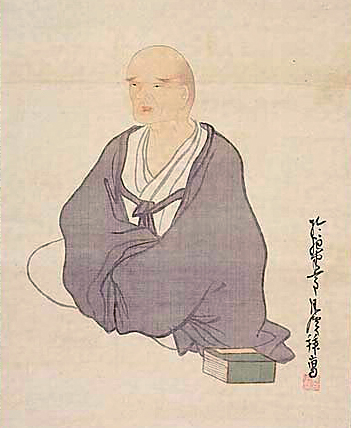
S2E8: Buson, Translation, and Food Part 2
Highlights from Poetry Pea
I’ve learned a great deal from Patricia’s two-part conversation with Janice Doppler about the concept of zoka in haiku. I think it’s her best workshop yet! Be sure to check it out, so you’ll be ready to submit your haiku when the submission period opens.
Part 1 link: https://poetrypea.com/s6e31-zoka-how-to-use-it-in-your-writing-part-1-featuring-janice-doppler/
Part 2 link: https://poetrypea.com/s6e32-zoka-part-2-a-tool-for-all-writers-featuring-janice-doppler/
Postcards from Texas is available now!
You can buy my new chapbook, Postcards from Texas, one of two ways:1. Purchase from Cuttlefish Books at this link: https://cuttlefishbooks.wixsite.com/home/poetry-series
2. Email me at allyson@allysonwhipple.com to order a signed copy.
On the Blog
A long-form essay about the challenges of reading haiku in translation. Read it here: https://culinarysaijiki.com/2023/09/06/accepting-the-challenges-of-translation/Buy Me a Coffee
If you would like to make a donation to cover production costs, visit https://www.buymeacoffee.com/culinarysaijikiJoin the Conversation
This season, I am welcoming both podcast guests and guest bloggers. If you’re interested in joining one or both, visit https://culinarysaijiki.com/join-the-conversation/ for details.Looking Ahead to Season 3
I’m already preparing for Season 3 of The Culinary Saijiki. I want to create a full 52 weeks of blog posts and podcasts episodes centered around the theme of “Feasts and Festivals.” My goal is to curate a global celebration of food and haiku in 2024, focusing on everything from bombastic national holidays to sacred religious traditions. To do that, I need your help! Start thinking about blog posts or podcast episodes you’d like to create, and be on the looking for full details soon.Theme Music
“J’attendrai” by Django Reinhardt, performing at Cleveland Music Hall, 1939. This recording is in the public domain. Hear the whole song at https://clevelandhistorical.org/files/show/6045. -

The Best of It: Summer Restaurant Meals Edition


- The gnocchi with pesto (seasonal special) at Dominic’s (No photo, sorry . . . It was the kind of dining establishment too fancy for millennial food pic nonsense.)
- The smash tacos and split and melt at Mac’s Local Eats
- The spicy goat cheese toast and the fancy avocado toast at Goshen Coffee
- The barbecue chicken salad at City Coffee and Creperie
- The waffle & chicken at Taste of Belgium (Cincinatti)
-
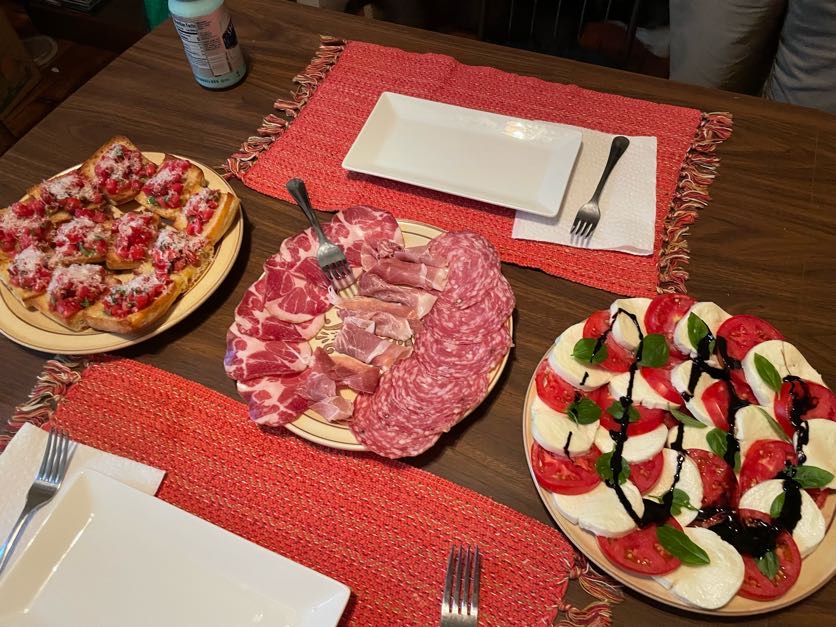
The Best of It: Summer Meals Edition


- Cheesecake with foraged blackberries
- Antipasto buffet
- Steak with foraged porcini mushrooms and roasted potatoes
- Spaetzle with foraged mushrooms and backon
- Cevapi with potatoes and ajvar
-

Classifying Animals as Meat
One of the research questions that surfaced for me earlier this year was when the presence of an animal in haiku meant that it was a food poem, and that I should add it to my collection. I wrote an initial post about meat in haiku during Season 1 of this project, but that question hadn’t occurred to me at the time.
Through reading and reflection, I’ve established some guidelines to help me decide whether or not an animal haiku is also a food haiku. Before I get into that, though, I feel the need to establish that these guidelines only apply to animals that are commonly used as food. I realize that to some degree, what constitutes an edible animal is culturally specific (such as crickets, guinea pigs, or the ortolan bunting), and I do my best through research to avoid my own cultural biases. However, there are certain animals that we rarely (if ever) see used as food. For example, eagles, hawks, and vultures are not likely to wind up on a rotisserie. Some animals simply do not need to be considered, and if I did find a haiku in which a skunk was roasting on a spit, I would certainly add it to my collection, if for no reason other than novelty.
Here are my criteria for when an animal could be considered meat:
- The haiku also references hunting, trapping, or fishing.
- If the animals are in captivity, they are on a farm or ranch, with the implication that they are being raised for food.
- The haiku references cleaning or butchering an animal, the initial stages of preparation for food.
- The haiku references cooking or preserving the animal.
The above criteria all indicate the intent to eat the animal, in one way or another. Even if the poet won’t necessarily be the one eating, the reader understands that the animal in the poem is one likely to be consumed by someone.
Next I’ll discuss six example haiku: three that indicate the animal is meat, and three that do not. All of these classical examples are translated by R.H. Blyth, and I found them in the haiku anthology from the Everyman’s Library Pocket Poets series.

The octopus trap:
Bashō
Fleeting dreams
Under the summer moon.The above haiku starts with the image of an octopus trap. In Japan, these traps are called takotsubo; they are traditionally ceramic vessels attached on a rope and cast into the ocean. Octopi hide in the pots, or use them as nests, making them easy to capture. Since this haiku describes a form of fishing, with the intent of eating the octopus, I consider this a food haiku.
(Although takoyaki is my favorite Japanese street food, I admit that the thought of an octopus thinking it was getting a nest and then being turned into food makes me want to not order it for a while!)
A woman
Bashō
Under the azaleas placed in the pot,
Tearing up dried cod.In this haiku, the fish is caught and dried. It’s long dead, and has been preserved for the future. In fact, this one might be a debatable food haiku because the woman mentioned in the first line appears to be using the dried fish as azalea fertilizer rather than food! (Azaleas are also toxic to humans; the poem does not reference the fish being used for garden fertilizer.) However, since dried cod could be used as food, I’m including it here.
In the fisherman’s house
Shiki
The smell of dried fish
And the heat.In Shiki’s haiku, we don’t see the dried fish, but we smell them; one can only imagine how the summer heat makes that more intense. The first line references a fisherman, someone who’s job it is to catch food not just for himself, but for others as well. The scent of his trade permeates his whole life, including his dwelling space. Since this is a haiku that is again about the catching and processing of fish, it is a food haiku.

A school of trout
Shiki
Passed by:
The colour of the waterIn contrast to Shiki’s other haiku in this post, here, the trout simply swim by. Although trout is a common sight at grocery counters and on restaurant menus, here, there is no indication that the speaker of the poem is doing any fishing. We do not see an attempt to lure or trap them. The speaker is sitting by a river, but the fish are simply there, and then they are not. To that end, I cannot consider this a food haiku.
A trout leaps;
Onitsura
Clouds are moving
In the bed of the streamAgain, we have a trout, which we can consider a food source. However, as in the previous haiku, Onitsura presents the trout as leaping while clouds move overhead. We do not see anyone, either the speaker or an observed third party, doing any fishing. There is no sense that the trout is leaping toward its doom. Instead, we have the haiku moment of the interplay between water and sky. Once again, it’s not a culinary poem.
In an old well
Buson
A fish leaps up at a gnat:
The sound of water is darkFinally, we have a haiku from Buson in which the fish is the one doing the hunting. While we don’t know whether the fish was successful in catching the gnat, we do see it in action on its own quest for sustenance. Since no human is in pursuit of this fish, it’s not a culinary haiku.
I’m interested in hearing your thoughts. Do you agree or disagree? Let me know in the comments below!
By the way, I am happy to announce that the podcast is FINALLY available via Apple Podcasts! So if that’s your preferred player, you can find that link here: https://podcasts.apple.com/us/podcast/the-culinary-saijiki/id1632986084
-
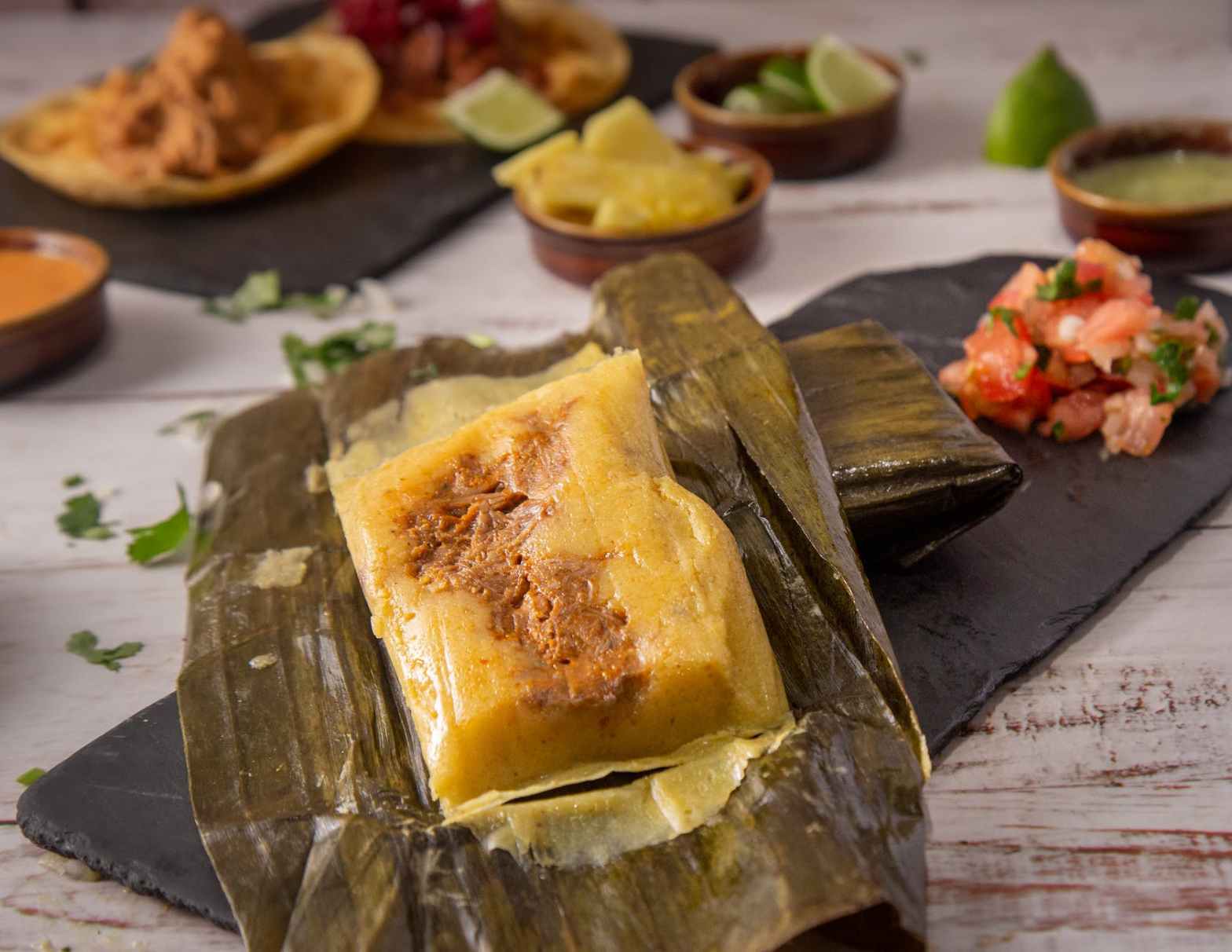
S2E3: Form, Content, and Tamales
Community Open Mic Airs August 30th
Click the Send a Voice Message button here: https://podcasters.spotify.com/pod/show/culinarysaijiki/message
Deadline: Saturday, August 26th at 11:59 pm CST.
Theme: Transitions
Editorial Decisions: Cherry and Plum Blossoms
Read the latest blog post here: https://culinarysaijiki.com/2023/07/12/editorial-decisions-cherry-and-plum-blossoms/
Join the Conversation
This season, I am welcoming both podcast guests and guest bloggers. If you’re interested in joining one or both, visit https://culinarysaijiki.com/join-the-conversation/ for details.
Support the Project
Buy me a coffee at https://www.buymeacoffee.com/culinarysaijiki. You can also help by sharing this podcast with anyone who you think might appreciate it.
Theme Music
“J’attendrai” by Django Reinhardt, performing at Cleveland Music Hall, 1939. This recording is in the public domain. Hear the whole song at https://clevelandhistorical.org/files/show/6045.
-

Food, Haiku, and Your Roots: 2023 HNA Presentation
An Overview of Six Seasons: A New Way With Vegetables
Read the most recent community blog post here: https://culinarysaijiki.com/2023/06/28/an-overview-of-six-seasons-a-new-way-with-vegetables/Join the Conversation
This season, I am welcoming both podcast guests and guest bloggers. If you’re interested in joining one or both, visit https://culinarysaijiki.com/join-the-conversation/ for details.Support the ProjectBuy me a coffee at https://www.buymeacoffee.com/culinarysaijiki. You can also help by sharing this podcast with anyone who you think might appreciate it.Theme Music“J’attendrai” by Django Reinhardt, performing at Cleveland Music Hall, 1939. This recording is in the public domain. Hear the whole song at https://clevelandhistorical.org/files/show/6045.
-

The Best of It: Wait, It’s Not Friday? Edition
- Breakfast for dinner
- A well-constructed spreadsheet
- Getting all the salt and sludge washed off of my car
- The You’re Wrong About podcast
- The If Books Could Kill podcast
-

M.A. Dubbs: Pink Tamales
In Gratitude
Thank you to Lorraine who bought me three coffees in August! I’m now 28% of the way toward my goal of covering website costs for the year. Those who want to support the podcast financially can do so at: https://www.buymeacoffee.com/culinarysaijiki/.More from M.A. Dubbs
- View M.A.’s website here: https://melindadubbs.wordpress.com/
- Hear M.A. read a haiku on the Culinary Saijiki community open mic episode: https://culinarysaijiki.com/2022/08/30/bonus-episode-community-open-mic-transitioning-from-summer-to-fall/
- Buy M.A.’s chapbook, Aerodynamic Drag: https://www.amazon.com/dp/B08TC8KXY3?ref_=k4w_oembed_cstB6EXe36biq6&tag=kpembed-20&linkCode=kpd
Failed Haiku Food Issue
You can find the May 2022 Failed Haiku issue themed around food here: https://failedhaiku.com/2022/05/Theme Music
“J’attendrai” by Django Reinhardt, performing at Cleveland Music Hall, 1939. This recording is in the public domain. Hear the whole song at https://clevelandhistorical.org/files/show/6045. -
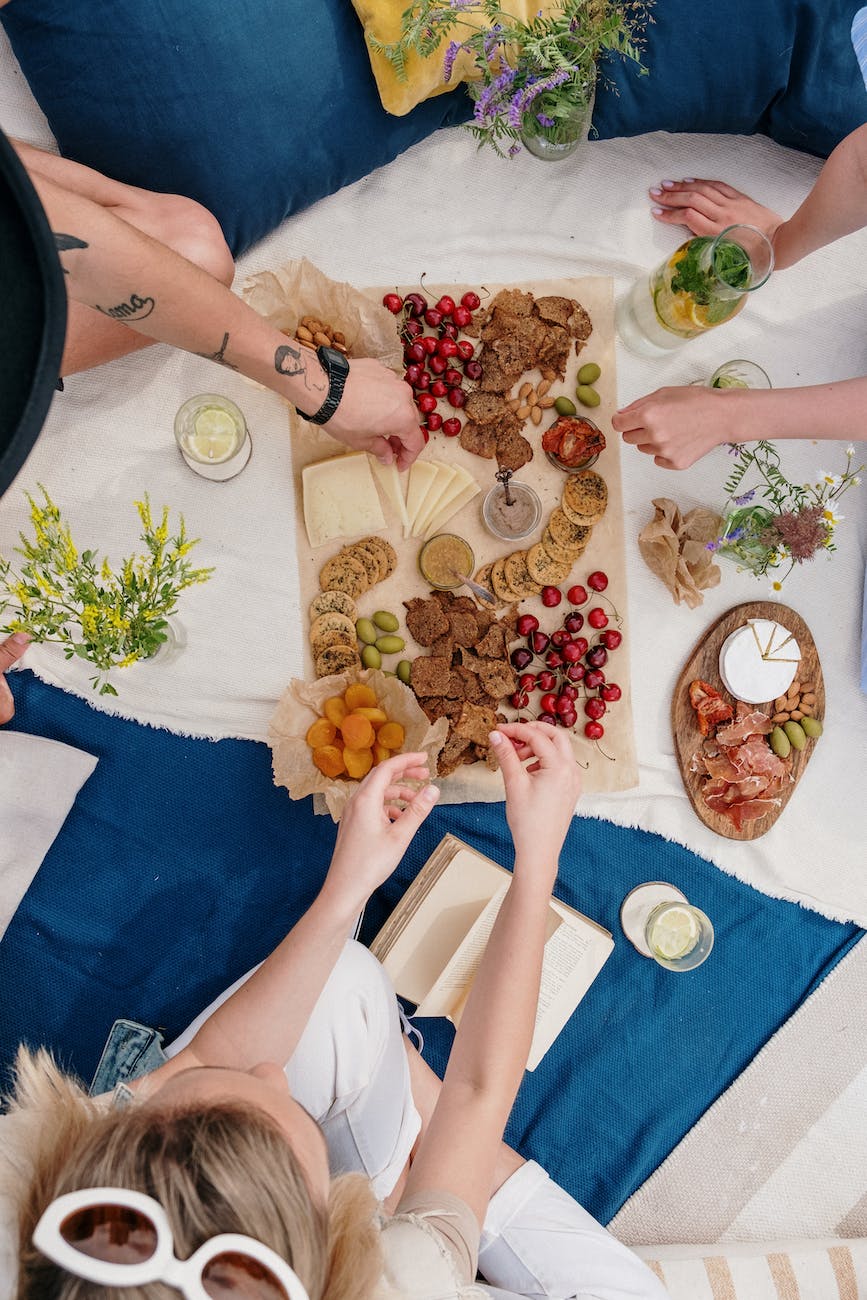
Dining Together
Thanks to Lorraine for the contribution of three coffees! I’ve now covered 28% of my web hosting costs for the year. I’ll be releasing the October bonus recipe next week, so if you want to make a contribution, now’s your chance!
The turn of autumn has me thinking about people gathering together to eat. Maybe it’s because I finally cooked a serious meal (French onion soup) in our new home. Maybe it’s because John’s birthday is just around the corner. Maybe it’s because I’m experiencing my first real autumn in over a decade, and the feelings of coziness it inspires. Either way, I decided to explore haiku in my collection that in some way reflect eating together. Oddly enough, only one of those haiku has a seasonal referent, and it’s summer! The rest best fit in the all-year category. But as always, these posts reflect my collection of food haiku and senryu at a particular moment in time; if I revisit this topic in a year, the seasonal distribution might look entirely different.
All Year
outside the food bank
Kim Goldberg, Charlotte DiGregorio’s Writer’s Blog
a ragman shares his crust
with a sparrowKim Goldberg has written an exceptionally tender haiku. Here is a man with next to nothing, yet still has it in his heart to share what little he does have with a small sparrow. While I’d initially intended for this post to focus on haiku about people eating together, I added this poem to the database early in this project, and I kept coming back to it as I was deciding what to write about this week. Per Higginson’s Haiku World, “sparrow” is an all-year term, and I don’t see any other seasonal referent, making it an all-year poem.

Photo by Caio on Pexels.com lover’s quarrel
Jim Kacian, Kingfisher 3
a bit of shell
in the omeletThis poem can be read a few different ways. First, the quarrel could be caused by the presence of a shell in the omelet. Second, the couple could have been quarreling, and the person who made the omelet leaves the shell in as a bit of passive-aggressive revenge. In a third interpretation, the person making the omelet is so flustered by the argument that they let the shell slip in unnoticed. Although there is no seasonal referent, this is nonetheless a poem that opens itself up to the imagination, which is one of my favorite things about a well-wrought haiku.
re-opening . . .
Barry Levine, Prune Juice #35
the server remembers
my standing orderThere is something about being a regular at a restaurant that feels special. Yes, the restaurant is part of your routine, but it’s that sense of consistency, the knowledge that the servers see dozens (if not hundreds) of people a day, and yet they still know who you are, and what you like to order. (Cue the Cheers theme song . . .) Barry Levine heightens that feeling by writing this poem in the COVID era. The restaurant has probably been closed for at least three months, maybe six, maybe even a whole year. Yet the server is still there, and that person still remembers. Because re-openings were different everywhere, there’s no seasonal referent in this poem, but that doesn’t make it any less heartwarming.

Photo by Chevanon Photography on Pexels.com tea tree swamp
Louise Hopewell, Echnidna Tracks #9
weary workers pause
to boil their billyI placed this poem in the all-year category, though I admit that my lack of knowledge about the southern hemisphere might be interfering with my understanding of the poem. This haiku required some research on my end. To “boil their billy” means to make tea. Here, we see laborers taking a pause to rest and enjoy some tea. Tea-drinkers tend to drink it all year, workers tend to work year-round, and thus I placed this poem all year. However, if I’m incorrect, please let me know in the comments!
shared coffee
Lori Kiefer, Haikuniverse, October 5th, 2022
all the stories
we don’t tellJust as devoted tea-drinkers can enjoy hot tea year-round, coffee drinkers usually take their beverage hot, even in the middle of summer. The avoidance of painful topics and/or the keeping of secrets also isn’t limited to a particular season. Lori Kiefer’s senryu does a beautiful job of showing a sense of distance even in physical proximity.
Summer

Photo by Yulia Rozanova on Pexels.com wind from the sea—
Pasquale Asprea, Haikuniverse, June 26th, 2022
I clean the green beans
with my motherThe act of shelling or cleaning beans can be a fun social activity. While it wasn’t something that happened in my family, I’ve cleaned a big garden haul with friends, many of whom shared fond memories of doing so in childhood. The green beans place this haiku in the summer. If you’re familiar with fresh sea air, it’s easy to feel the breeze, smell the salt, and feel the connection that comes from cleaning, preparing, or preserving food with a loved one.
I hope that as the weather gets colder and the days get shorter, you have plenty of opportunity to share good meals with people you care about.
(PS – A shout out to the wonderful folks a Kampai who know my favorite items on the menu.)