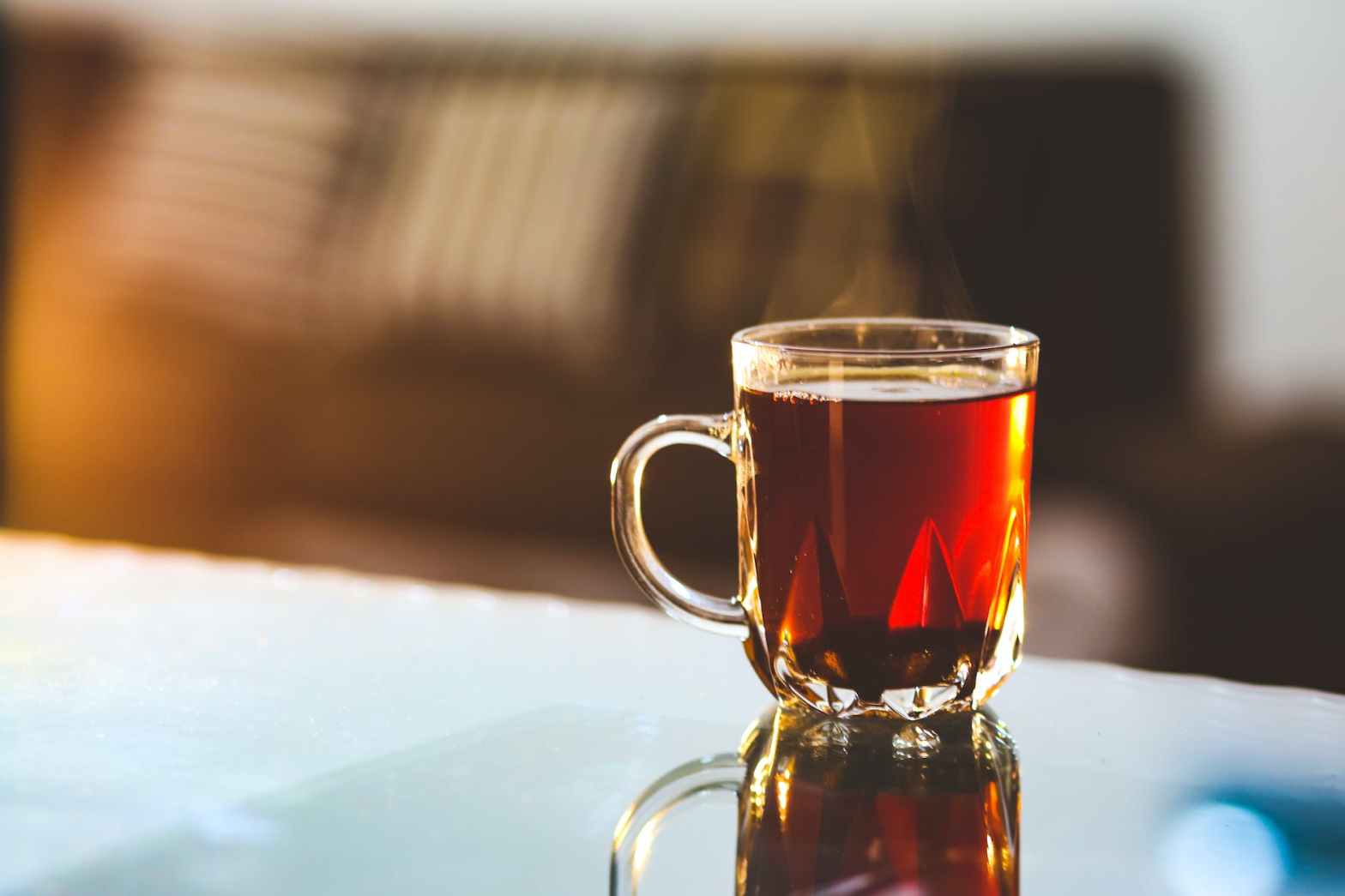
Welcome to a 25-part blog series in which I review (kind of) 100 different Earl Grey teas over the course of 2024. I wanted to do a big tea-based project, and ultimately, drinking a range of Earl Greys seemed like the best bet. 100 different Earl Grey teas is a lot, but really, I have to drink less than 10 a month, and if you knew how much tea I drank on the regular, you would realize that’s a perfectly reasonable challenge. Earl Grey is also a tea that doesn’t necessarily need milk or sweetener. It’s versatile, bright, and honestly, was a tea that took me a while to like. So challenging myself to really go deep into this style of tea seems like a fun way to develop my palate.
Each post will consist of four sections: a discussion of four teas I’ve tried, grouped by category, and then a breakdown of my progress on the tasting journey, including charts that show what I’ve drank across categories. I hope you enjoy this tea journey as much as I do!
Four Classics Earl Grey Teas
I define Classic Earl Grey as containing only two things: black tea and bergamot. Of course, there are a number of Earl Grey variations, and I have set up categories for those. For this initial post, though, I want to focus on four versions of the standard blend.
Eastside Earl Grey – The Steeping Room, Austin, TX
Eastside Earl Grey is at a distinct advantage, as it’s a long-established favorite. In fact, when I first tried Earl Grey back in 2006, I hated it. It actually made me throw up! It wasn’t until 2022, when I made an Earl Grey ice cream pie, that I tried the tea again. I went to The Steeping Room to buy their Eastside Earl Grey because I wanted to use quality tea as part of my pie. The pie was delicious, but with all the cream and sugar in the pie, I wasn’t sure I really loved the tea, or if the parts I disliked were mitigated. Of course, there was plenty left over, so rather than waste it, I started brewing it. To my surprise, I couldn’t get enough. I was finally an Earl Grey convert.
The Eastside Earl Grey uses real Italian bergamot, and I think both the real and the Italian make a difference. I understand why some tea companies make the decision to use artificial bergamot. But the way mashed potatoes from scratch are more satisfying than mashed potatoes from a box, real bergamot makes a better impression than artificial. Sure, there is a time and place for boxed mashed potatoes; in fact, they might scratch a sentimental itch. And there is a time and place to use artificial bergamot. But tasting an Earl Grey that uses a real bergamot was a game–changer.
Ultimately, this tea holds such a special place in my heart that it will be tough for any other Earl Grey to compare. This was the first tea I drank in 2024, and though it’s a familiar cup for my palate, it always tastes fresh.
Earl Grey Classic – Fortnum & Mason, London
It feels sacreligious to say that I didn’t like this blend. Fortnum & Mason is a legend. The bergamot smell was strong on the dry leaves, but I wrote in my tea journal, “It feels like as soon as the water hits the leaves, the bergamot washes away.” Of course, that’s not literally true. Otherwise there would be at least one cup with an overwhelming hit of bergamot. Certainly, though, that was how it felt over the course of drinking six cups of it, hoping that I would find something to like. But infusion after infusion, I couldn’t taste the bergamot once it was steeped.
Fortnum & Mason doesn’t specify on their website what kind of bergamot. The ingredients for this blend are “Tea, Flavouring.” (I admit that I love the simplicity.) Since it’s not specific, it’s tough for me to point to a specific reason why this tea didn’t work for me. I did also note how small the leaves were. Compared to the Eastside Earl Grey, which has big, full leaves (see, I told you this was the standard), these were tiny, and just didn’t look visually appealing either dry or wet. Again, there are no specifics about the tea, so it’s tough for me to make a definitive statement, but it certainly didn’t help things.
(Don’t worry, I had a much better experience with Fortnum’s Smoky Earl Grey, but that’s a topic for another post.)
Earl Grey Organic – Tea Market, Kansas City, MO
I appreciate that Tea Market includes the specific teas included in this blend. There are three black teas in this Earl Grey: Assam, Ceylon, and Nilgiri. In addition, they use Turkish bergamot instead of Italian. I tried to do some research on the differences between Turkish and Italian bergamot. Reading some scientific abstracts online, there are definitely some differences in the various chemical compounds. Unfortunately, I couldn’t get access to the full articles, so all I could discern is that Turkish and Italian bergamot are not exactly the same. But this is only the first post of the year, and I am confident that eventually, I can probably get access to some quality scientific information.
Like the Eastside Earl Grey, I found this blend to be incredibly well-balanced. I felt that the bergamot was more subtle than the Eastside Earl Grey. I’m not sure if that’s because of the specific chemical components of Turkish bergamot, or something specific to my palate. While I prefer a bolder level of bergamot, ultimately, this was still an enjoyable Earl Grey that I would drink again.
I find that there are two types of people who are resistant to traditional Earl Grey: those who do not like black tea, and those who do not like bergamot. For someone who is skeptical of Earl Grey and knows they don’t love bergamot, this might be a good one for them to try. It’s a great example of a bergamot that is flavorful without being aggressive. This could easily be a tea that converts someone to Earl Grey.
Earl Grey – Artful Tea, Santa Fe, NM
The kind folks at Artful Tea sent me samples of all four of their Earl Grey blends. Thanks to Karen and the team for supporting this project!
The classic Earl Grey from Artful Tea is similar in balance to the version from Tea Market, in that the bergamot is subtle, but the black tea is not overpowering. This is another version of Earl Grey that would be great for a skeptic who doesn’t love bergamot. I certainly understand that skepticism. When I first tried an Earl Grey in 2006 and got sick, it was because of the bergamot flavor. (Side note: since I began writing this blog post, I decided to give that brand another try . . . but that’s a post for another day!) In both this blend and the Tea Market blend, you can taste the black tea and bergamot easily; neither overpowers the other.
The Artful Tea approach to Earl Grey involves straight Yunnan tea rather than a blend of teas. In addition, like most blenders, it uses Italian bergamot. One of the things I noticed in my tasting was that sometimes bergamot tastes more toward the lemon end of the spectrum, and sometimes it tastes more orange. As someone who is more partial to lemon and less partial to orange, this is a blend that will have a regular place on my shelf. One of the things I should consider in future study is whether Italian bergamot has more lemon-related compounds than orange.
That being said, there are a number of factors that can influence the molecular structure of bergamot. Soil quality and climate conditions can have an effect on the fruits from year to year. We can’t just say Italian bergamot always tastes one way, Turkish always tastes another, and Greek a third way. There are no absolutes, and honestly, I think that’s lovely.
By the Numbers
As of this writing, I’ve tasted 8/100 Earl Grey teas. I need to taste 9 a month to stay on track, and with 10 days left to go in the month, that’s reasonable. I’m taking a little tasting break through the weekend to avoid boredom, and also to focus on the tasting homework for my tea sommelier training. (Yesterday I started sampling the delights from the Lunar New Year box from The Steeping Room, and today I am enjoying some samples from the My New Favorite Tea box.)

As far as categories go, I’ve sampled four classic Earl Greys, two Lady Greys, one Creme Earl Grey, and one special variation. I will elaborate more on those categories in future posts. My plan is to sample two more Lady Grey teas and have that be the focus of my next post. I’ll do my best to do four of the same category in each write-up, but I might not be able to do that if I want to stay consistent. We’ll see! If you have any recommendations for Earl Grey teas for me to sample, please leave a comment!

Support the Project
Enjoying this series? You can support my tea wish list here, or send me a DM on Instagram if you have samples you want to share! (I’m now realizing I don’t have a proper contact page on this site, but I’ll remedy that for the next post.)
For more tea content, check out my tea pairings playlist on YouTube.
Comments
14 responses to “The Earl Grey Year Part 1: Four Classics”
As someone who always drinks my Earl Grey (my favorite tea) with full milk or cream and either honey or raw sugar, will you be trying any of these options as you go or will they all be without any added elements?
Most likely I will drink them straight, which is how I prefer. I would says the 3 teas I gave solid reviews to would all hold up well to milk/cream. The folks at Artful Tea post a number of tea lattes on their social media, so they have probably blended theirs with additions in mind.
[…] Read previous installments here:The Earl Grey Year Part 1: Four Classics […]
[…] previous installments here:The Earl Grey Year Part 1: Four ClassicsThe Earl Grey Year Part 2: Four […]
[…] previous installments here:The Earl Grey Year Part 1: Four ClassicsThe Earl Grey Year Part 2: Four FloralsThe Earl Grey Year Part 3: Four More […]
[…] The Earl Grey Year Part 1: Four ClassicsThe Earl Grey Year Part 2: Four FloralsThe Earl Grey Year Part 3: Four More ClassicsThe Earl Grey Year Part 4: Greens and Tisanes […]
[…] The Earl Grey Year Part 1: Four Classics […]
[…] The Earl Grey Year Part 1: Four Classics […]
[…] The Earl Grey Year Part 1: Four Classics […]
[…] The Earl Grey Year Part 1: Four Classics […]
[…] The Earl Grey Year Part 1: Four Classics […]
[…] The Earl Grey Year Part 1: Four Classics […]
[…] The Earl Grey Year Part 1: Four Classics […]
[…] The Earl Grey Year Part 1: Four Classics […]