This was supposed to be a blog post about four Lady Grey teas. Because until this past Tuesday, I was living under the belief that Lady Grey tea was Earl Grey with lavender. I was living under this impression because the only tea named Lady Grey that I drink regularly is from The Steeping Room, and that contains lavender. But after seeing a number of Earl Grey and lavender teas that weren’t called Lady Grey, and also noticing that the Edith Grey from Big Heart Tea Company contained rose, I began to question whether or not I actually knew what the Lady Grey blend was supposed to include.
I ended up creating polls on Threads and my Instagram Stories soliciting input on what Lady Grey tea actually is. Some people shared helpful articles or left comments and voice notes. I learned two things from my polls:
- Lady Grey tea was in fact developed by Twinings in the 1990s. It’s a trademarked blend that includes lemon and orange peel in addition to bergamot.
- I’m not the only one who was confused about Lady Grey tea.
My Threads poll showed the greatest Lady Grey literacy; most people identified the blend as Earl Grey plus citrus, but over a third of respondents thought that Lady Grey contained lavender. (One commenter said they thought that Lady Grey simply contained less bergamot than regular Earl Grey, which is also a thing I have heard, but can’t remember seeing.)

On my Instagram stories, on the other hand, 75% of respondents said they believed that Lady Grey contained lavender, while only 25% correctly identified it as Earl Grey with citrus peel.

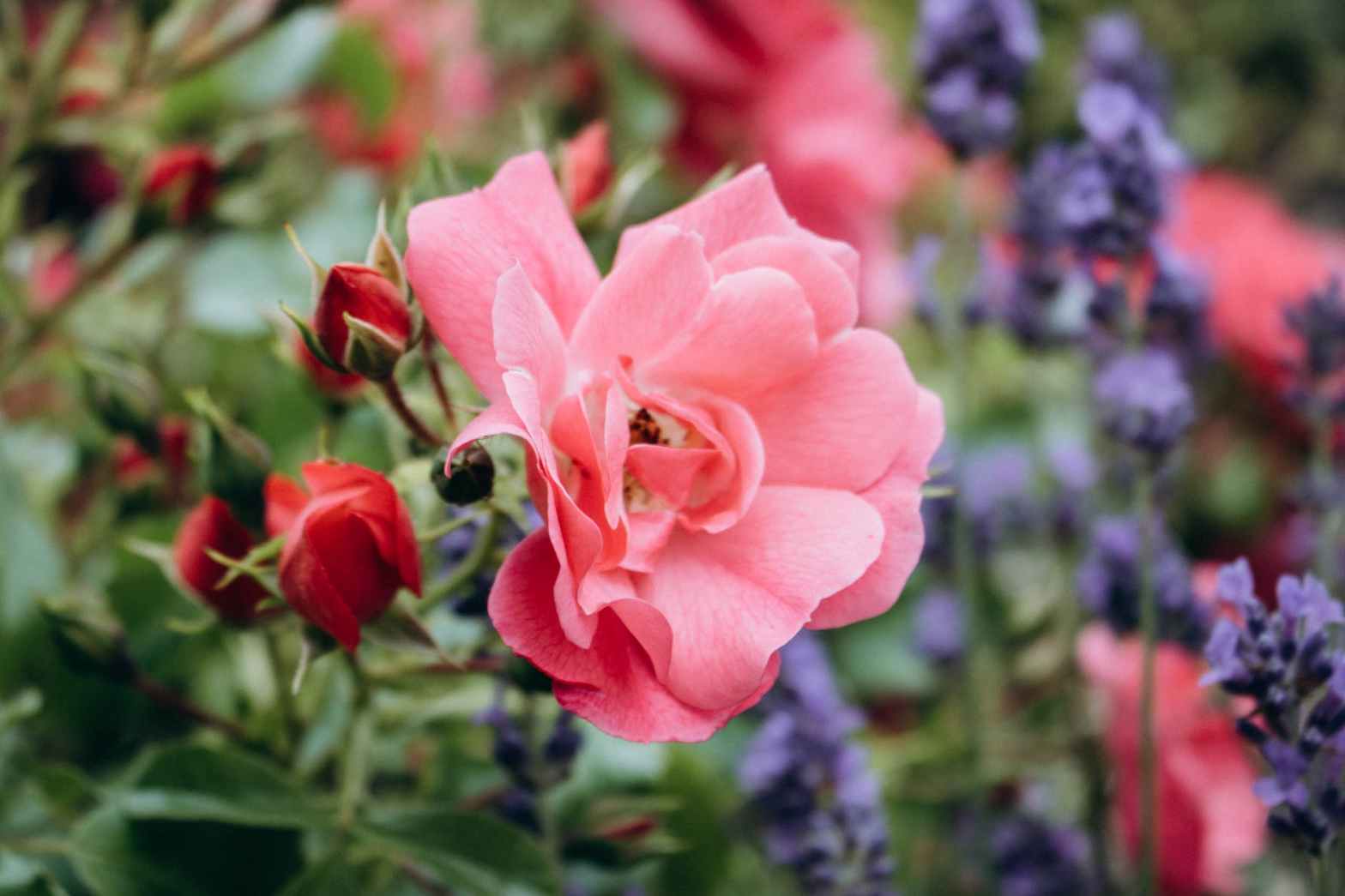
I had initially been tracking every floral Earl Grey as a Lady Grey tea, but now that I know otherwise, I have changed the category to Floral Grey. Rather than just have a category for Earl Grey with lavender, I created a more expansive title to focus on any sort of floral inclusion. I think Earl Grey is a fantastic base for any number of flowers, and I don’t want to pigeonhole too many blends in a miscellaneous category, so Floral Grey is the new category from here on out.
Four Floral Grey Teas
This week’s entry doesn’t just introduce the category of Floral Greys. I also get to write about two local companies! All of these companies have online ordering, allowing you to sample their teas even if you live far away.
Organic Lady Grey Black Tea, The Steeping Room, Austin, TX
Although billed as a Lady Grey, this is a lavender-based blend. The ingredient list includes black tea, lavender flowers, bergamot oil, and lavender extract. The dry leaves look absolutely gorgeous with a fragrance to match.
This blend has a mellow sweetness to it, almost like honey. I’m not sure what specific black tea is used in the blend, but it’s a nice, well-rolled full leaf, and I’m guessing it’s the characteristics of the tea bringing out that particular flavor. The ratios of bergamot and lavender also work well together. I find bergamot to be a little delicate, and because of that it can be overpowered by other flavors. But the folks at The Steeping Room have struck a solid balance. While their Eastside Earl Grey remains my favorite, this is an excellent tea for lavender-lovers.
Edith Grey, Big Heart Tea Co., St. Louis, MO
This is the only blend in this week’s update that does not include lavender. Per the Big Heart Tea Company website, Edith Grey tea contains single-origin Malawi tea, bergamot oil, and rose. I got this blend as part of the 12 Days of Cozy Tea calendar I bought back in December. (Since I was already doing a standard advent calendar, I saved the 12 days for the actual Christmas period, though I actually ended up saving this blend so I could drink it as part of the project.)
I really wanted to love this tea. Rose is an iffy flavor for me, but I always want to be able to champion my local businesses. While many of the teas in the Cozy Tea Calendar were fantastic, I’m sorry to say that the Edith Grey blend wasn’t one of them. Neither the bergamot nor the rose came through enough for me, and considering I often find rose overwhelming, that’s really saying something. The black tea base was excellent, but unfortunately, it dominated the rest of the inclusions.
I will say that among existing Big Heart customers, the Edith Grey is a popular blend, with 4.7 stars (out of a possible 5); the blend is also often sold out. Perhaps the amount that ended up in my Cozy Calendar teabag was not a representative sample; perhaps the physical proportions were unbalanced.
(Because I just can’t bring myself to be totally negative about a small, local business, I will say that there were other teas in the Cozy Calendar that I loved. The Winter Chai and Royal Treatmint were my favorites.)
Earl Grey with Lavender, Cornucopia Kitchen, Kirkwood, MO
I received a sample of Cornucopia’s Earl Grey with Lavender blend from a coworker when she saw me drinking a cup of Earl Grey at the office. She didn’t even know I was doing this project, just gave me a bit of her purchase in order to share the joy of tea! I can’t speak much to the specifics of this blend, because Cornucopia has a minimalist website, but on the whole, I enjoyed it.
In this cup, I found the lavender to outshine the bergamot in both the smell and the initial taste. That being said, as the tea cooled, the bergamot flavor was able to come through a bit more. Of the lavender Earl’s I’ve tasted so far, this one had perhaps the weakest bergamot taste, but it was nonetheless enjoyable. (It’s also worth remembering that everyone’s palate is different, and while I crave a hearty bergamot taste, that’s not everyone’s preference.)I think someone who is iffy about the taste of bergamot but wants to explore more Earl Grey teas would enjoy this very much.
While I don’t get out to Kirkwood very often, the next time I find myself in the neighborhood, I will make sure to pay Cornucopia a visit, and I would probably purchase this blend again.
Earl Grey Lavender, Artful Tea, Santa Fe, NM
Artful Tea’s take on a floral Earl Grey is my favorite of this category so far. While the aesthetics of the dry leaf aren’t everything (a dry tea can be visually stunning but taste terrible . . . we’ve all been there), the addition of cornflower petals alongside the lavender creates a blend that is gorgeous to look at both before and after steeping.
While the lavender is the star of the show, it manages to shine without overwhelming the bergamot. I think that the addition of the cornflower petals helps balance things out. While cornflowers are often considered to have a neutral flavor, I know many people (myself included) detect a faint sweetness from them. I’m not a supertaster, but whenever I taste cornflower in a blend, it brings with it a sort of light, creamy sweetness.
This is a tea I will definitely add to my Earl Grey rotation. The only reason I wouldn’t recommend this to someone is if they didn’t like lavender, because that particular flavor is unmistakable. Other than that, though, I think this is an excellent blend.
By the Numbers
As of this writing, I’ve tasted 11 different Earl Grey teas, putting me slightly ahead for February. I have 8 more untasted teas in my spreadsheet, plus my Instagram friend royal_teacups is going to mail me some Earl Grey from Denmark! When February starts I’ll finish my Artful Tea samples, as well as dive into the Cove Tea Company samples that got delayed two weeks due to the wild winter weather.

Classic Earl Grey teas are still the dominant style I’ve had, with Floral Greys in a close second. While I haven’t tasted an Earl Grey tisanes yet, I have a few in the queue, as well as some more special blends. I’m not sure yet whether I’ll return to Classic Earls in the next post, or branch out. We’ll see where the tasting menu takes me!

Support the Project
Read previous installments here:
The Earl Grey Year Part 1: Four Classics
Enjoying this series? You can support my tea wishlist here, or contact me if you have samples you want to share!
For more tea content, check out my tea pairings playlist on YouTube.
Comments
2 responses to “The Earl Grey Year Part 2: Four Florals”
[…] The Earl Grey Year Part 2: Four Florals […]
[…] Since I’m officially at the halfway point of tasting, I thought it would be fun to compare my very first category pie chart with the current one. When I made my first blog post, I’d only sampled eight teas, and only had four categories. In fact, one of the categories no longer exists! (If you need a refresher about what happened to the Lady Grey category, you’ll find it in Part 2.) […]