As with last week’s post, this week I’m combining two categories: Creme Earl Greys and Specialty Blends. I describe each category in their respective sections. Since I simply have fewer of these tea categories in my Earl Grey lineup, combining them ensures they get written about in a timely manner.
A quick housekeeping note before I begin. Last week, you might have noticed that I started adding a reference list to the end of my posts. This list is a running inventory of all the reading I have done for this project, whether or not I have any citations in a particular post. I obtained many of these sources through my access to an academic library. If you want to access them and need help, let me know!
Two Creme Earls
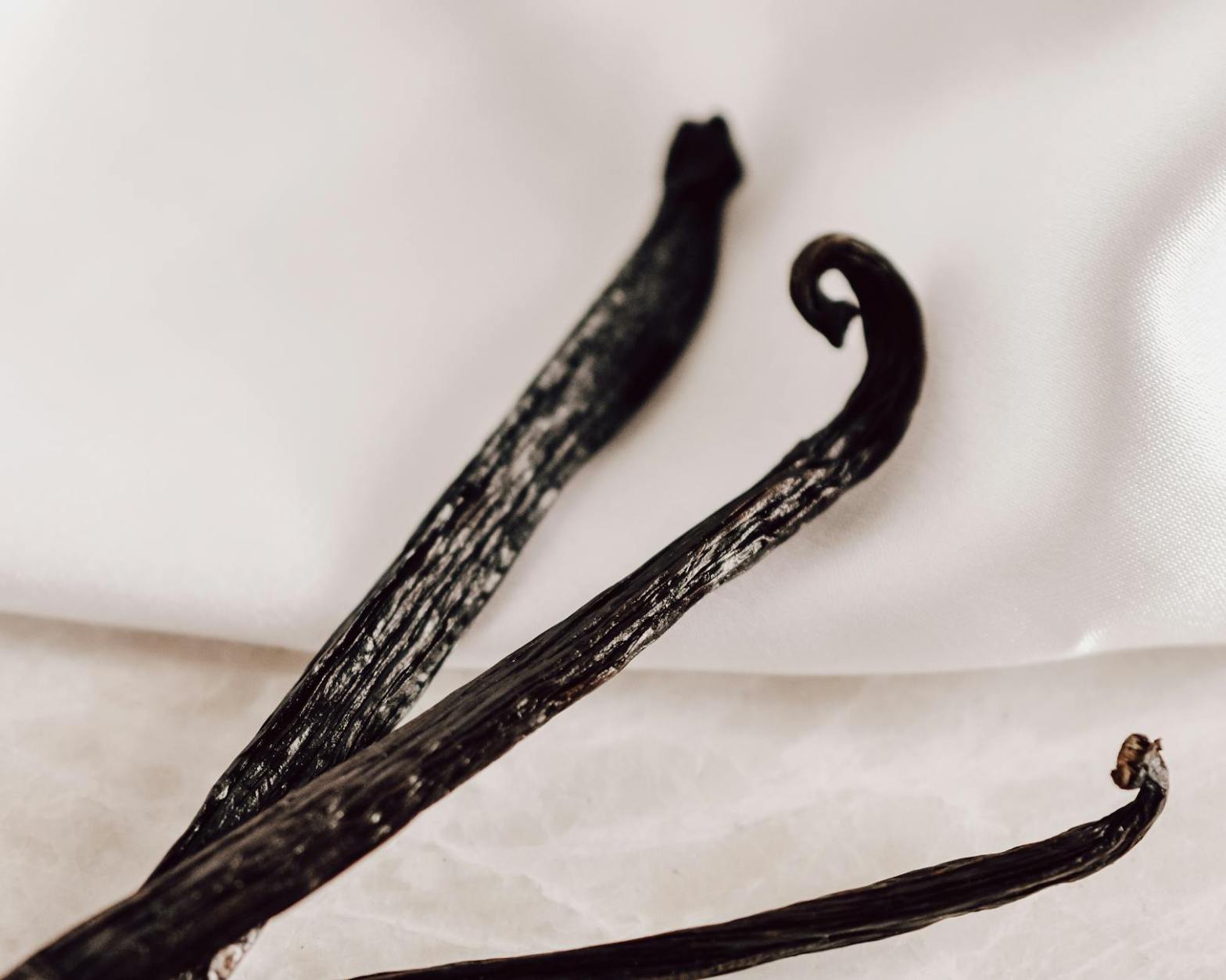
Earl Grey Creme teas usually consist of black tea, bergamot, vanilla, and cornflowers. However, there is some variation within the theme. Blenders often omit the cornflowers, as they ostensibly only create pretty leaves and do not impart flavor (I disagree on the latter point; while the flavor is subtle, I find it easy to detect). A smaller number of blenders omit the vanilla. And, like bergamot, vanilla has a range of flavors depending on its country of origin.
Creme Earl Grey is not my favorite variation. It’s easy for the vanilla (if used) to overwhelm the bergamot, and often it tastes overly sweet or artificially creamy. Even when the blend is made by a skilled tea artisan, it’s simply not my preference. Still, the two teas featured in this week’s post were perfectly enjoyable, and if you like a creamy tea without the milk, these might be your new favorites.
Earl Grey Creme, The Steeping Room
While it’s no secret that I’m a huge Steeping Room fan, I have to admit that this is not my favorite of their offerings. A Creme Earl is already not my preferred tea, so it’s going to take a lot to wow me. This is a perfectly nice cup, and I’m glad I tried it, but when I make my next Steeping Room order, I’m going to be stocking up on extra Eastside Earl Grey instead.
The main thing that kept me from loving this blend is that the bergamot doesn’t quite shine through enough when stacked against the creme flavor. This particular blend does not use vanilla. I know some of the creaminess is coming from the cornflowers, but I’m wondering if the “compliant flavor” listed on the label contributes to that as well. The bergamot is there, but some of its vibrancy is dulled.
Despite the fact that this Earl Grey Creme doesn’t suit my particular preferences, it’s still a nice, easy cup to drink. Someone who is a big fan of Creme Earls would probably enjoy this.
Earl Grey Moonlight, Adagio
Adagio has a number of Earl Grey variations. Their Earl Grey Moonlight contains black tea, orange peel, blue cornflowers, vanilla flavor, bergamot flavor, and creme flavor. A sample pouch makes 10 cups, so I had ample opportunity to try this blend. The first time I tasted it, I was still recovering from bronchitis and had sinus congestion. However, the dry leaves were so fragrant that I could still smell everything! Between that and the prettiness of the dry leaves, it made a nice first impression.
As for the steeped tea, it was an enjoyable cup, though I felt that the vanilla overpowered the bergamot. The flavor was smooth and enjoyable, and everything was well-balanced enough that I could drink multiple cups in one day . . . but when push came to shove, I didn’t especially want to. I would have a cup of it and then be ready to move on to another tea.
As with The Steeping Room’s version, if you like a tea that has a creamy flavor without having to add dairy, you would probably love this blend. People who enjoy vanilla would probably enjoy this as well. Certainly if I was given the choice between a straight vanilla flavored tea and Earl Grey Moonlight, I would choose the latter. I like vanilla, but it’s just not my favorite tea flavoring, so I enjoyed having some citrus to balance it out, even though it didn’t really shine.
Two Special Variations
Special variations are Earl Grey blends that do not fit easily into one of my other categories. For example, a blend that includes a mix of green, white, and oolong tea (as described below) is a special blend because it includes three types of tea rather than just the standard black. Special blends might also include unusual additives, such as coconut (you’ll see an example of that featured in a later post).
Special variations can be fantastic, or they can fall flat. When they’re done well, they provide an innovative approach to a common tea blend. They bring a sense of surprise and fun into the drinking experience. When done poorly, however, additives can overwhelm classic flavors, or the tea can feel like a novelty beverage.
Smoky Earl Grey, Fortnum & Mason
In my very first post of this series, I wrote about a disappointing tasting experience with Fortnum’s Earl Grey Classic. Their Smoky Earl Grey was the complete opposite experience; I adored it. According to the Fortnum & Mason website, this blend was the original Earl Grey the company created and sold. It was developed because a member of the royal family requested an Earl Grey blend with more oomph. They did not disappoint!
The smokiness of this blend comes from the inclusion of lapsang souchong and gunpowder green teas. Because the blend includes both green and black teas, and because lapsang souchong is not a standard Earl Grey base, I’ve classified this as a special variation.
The success of this brew is a testament to the skill of Fortnum’s blenders. It would be easy for the lapsang souchong in particular to completely overwhelm the bergamot. However, they have managed to create a cup in which the citrus and smokiness hold their own. It’s a unique tasting experience.
Earl Grey Supreme, Harney & Sons
The Harney & Sons Earl Grey Supreme combines black, oolong, and white tea, which is what places it in the Special Variations category. This is a visually stunning blend, with the brown oolong leaves creating a sense of texture, and the silver tips providing contrast. The dry leaves also smell stunning. You can sense all of the teas along with the citrus.
In terms of taste, the black tea dominates the oolong and white tea. I was hoping for something a little more dynamic, but it didn’t register with my palate. The bergamot is bright and vibrant, and shines even though there is plenty of flavor from the tea itself.
The Earl Grey Supreme is a popular blend among Harney fans, which illustrates that even a beloved blend isn’t right for every single tea drinker. Although the flavor was good on the whole, there is a tannic intensity that prevents me from truly enjoying it. I can have a single cup and then I’m done. As someone who prefers to pick one tea and drink it all day long, it’s disappointing that my stomach can’t handle much of this blend. I’m also not clear on what causes that issue for me, as this is the first time it’s happened on this project.
By the Numbers
As of this writing, I’m officially at the 25% mark! The yellow on the tracking chart is getting bigger, and I feel like I’ve hit a real project milestone. I also only have three more teas to taste in order to stay on track for March, and considering we’re barely a third of the way through the month, I’m in a comfortable position.

Since so little time has elapsed since my last project update, I’ve only sampled two new teas, meaning that the proportions haven’t changed very much. Posting this category breakdown right at the 25% mark did inspire me to go back to the first post in this series to see what has changed. On January 20th, I only had four categories; now I have six. Classic Earl Grey still dominates, with Floral Greys still in second place. Creme Earl Greys and Special Variations still are proportionately tied. While a few things have changed, much is still the same.

Now that I’m more caught up with the blogging portion of this project, I’m not sure what the topic will be for the sixth installment. It might be another round of classics, or it might be another mix of categories. Either way, expect at least one more update in March, if not two.
Support the Project
Read previous installments here:
The Earl Grey Year Part 1: Four Classics
The Earl Grey Year Part 2: Four Florals
The Earl Grey Year Part 3: Four More Classics
The Earl Grey Year Part 4: Greens and Tisanes
Enjoying this series? You can support my tea wishlist here, or contact me if you have samples you want to share!
For more tea content, check out my tea pairings playlist on YouTube.
Project References
Note: This is an ongoing list of all the reading I have done so far for this project. The bibliographic entries here are not necessarily cited in this specific post.
Avila-Sosa, Raúl et. al. “Bergamot (Citrus bergamia) Oils.” Essential Oils in Food Preservation, Flavor and Safety. Ed. Preedy, V.R. (2015). Elsevier Science & Technology. pp. 247-252. http://dx.doi.org/10.1016/B978-0-12-416641-7.00027-4
Di Giacomi, Angelo and Giovanni Dugo. “Origin, History, and Diffusion.” Citrus bergamia: Bergamot and Its Derivatives. Ed. Dugo, Giovanni and Ivana Bonaccorsi. Boca Raton: CRC Press, 2013. pp. 1-8. https://doi.org/10.1201/b15375
Heale, Christopher. (n.d.) “A Guide to the Tea Grading System.” Herbs & Kettles. https://www.herbsandkettles.com/blogs/blog/a-guide-to-the-tea-grading-system
Twinings. (n.d.) “What is Bergamot?” https://twinings.co.uk/blogs/news/what-is-bergamot