Support the ProjectBuy me a coffee at https://www.buymeacoffee.com/culinarysaijiki. You can also help by sharing this podcast with anyone who you think might appreciate it.Theme Music“J’attendrai” by Django Reinhardt, performing at Cleveland Music Hall, 1939. This recording is in the public domain. Hear the whole song at https://clevelandhistorical.org/files/show/6045.
Season 2 of The Culinary Saijiki launches on March 20th. In addition to three community blog posts and three open mic episodes, I have a list of fun topics related to classical haiku. And there’s plenty of opportunity for fellow haijin to get involved.
First, I am ready to start recording podcast guests for the new season. If you are interested in talking about classical haiku and how it relates to food, fill out the form here: https://forms.gle/7JP69qWfFf52ZfE37. Not sure what you want to discuss, but still want to be on the podcast? Fill it out anyway! I have some options for you to pick from.
Second, I would like to welcome guest bloggers for season two. If you would like to write a guest post related to the season two focus, fill out this form: https://forms.gle/smjAHvqdS3Tz38KYA. I can’t wait to see your ideas!
And for those of you who are wondering . . . Yes, you can write a guest post and be on the podcast!
I look forward to hearing from you and sharing your ideas as part of this project!
Join the Conversation Season 2 will focus on food as it appears on classical haiku. If you would like to be on a Season 2 podcast episode, or write a guest post on this topic, contact me at allyson@allysonwhipple.com.
Theme Music “J’attendrai” by Django Reinhardt, performing at Cleveland Music Hall, 1939. This recording is in the public domain. Hear the whole song at https://clevelandhistorical.org/files/show/6045.
Talk about a cornucopia of poetry! For this bonus post, people took me up on my offer of multiple forms. I received not only haiku, but also tanka and tan-renga, and submissions came from three different continents!
It was a delight to put this post together over the course of a cold winter afternoon, drinking multiple cups of tea. I hope you enjoy the creative bounty as much as I did.
Haiku
In Deb Koen’s first haiku, the second and third lines display a masterful example of double meaning, reinforcing the sense of abundance that comes from a harvest. The produce features an array of colors; each of these colors was produced by, and harvested from, the planet itself. The second sense of meaning comes from the range of colors available at a produce market. The color range among the harvested crops is expansive; every shade of the planet is represented here. We have not just an abundance of physical nourishment, but a feast of delights for the eyes as well.
farmstand every color from earth
Deb Koen, USA. This haiku originally appeared in Haiku Canad Review, Winter 2020.
In the second haiku, Koen associates the comfort that both food and music can provide. For most people, comfort foods are rich and hearty. What makes them comforting is not just their heartiness. but also their familiarity. Just as delicious food prepared with care gets passed around a holiday table, an LP of comforting music rotates not just in physical space, but in and out of the listener’s consciousness. In this haiku I see abundance (hearty comfort food) and celebration (food being passed around the table), but I also wonder if this poem is about a meal taking place after a funeral: the food comforts the grieving, and the music brings back good memories of the departed loved one.
comfort food circling the table a Beatles LP
Deb Koen, USA. This haiku originally appeared in Frogpond 44:2.
Tanka
Hassane Zemmouri’s first tanka gives us an image of a child’s joy at harvesting berries. There are two bounties: the fruit off the vine, and the experience of watching a child’s face light up. This poem reinforces the concept that food is not just physical nourishment. The connections we make to the land, and to each other, through the processes of harvesting, cooking, and eating, shine through in this brief work.
picking season- the full basket doesn’t accommodate the girl’s joy her smile more delicious than the expected jam
Arabic translation:
Hassane Zemmouri, Algeria. This tanka originally appeared in Take5, Issue 3.
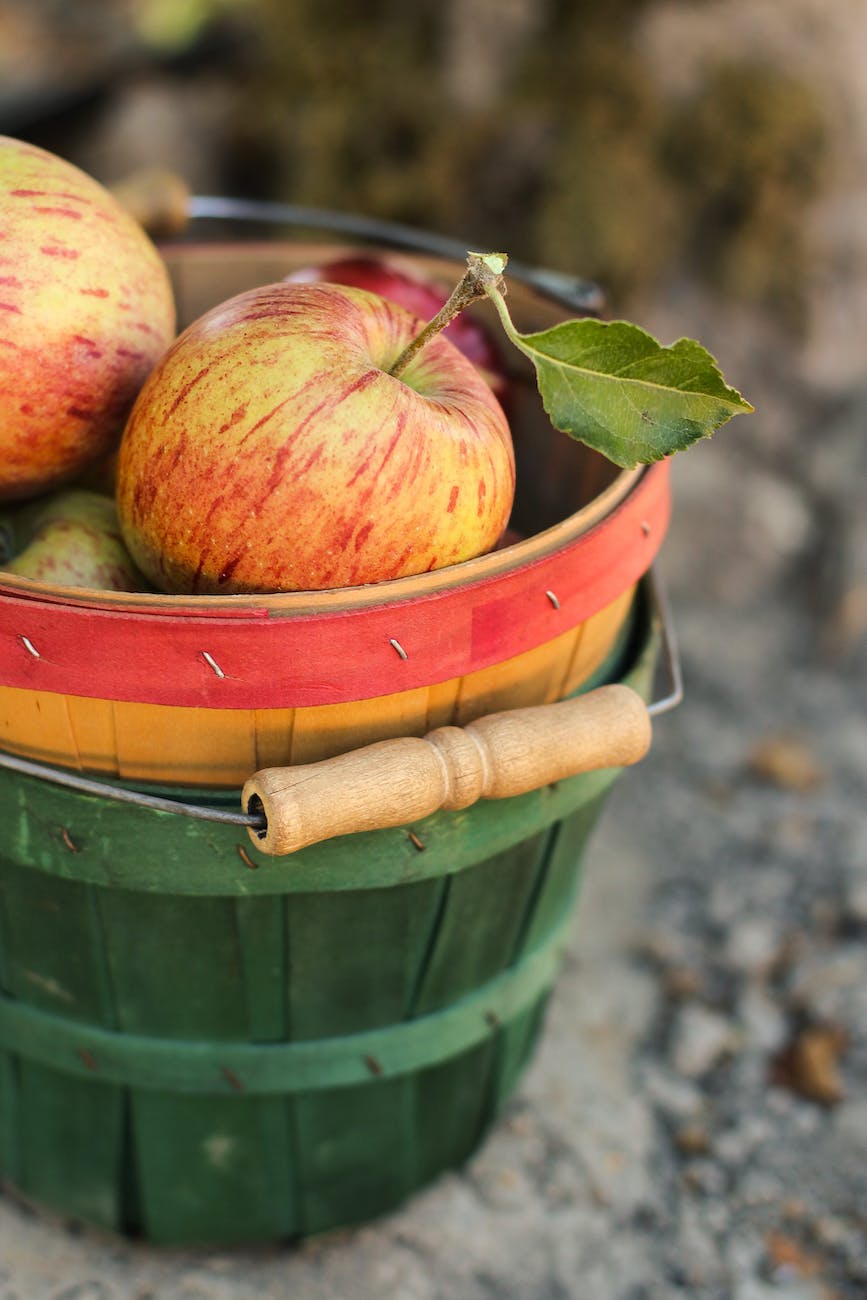
Hassane’s second tanka reminds me of picking apples with my nephew this fall. Our neighbors have an apple tree, but weren’t interested in harvesting the fruit. My nephew and I went out with an apple picker and got as many as we could. When he was concerned about bruised or spotted apples, I reminded him of what his great-grandmother believed: that the ugly apples make the best applesauce. After harvesting the apples, my partner turned them into applesauce, and saved the peels to make jelly. I appreciate Hassane’s tanka because it illustrates so well how a short poem can awaken a beloved memory in a stranger half a world away.
end of picking- the mother chooses the bruised apples for jam children dream of candy apples
French translation:
fin de cueillette- la mère choisit les pommes meurtries pour la confiture les enfants rêvent de pommes d’amour
Arabic translation:
Hassane Zemmouri, Algeria
Tan-Renga
In their first tan-renga, Christina Chin and Uchechukwu Onyedikam magnify the sense of celebration that often comes at harvest time. Glass Gem corn originates in Oklahoma, and was developed by a farmer named Carl Barnes. It took him many years to collect the seeds and cross-breed the corn he found to create the vivid, translucent kernels we see today. It’s a rare breed of corn, and in this tanka, I see a celebration of the ingenuity and patience required to cultivate heirloom stock. Because rainbows are also associated with the queer community, I think that this tanka implies the marriage of queer farmers, a portion of the population that often gets overlooked. (You can read more about that at NPR.)
stripping husks from glass gem corn an heirloom of rainbow colours farmer kisses farmer
Christina Chin, Malaysia, and Uchechukwu Onyedikam, Nigeria
The New Yam Festival is a celebration that takes place in Kogi state, Nigeria. It celebrates the farming season, as well as community and culture of of the Igbo people. It typically falls at the end of August or beginning of September, depending on when the first new yams appear. This tan-renga reminds me that while many holidays and festivals have set dates, the Earth does not follow the human-made calendar to the exact day. The world releases its bounty on its own time.
New Yam Festival the Igbo people dig into the ridges end of rainy season
Uchechukwu Onyedikam, Nigeria and Christina Chin, Malaysia
In their first tan-renga, Christina Chin and Linda Ludwig present a wintry scene warmed by delicious food and intimacy. While crabbing season varies by region, in much of the world, it starts in late autumn and ends in mid to late winter. While moonless nights happen all year long, there’s something about the darkness of winter that makes the lack of moon in this poem feel more potent. Yet the crabs, being in season, are juicy and delicious. I interpret a sensuality in this poem not just from the word “succulent,” but also because in some parts of the world, shellfish are considered an aphrodisiac. Regardless of whether or not I’m correct, there is still a delightful coziness in this tan-renga.
the traps heavy with crabs river with no moon succulent dinner for two
Christina Chin, Malaysia, and Linda Ludwig, USA
This final tan-renga contains historical allusions, illustrating the ways in which food is bound up in culture both past and present. The Silk Road existed as a network for traders exchanging goods between Asia and Europe, between 130 B.C.E. and 1453 C.E. Commodities included textiles, animals, and of course, foods and spices. The gogi berry comes from a shrub native to China, and long been used in both Chinese and Korean cooking and medicine. Today, people in the western world can find gogi berry tea sold as an alternative health product. What started as an indigenous ingredient is now a decontextualized commodity. Nonetheless, we can connect to the image of gogi berry and ginger blended into a simple tea, and imagine the connection the drinker might feel to generations past.
the silk road old world treasures chi tea a hot concoction of goji berry ginger
Linda Ludwig, USA and Christina Chin, Malaysia
****
Thanks to everyone who contributed poems to this special post. I look forward to blogging again in 2023! For now, may you have a peaceful close of the year.
In Gratitude Thanks to Peter Schmidt for buying me 5 coffees this month! I’m now 48% of the way to having my web hosting covered for the year. If you want to contribute financially, visit https://www.buymeacoffee.com/culinarysaijiki. Contributors get a bonus recipe every month!
November Community Blog Post I’m putting together another community blog post (view the May community post here). Theme: Harvest Deadline: 11:59 p.m. CST on Wednesday, November 23rd Submission Form: https://forms.gle/TxZWqf3zbfi1i9uR8 Notes: Haiku in languages other than English are welcome; please provide a translation. Experimental haiku are also welcome. If sending previously published haiku, remember to provide publication credit.
Theme Music “J’attendrai” by Django Reinhardt, performing at Cleveland Music Hall, 1939. This recording is in the public domain. Hear the whole song at https://clevelandhistorical.org/files/show/6045.
First, thanks to Peter Schmidt for buying me 5 coffees this month! I’m now 48% of the way to having my web hosting covered for the year.
Second, remember to send work for the Community Bonus Post at the end of the month. That will be the last blog post for 2022! Send your work via the Google Form by 11:59 pm CST on Wednesday, November 23rd.
When I started this project in the spring, I had no idea what shape it was going to take. Like many of my creative pursuits, I dove in headfirst, making it up as I went along, knowing I’d figure it out along the way. I’m also grateful that the blog and podcast have allowed me to stay connected to my creativity through a tumultuous second half of 2022, including a cross-country move, buying a house, and changing jobs twice. Moving in October, I felt the call to take a break. I wrote recently to a group of friends that, for most of my adult life, I’ve felt the desire to put life on pause from October through the new year. And pretty much every year, I’ve ignored that, pressuring myself to keep up with the pace of life I keep during the sunnier, warmer months. This year, though, I’m trying to honor that impulse. So I’m taking today to serve as a way to reflect on the project so far, and what my plans are for the future.
The Blog
On this site, I’ve experimented with a few different types of posts. My focus is sharing haiku others have written, along with my own commentary. Sometimes I focus on a specific type of food; sometimes I focus on a specific season; sometimes the post is more conceptual. I haven’t nailed down one specific approach because different ideas inspire different structures. That being said, I think I would like to maintain a more consistent structure in the future, and one of the things I’ll be doing during my project hiatus is considering the shape I want future posts to take. It’s hard to be in that planning mode when you’re in creation mode, so I’m looking forward to stepping back, letting my mind go fallow, and seeing what emerges. If there are particular structures or approaches that appeal to you, let me know in the comments!
I also enjoyed putting together the May community blog post, and am excited to be reading haiku for the November post as well. I’m considering making this a regular feature next year, either quarterly or every other month. If you have a preference, please let me know! While I ultimately have to shape this project around what works with the rest of my life, I also do want to know what interests people who read this blog.
The Podcast
Since launching the podcast in June, I’ve learned some of the basics of Garageband, finally settled on a theme song, and even experimented with different kinds of episodes. I modeled the show after long-form, open-conversation podcasts, which are the kind I most enjoy listening to. However, I also did one solo episode, and was surprised to find how much fun I had making it! And just as I enjoy doing the community blog posts, I loved putting the community open mic bonus podcast together. If I decided to make community blog posts every other month, I might do that for podcasts as well. Odd-numbered months could have a community blog post, and even-numbered months could have a community open mic. This idea is still percolating; I’ll see how it takes root during my hiatus.
The Future
The main thing I want to do during my creative break is take time to get organized. I’ve collected over 200 haiku at this point, and while my organization system on the whole is pretty solid, ever since buying and setting up the house, I haven’t done a great job keeping track of which haiku I have already used on the blog and podcast. I’m honestly excited to take a weekend afternoon and get everything reorganized.
I also want to put together the foundation for an eventual print manuscript. While I don’t imagine putting a print book together until at least 2024, the time to get organized is now. That means setting up a Scrivener file especially for the book project, getting a basic organizing scheme in place, and importing relevant blog or podcast content that I might want to revisit. While I know that a project of this length is going to evolve over time, giving myself a structure now will set me up for an easier time down the road.
In addition to the community blog post at the end of the month, I have two more podcast episodes lined up, and then I’m officially on hiatus until January. I hope you have a restful and creatively fulfilling winter season.
Huge thanks to everyone who has read this blog, commented on posts, and supported this project. It means a great deal to me that there are people interested in the work I’m doing here. I’m excited for what this project will yield in the new year.
With a bonus Tuesday in November, I decided I wanted to host another community blog post! (View the May community post here.) The first submission has already come in! I look forward to reading all the poems that come in and assembling them.
Theme: Harvest
Deadline: 11:59 p.m. CST on Wednesday, November 23rd
Notes: Haiku in languages other than English are welcome; please provide a translation. Experimental haiku are also welcome. If sending previously published haiku, remember to provide publication credit.
Please reach out if you have questions, or if you have issues using the form.
In Gratitude Thank you to M.A. Dubbs, who bought me three coffees in August! I’m now 35% of the way toward my goal of covering website costs for the year. Those who want to support the podcast financially can do so at: https://www.buymeacoffee.com/culinarysaijiki/.
November Community Blog Post I’m putting together another community blog post (view the May community post here). Theme: Harvest Deadline: 11:59 p.m. CST on Wednesday, November 23rd Submission Form: https://forms.gle/TxZWqf3zbfi1i9uR8 Notes: Haiku in languages other than English are welcome; please provide a translation. Experimental haiku are also welcome. If sending previously published haiku, remember to provide publication credit.
Theme Music “J’attendrai” by Django Reinhardt, performing at Cleveland Music Hall, 1939. This recording is in the public domain. Hear the whole song at https://clevelandhistorical.org/files/show/6045.
More from Jennifer Hambrick You can order Jennifer’s haibun collection, Joyride (Red Moon Press, 2021) and her newest collection, In the High Weeds (National Federation of State Poetry Societies, 2022) from her website: https://jenniferhambrick.com/order/
Join the Conversation I’m seeking guests for October, November, and December! If you’d like to be on the podcast, visit https://culinarysaijiki.com/join-the-conversation/ and fill out the form. My life is a little hectic right now, so if I don’t follow up in a timely manner, send me a reminder.
Support the Project You can make a one-time or recurring donation to the Culinary Saijiki at https://www.buymeacoffee.com/culinarysaijiki. You also can help by sharing this episode with people you think will love it!
Theme Music “J’attendrai” by Django Reinhardt, performing at Cleveland Music Hall, 1939. This recording is in the public domain. Hear the whole song at https://clevelandhistorical.org/files/show/6045.