Haiku and a Cup of Tea

  • S2E8: Buson, Translation, and Food Part 2

    S2E8: Buson, Translation, and Food Part 2

    Highlights from Poetry Pea

    I’ve learned a great deal from Patricia’s two-part conversation with Janice Doppler about the concept of zoka in haiku. I think it’s her best workshop yet! Be sure to check it out, so you’ll be ready to submit your haiku when the submission period opens.

    Part 1 link: ⁠https://poetrypea.com/s6e31-zoka-how-to-use-it-in-your-writing-part-1-featuring-janice-doppler/⁠

    Part 2 link: ⁠https://poetrypea.com/s6e32-zoka-part-2-a-tool-for-all-writers-featuring-janice-doppler/⁠

    Postcards from Texas is available now!
    You can buy my new chapbook, Postcards from Texas, one of two ways:

    1. Purchase from Cuttlefish Books at this link: ⁠https://cuttlefishbooks.wixsite.com/home/poetry-series⁠

    2. Email me at allyson@allysonwhipple.com to order a signed copy.

    On the Blog
    A long-form essay about the challenges of reading haiku in translation. Read it here: ⁠⁠https://culinarysaijiki.com/2023/09/06/accepting-the-challenges-of-translation/⁠⁠

    Buy Me a Coffee
    If you would like to make a donation to cover production costs, visit ⁠⁠https://www.buymeacoffee.com/culinarysaijiki⁠⁠

    Join the Conversation
    This season, I am welcoming both podcast guests and guest bloggers. If you’re interested in joining one or both, visit ⁠⁠⁠⁠⁠⁠https://culinarysaijiki.com/join-the-conversation/ ⁠⁠⁠⁠⁠⁠for details.

    Looking Ahead to Season 3
    I’m already preparing for Season 3 of The Culinary Saijiki. I want to create a full 52 weeks of blog posts and podcasts episodes centered around the theme of “Feasts and Festivals.” My goal is to curate a global celebration of food and haiku in 2024, focusing on everything from bombastic national holidays to sacred religious traditions. To do that, I need your help! Start thinking about blog posts or podcast episodes you’d like to create, and be on the looking for full details soon.

    Theme Music
    “J’attendrai” by Django Reinhardt, performing at Cleveland Music Hall, 1939. This recording is in the public domain. Hear the whole song at ⁠⁠⁠⁠⁠https://clevelandhistorical.org/files/show/6045⁠⁠⁠⁠⁠.

  • S2E7: Buson, Translation, and Food Part 1

    S2E7: Buson, Translation, and Food Part 1

    More About Patricia

    Visit the Poetry Pea website to learn more about the podcast and journal: ⁠https://poetrypea.com/⁠

    View Patricia’s contributions to re:Virals and Per Diem for the Haiku Foundation:⁠ https://thehaikufoundation.org/tag/patricia-mcguire/⁠

    Watch Patricia’s 2020 presentation at the Haiku Society of America Conference: ⁠https://youtu.be/QzPHybySDgw?si=IQOf8EtF2DczSbU_⁠

    In Gratitude

    Thanks to Kimberly Kuchar for buying three coffees to support the project. If you want to make a contribution, you can do so here: ⁠https://www.buymeacoffee.com/culinarysaijiki⁠

    On the Blog

    A long-form essay about the challenges of reading haiku in translation. Read it here: ⁠https://culinarysaijiki.com/2023/09/06/accepting-the-challenges-of-translation/⁠

    Join the Conversation

    This season, I am welcoming both podcast guests and guest bloggers. If you’re interested in joining one or both, visit ⁠⁠⁠⁠⁠https://culinarysaijiki.com/join-the-conversation/ ⁠⁠⁠⁠⁠for details.

    Theme Music

    “J’attendrai” by Django Reinhardt, performing at Cleveland Music Hall, 1939. This recording is in the public domain. Hear the whole song at ⁠⁠⁠⁠https://clevelandhistorical.org/files/show/6045⁠⁠⁠⁠.

  • Accepting the Challenges of Translation

    Before I commence with this week’s post, I want to take a moment to thank Kimberly Kuchar for buying me three coffees in support of this work. I’m grateful for the support! I’m working on some late summer and early autumn bonus content. If you want to contribute financially, you can do so using the button below.

    I recently stumbled on a 178-page PDF of Bashō’s poetry compiled by Hungarian writer and artist Gábor Terebess. What I find remarkable about his work is that virtually every haiku includes three or more translations of the same poem. I wish I’d happened upon it sooner! You can view the document for yourself here: PDF.

    In focusing on classical haiku this season, I’ve naturally given a great deal of thought to translation. One of the things that I’m interested in is translational range: the ways in which one poem can seem similar or different based on who translates it. Terebess’ PDF is an excellent resource because it allows the reader to see a number of translations of the same poem, illustrating the range in form and content. 

    I’ve admittedly neither taken as in-depth a look at classical haiku or thought this much about translation as I have before this season of the project. (I’m a bit embarrassed to admit this, but it’s true.) And in reviewing Terebess’ PDF, I had a realization that was new to me but perhaps an old idea to people who have been studying haiku longer than I have. It finally occurred to me that not only does translation affect the tone and emotional resonance of the poem, but it can change the ways in which readers perceive the subject matter of the poem. 

    Here is the romaji version of Bashō’s haiku:

    aki chikaki
    kokoro no yoru ya 
    yo jō han

    Matsuo Bashō

    Terebess offers seven different translations of this haiku1. In five of the variations, there was nothing that suggested to me that I should include this poem in my database2.

    Autumn is near; 
    The heart inclines 
    To the four-and-a-half mat room.

    R.H.Blyth

    as autumn approaches 
    our hearts are drawn together– 
    a four-and-a-half mat room.

    David Landis Barnhill

    Autumn nearing 
    Inclination of my mind! 
    A four-and-a-half-mat room.

    Robert Aitken

    Autumn approaches
    and the heart begins to dream 
    of four-tatami rooms

    Sam Hamill

    Smell of autumn – 
    heart longs for 
    the four-mat room.

    Lucien Stryk

    However, two of the translations meet my definition for inclusion in this project:

    sensing autumn’s approach
    four hearts draw together
    in a small tea room

    Makoto Ueda

    as autumn draws near
    our hearts feel closer 
    to this small tearoom

    Jane Reichhold

    As I’ve mentioned at various points during this project, I take a broad view when collecting poems for this project. Planting and composting, cooking and cleaning, feast and famine are all part of the spectrum. So a tea room merits inclusion, but a general room does not.

    At the time of this writing, my Japanese is not strong enough for me to make an informed decision of my own regarding the original. (I let my Duolingo streak lapse in the midst of moving last year, and at this point starting over just feels overwhelming.) This example shows me just how much I am at the mercy of translators (in pretty much any language) to accurately and poetically convey the subject matter. 

    One might ask whether or not this issue truly matters if one is simply reading for the sake of reading, rather than collecting material for a large project. But I believe that it does. While the issue of the tea room versus the general tatami room is my primary cause for concern, the translational range for this poem is wide. Blyth, Aitken, Hamill, and Stryk have translations that imply a single person and a sense of longing, whereas Barnhill, Ueda, and Reichold mention multiple people. I perceive the latter three poems having a greater degree of intimacy.

    I focus on food because it’s a useful lens for me to explore larger topics. Yet the challenges I find and the themes I come across are ultimately not specific to my area of focus. The challenge of whether or not to classify this as a culinary haiku is just a small component about the broader issues that readers face when reading in translation.

    Translation is an art unto itself, and like all arts, it is subject to human foible and human preference. There is no perfect approach, and even if there was, an ostensibly perfect translation wouldn’t necessarily resonate with all readers. I think it’s worth embracing that imperfection. That doesn’t mean being uncritical; rather, it means that our criticisms are grounded in this knowledge of translational fallibility. 

    I think that the best thing that we can do as readers and practitioners is to read translation as widely as possible. If we can study translation the way we study poetry written in our native language(s), we can learn to appreciate the spectrum of what’s available. Identifying what we enjoy and do not enjoy in a translated work is a useful aesthetic exercise that can not only yield insights about our own poetic values, but also help us recognize potential blind spots. For example, I’ve learned to appreciate R.H. Blyth as a product of his time. I don’t think any of his translations will be my favorite, but I can still find value in his work, as well as gratitude for his anthologies, and the groundwork he laid for future haijin writing in English. 

    Ultimately, I will add Ueda’s and Reichold’s translations to my database. I admit that the Ueda version is the one I find most aesthetically pleasing. Beyond that, though, I have decided that I want to simply live with the contradiction of culinary and non-culinary versions of this haiku. Existing with contradiction is one of the driving forces of this project. 

    On the day I write this, every coffee shop (chain or local) is selling pumpkin-flavored beverages. Students have gone back to school, the days are getting shorter, and those who care about such things have put their white clothes away. But summer vegetables are still in abundance, and I worked up a serious sweat on my lunch hour walk. We’re nearly at mid-autumn on the haiku calendar, but are still in summer based on the Gregorian calendar. Working on this project, I am constantly aware of how I am always existing within the contradictions of seasons and cultures. So it makes sense to accept the contradictions of working in a form whose foundational texts I must (for now, at least) read in translation.

  • The Best of It: Summer Events Edition

    The Best of It: Summer Events Edition

    1. Attending Haiku North America
    2. Seeing West Side Story at the Muny
    3. My first Cardinals game!
    4. Seeing the corpse flower bloom at the Missouri Botanical Garden
    5. SerbFest
  • The Best of It: Summer Restaurant Meals Edition

    The Best of It: Summer Restaurant Meals Edition

    1. The gnocchi with pesto (seasonal special) at Dominic’s (No photo, sorry . . . It was the kind of dining establishment too fancy for millennial food pic nonsense.)
    2. The smash tacos and split and melt at Mac’s Local Eats
    3. The spicy goat cheese toast and the fancy avocado toast at Goshen Coffee
    4. The barbecue chicken salad at City Coffee and Creperie
    5. The waffle & chicken at Taste of Belgium (Cincinatti)
  • The Best of It: Summer Meals Edition

    The Best of It: Summer Meals Edition

    1. Cheesecake with foraged blackberries
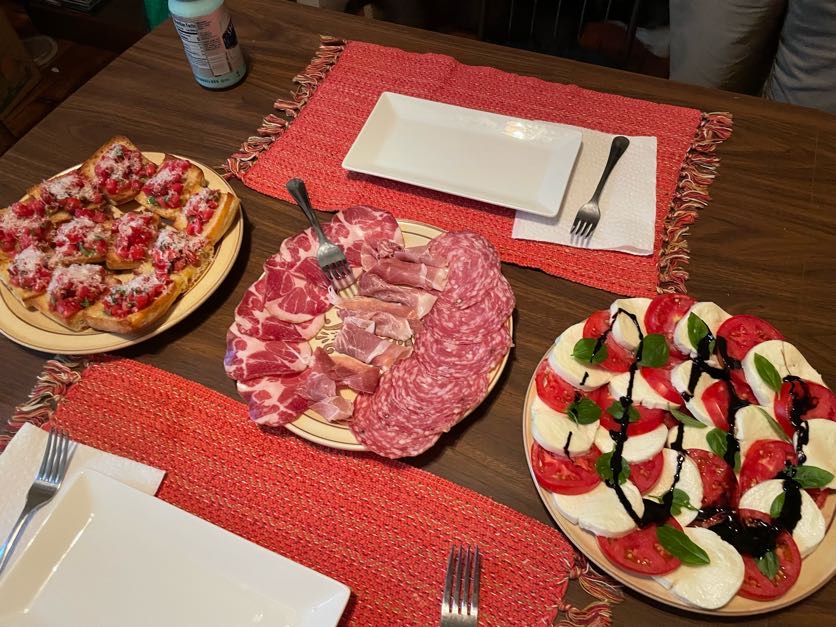
    2. Antipasto buffet
    3. Steak with foraged porcini mushrooms and roasted potatoes
    4. Spaetzle with foraged mushrooms and backon
    5. Cevapi with potatoes and ajvar
  • S2E6: Community Open Mic

    S2E6: Community Open Mic

    Thank You, Contributors!

    Not all of this episode’s contributors have a dedicated online presence, so in the interest of fairness, I am not including supplemental links in these show notes. However, I encourage you to seek out these poets in the various print and online haiku journals:

    • Phillip Woodruff
    • Adele Evershed
    • Vandana Parashar
    • Eavonka Ettinger
    • Peter Larsen
    • Kimberly Kuchar

    Thank you again for being willing to share your work, as well as having patience with the technological issues!

    In Gratitude

    Thanks to Pamela P. for buying me a coffee! I appreciate the support. If you want to support this project financially, you can do so at at ⁠⁠⁠⁠https://www.buymeacoffee.com/culinarysaijiki⁠⁠⁠⁠. You can also help by sharing this podcast with anyone who you think might enjoy it.

    Postcards from Texas is available for preorder

    Preorder one, or all three, of the Cuttlefish chapbooks for summer 2023: ⁠⁠⁠https://cuttlefishbooks.wixsite.com/home/2023-summer-book-launch⁠⁠⁠

    If you preorder my book or the entire bundle, send me your address and I’ll mail you a thank-you postcard!

    You can also read my interview with fellow Cuttlefish author Julie Bloss Kelsey at my personal blog: ⁠https://allysonwhipple.com/2023/08/29/chapbook-interview-julie-bloss-kelsey/⁠

    On the Blog

    An overview of Full Moon is Rising: The Lost Haiku of Matsuo Basho and Travel Haiku of Matsuo Basho, a New Rendering, by James David Andrews. Read it here: ⁠https://culinarysaijiki.com/2023/08/23/lost-haiku-authorship-and-translation/⁠

    Join the Conversation

    This season, I am welcoming both podcast guests and guest bloggers. If you’re interested in joining one or both, visit ⁠⁠⁠⁠https://culinarysaijiki.com/join-the-conversation/ ⁠⁠⁠⁠for details.

    Theme Music

    “J’attendrai” by Django Reinhardt, performing at Cleveland Music Hall, 1939. This recording is in the public domain. Hear the whole song at ⁠⁠⁠https://clevelandhistorical.org/files/show/6045⁠⁠⁠.

  • Chapbook Interview: Julie Bloss Kelsey

    Chapbook Interview: Julie Bloss Kelsey

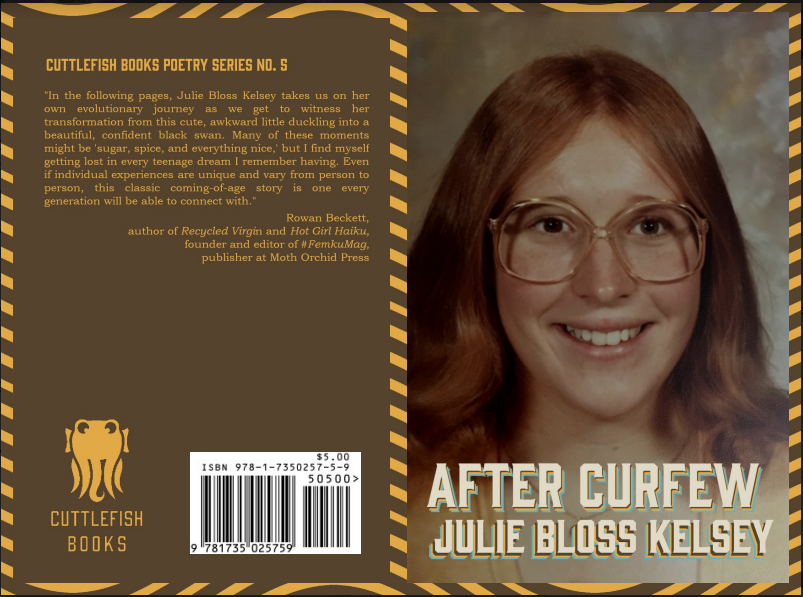
    We’re in the final three days of preorder for the Cuttlefish Books Summer Book Launch! I’m grateful to all of you who have ordered copies so far. Earlier this month, I featured fellow Cuttlefish poet Lenard D. Moore, and today I want to feature the other member of my cohort: Julie Bloss Kelsey.

    Julie creates the New to Haiku column for The Haiku Foundation, and also serves as the THF secretary. Her first collection, Grasping the Fading Light: A Journey through PTSD, won the 2021 International Women’s Haiku Contest. Julie is also a freelance writer, environmental scientist, and a mother.

    You mentioned on Instagram that After Curfew  was inspired by Rowan Beckett’s Hot Girl Haiku. Can you say more about that inspiration, and how it helped you write and shape your collection?

    Rowan held an online launch party on Facebook for their book, Hot Girl Haiku, in May 2022. My friend, haiku poet Susan Burch, reminded me to attend. I’d never been to an online launch party. It was fun! Rowan had posts and videos set up on a schedule. One of the prompts was to write our own “hot girl haiku.” It brought me back to that time in early adolescence and young adulthood when I wanted so much to be a “hot girl” but I was more of a “geeky girl.” I wrote this in the comments:

    face-first
    in a stranger’s lap—
    tequila shots

    Joshua Gage, of Cuttlefish Books, wrote back that he’d like to hear more of that story. I said there wasn’t much to tell — I didn’t think I had too many “hot girl” moments. But it got me thinking, which led to writing the collection. 

    On a related note, I read online that you wrote most of After Curfew in one sitting. Do you usually write in big spurts? How was creating this collection similar to or different from your usual process? 

    I rarely write in big spurts! This was very different than my usual plodding along. I just felt inspired. It was like Rowan gave me permission to write about my past. 

    What was your editing process like? Did you have to cut any haiku? Was there a point where you found yourself needing to add some to supplement the original poems? 

    I wrote the poems quickly at first, jotting them down as they came to me. When it came time to order them, I wanted to tell a cohesive story: of first love, of loss, of moving on. When I realized that I really did have a collection, I wrote a few poems to fill gaps in the narrative, and I dropped a few that didn’t fit. Originally, I had a few tanka in there too.

    In English-language haiku, poets are often instructed to focus on composing from the present moment. After Curfew is written in the present tense, but concerns the past. Did you make a conscious decision to keep the poems in the present tense? Or did that emerge organically during the writing process?

    I think the present tense brings an immediacy to haiku — writing in past tense puts some distance between the reader and the poem. I’d like to say something profound about how I wanted the reader to share in my awkward moments, but the truth is, I was reliving my memories as I wrote them.

    What was it like to relive those awkward teenage years in such an immediate and compressed way? Did that awkwardness feel fresh, or has distance lessened it? 

    Oh my goodness, reliving those years still feels awkward! But I can laugh alongside the discomfort now. I’ve read this collection aloud to friends and most laugh and nod along. We’ve all been there, but when you are living those years, it’s so tough.

    Cuttlefish Books has been posting some of my haiku from the book on Instagram. I was really struck by the response to this one:

    strangers at the bar
    trying to remember
    my fake name

    To me, that was a funny memory of getting called out for using a fake name. But when I saw a hashtag about the patriarchy, I realized that’s true as well. I was using a fake name to keep myself safe. That experience was just so normalized for me that I never saw it that way. It adds a whole new dimension to the poem, and to the collection. Rowan wrote an Afterward for me that touches on this.

    What level of vulnerability was required to not only write these haiku, but publish them in a collection? Is it similar to, or different than, the levels of vulnerability required in other areas of your work?

    I’ve said that my first print collection, Grasping the Fading Light: A Journey through PTSD, was equally embarrassing, but for different reasons. This collection is much easier for me to see in print. I’m not sure I will ever publish anything that makes me feel as vulnerable as my trauma collection does.

    I love that you used your 8th grade class photo as the cover image. What was the thought process that went into your cover design decisions?  

    My best friend posted that picture of me on Facebook for my birthday one year! I saved it and reposted it to my Facebook wall in December of last year. Joshua Gage, of Cuttlefish Books, noticed it and asked if we could use it for the cover. 

    Is there anything else I haven’t asked that you’d like to say about After Curfew, or about haiku in general? 

    Reading over my answers, I realized that Facebook played a huge role in this book coming into existence! Social media, for all of its ills, can be a great tool for poets. I cut my teeth writing haiku on Twitter. 

    Writing haiku can be isolating. Most of us don’t interact with other haiku poets in person in our daily lives. Helping new haiku poets find connection is a primary goal of my haiku column, New to Haiku, at The Haiku Foundation.

    More from Julie Bloss Kelsey

    Check out the New to Haiku series at The Haiku Foundation.

    Order a copy of Grasping the Fading Light: A Journey Through PTSD.

    Read more about Julie’s literary accomplishments in the Poets & Writers Directory.
  • Lost Haiku, Authorship, and Translation

    Lost Haiku, Authorship, and Translation

    Before I begin: Remember that the deadline for the community open mic is Monday, August 28th at 11:59 pm CST! Read the reminder post for updated submission details. Link: https://culinarysaijiki.com/2023/08/21/reminder-last-chance-for-the-podcast-open-mic/

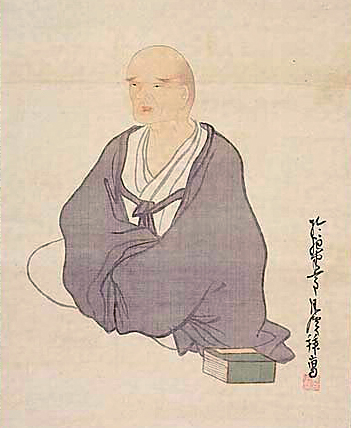
    I’ve slowly started to build up an interesting collection of mid- to late-twentieth century classical haiku translations. Many of these anthologies are by people that, at least to me, are obscure. Perhaps those more experienced are familiar with them, but these are not translators I regularly see cited in essays, blogs, podcasts, or presentations. Ultimately, upon reading them, I’ve developed a better sense of why R. H. Blyth remains a standard reference point. Though certain stylistic elements of his frustrated me, especially when I was first delving into haiku, ultimately, when I read these less-popular translators, I start to see more of what Blyth did well. I will focus more on Blyth’s translations in a later post. This week, I wanted to talk about a text that took me by surprised: Full Moon is Rising: “Lost Haiku” of Matsuo Basho (1644-1694) and Travel Haiku of Matsuo Basho a New Rendering by James David Andrews (Boston: Branden Press, 1976).

    I picked up this book a few months ago at Prairie Archives bookstore in Springfield, Illinois. The poetry section at Prairie Archives is where I’ve picked up a number of my obscure(ish) classical haiku translations. I was intrigued when I saw the title of the book, but also didn’t think much of it. At $5.00, it was cheap enough to justify adding it to my collection. I do recall having a vague assumption that Andrews might have uncovered some of Bashō’s haiku that, in 1976, had not before been seen. However, I also figured that, given the book’s age, the hypothetical discovery was no longer novel.

    (Note: Because Bashō’s name does not include diacritical marks in Andrews’ book, I have omitted them in direct quotation.)

    I finally picked up Full Moon Rising earlier this month as part of The Sealey Challenge. Within the first page, I realized I had overlooked the signifier of the quotation marks in the title: Andrews was referring to the haiku as lost, but using the quotation marks to indicate that was not actually true. (How did I miss this? Given the ways in which people put quotation marks around things for emphasis, or in some cases with a total lack of logic, I no longer assume they mean anything when I see them in anything other than a direct quotation.) Which, by the way, is a huge pet peeve of mine. When I taught technical writing, I implored my students to instead use the correct word rather than use quotation marks as a form of negation.

    “These are “lost haiku” by being poems that (in some instances) Basho might well have chosen to write, but did not.”

    p. 11

    I admit that I was confused. I couldn’t tell if this was some sort of creative writing exercise, an attempt at serious engagement with the haiku tradition, or an act of utter hubris. After all, it’s not as though any of us could ask Bashō’ what he did or did not intend.

    Fortunately, Andrews provides context. His inspiration came from reading Nobuyuki Yuasa’s translation of The Narrow Road to the Deep North. Unfortunately, that explanation didn’t improve my feelings toward Andrews’ work. I began to feel more reticent.

    Reading the book in English, I was also impressed by the poetic vividness of many of Basho’s prose narrative sections. And I asked myself what would happen if some of the prose jewels in Basho’s narrative were transformed into haiku — especially in those places where Basho could have given us a haiku but did not.

    pp. 11-12

    What I find disheartening here is the seeming lack of knowledge of the haibun form, or an understanding that the prose and haiku are supposed to work together to create a unified whole. In addition to Andrews repurposing many of the haibun passages into haiku, the second section of Full Moon is Rising consists largely of Bashō’s Narrow Road haiku completely divorced from their prose counterparts. I am well aware that many of Bashō’s haiku available today were excised from the context of renga. Yet Bashō created the haibun. I do not have a copy of Yusasa’s translation, so I do not know if he has any introductory matter that explains the haibun form. Even so, the idea of Andrews taking the haiku out of context, translating them, and adding his own haiku in place of some of the prose just doesn’t sit right with me.

    I also find myself caught in the balancing act of allowing for remix and reinvention, and the hubris of trying to revise someone’s work, especially in a form that they invented. Certainly, without the option of riffing and repurposing, there would be a void in the creative world. Percival Everett’s novel Erasure more or less cribs a whole scene from Ralph Ellison’s Invisible Man. People have written entire essays about the ways in which sampling in hip-hop and pop music creates a sense of engagement between compositions. The world of haiku is an allusive one; certainly, even with the glut of frog/pond/water imitations, you’ve found one that made you smile. I know that I have.

    Ultimately, I might be less frustrated by this book if I felt either the translations or the original poems were particularly well-done. However, I take several issues with Andrews’ approach to haiku. The three examples below are all translations of Bashō; Andrews’ original poems are stylistically the same. (The examples are displayed as screenshots because it’s the 21st century but apparently indenting poems is a feature that’s just too hard for blogs.)

    The primary issue I have with these poems is that Andrews’ commitment to the 5-7-5 structure compromises the poetic integrity of the haiku. Just as Andrews appears to be ignorant (at best) about haibun structure, he seems rigidly committed to 5-7-5 even though he admits in his own introduction that other people were not adhering to that.

    What I have done is, first, to provide a new rendering of each of the haiku that Basho did write in his travel sketches. It happens that in his 1966 translation [. . .] Mr Yuasa did not put Basho’s travel haiku into the classic seventeen-syllable (5-7-5) form. Instead, he used a four-line form of varying quantity. In my new rendering here, the 5-7-5 form is used throughout. So far as I know, this complete group of Basho’s travel haiku has never, until now, appeared in English in the 5-7-5 form.

    p. 12

    While I do not know Yuasa’s motivation for using a four-line form for the haiku, I will say that the four-line structure for classical translations is not uncommon; I’ve found a number of examples in English-language translations from the 1950s, 1960s, and 1970s. What frustrates me is Andrews’ apparent pride at his devotion to 5-7-5, even though it wasn’t used across the board, even in 1976. He seems proud of his work and seems to think that Yusasa’s is inferior. Yet it’s hard for me to imagine that Yusasa would have less expertise in the matter than Andrews.

    The other aspect of Andrews’ work that I struggle with is his rejection of English articles (a, an, the). I’m not sure if it’s due to his devotion to 5-7-5 or a desire to make English seem more like Japanese, which does not contain grammatical articles. My guess is that it’s a combination of both. Regardless of intention, the choice to avoid articles further compromises poetic integrity. At best, the text is choppy; there is no flow. At worst, the poems could be construed as racist.

    Not every piece in the collection is bad. The haiku above is, at the very least, competent. Ultimately, though, Full Moon is Rising leaves me with a bad taste in my mouth. I will keep it in my collection in the sense that I think it’s worth having access to multiple translations, even those that you don’t like. While I generally avoid teaching by negative example, there is a time and place for it, and understanding what you do not like is important for developing your own writing and/or translation style. I might even reference it again in future discussions of translation. But ultimately, I have concerns about Andrews’ approach and philosophy, and I do not recommend this as a source text.

  • Reminder: Last Chance for the Podcast Open Mic!

    Reminder: Last Chance for the Podcast Open Mic!

    There is just one week left to submit some food haiku for the community open mic! This is the only open mic of season 2, so don’t wait around for next time. Otherwise, you’ll be waiting until 2024! Read on for full submission details.

    First, a reminder that if you run into any issues submitting your work, please email me at the address below. I’m happy to help!

    Due to changes in the Spotify for Podcasters interface, there are now two options for sending your work:

    1. Record your haiku and email the file to me at allyson@allysonwhipple.com. You can use your voice memo app and attach it to an email. It’s the simplest option this season.
    2. Send a voice message through Spotify (requires a free Spotify for Podcasters account): ⁠⁠⁠https://podcasters.spotify.com/pod/show/culinarysaijiki/message⁠⁠⁠

    You only need to choose one of the above options.

    New Deadline: Monday, August 28th at 11:59 pm CST.

    Theme: Transitions

    Details:

    • Remember to mention food in some way
    • You are welcome to record up to three (3) haiku
    • Please say your name before your haiku
    • Please read each haiku twice
    • Please keep your haiku family-friendly