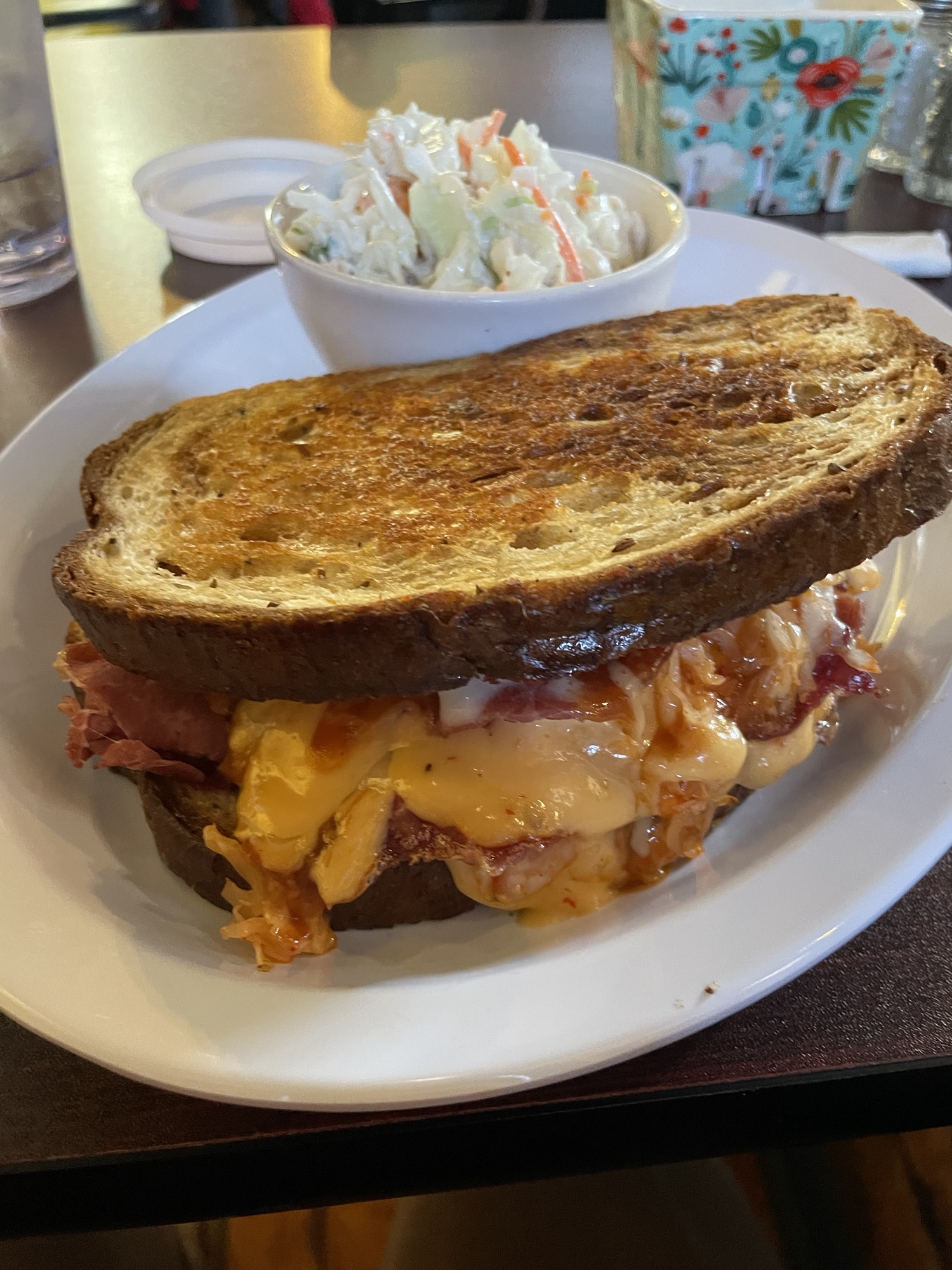
For the past decade, my relationship to New Orleans has been complicated. My ex-husband is from there, and in the wake of my less-than-amicable divorce, I wasn’t keen on visiting the city ever again. But after nearly two years living in one of its sister cities, and after 10 years of time and distance, it seemed like it was time to revisit the place.
There were a few other factors as well. John loves New Orleans, and it had been over a decade since his last visit as well. Plus, there was one restaurant in particular I was dying to try (more on that in the Day 2 section). It was also about to be my birthday, and while neither of us could take time off work for an international trip, New Orleans is pretty much a straight shot down I-55 (I hate to fly and if I have the opportunity to drive, will always choose to do so). With that, it was time to put bad memories aside and start fresh with New Orleans.
And while we did more than just eat . . . let’s be honest, that was a big component. So without further ado, the exhaustive culinary list of my birthday road trip (including Mississippi and St. Louis).
The Drive Out: Local Eats
While most of our travel day involved eating outside of New Orleans, that food was nonetheless part of the culinary journey! From my favorite breakfast sandwich to my first taste of Memphis barbecue to our arrival at a standard New Orleans tourist destination, it was a delicious drive. (Even though it rained the entire length of 55 South.)
Cafe Miami (St. Louis)
I believe in a fortifying breakfast before a long road trip, so before leaving Soulard, we stopped at Cafe Miami, which I think has the best breakfast sandwiches in the neighborhood. I got the Everything Breakfast, which is my favorite, while John got the Breakfast Chopped Cheese. We’d already had a pot of coffee before getting on the road, so we just got food this time around (though they do source their coffee from Dubuque Coffee Company, which I love). After that, it was time to hit the road for real!
Coleman’s Bar-B-Q (Mississippi)
It might be difficult to believe, but until last week, I’d only ever eaten Texas barbecue. Since barbecue is a geographically-dependent food, not all styles are the same. Coleman’s Bar-B-Q is in Mississippi, less than an hour from Memphis, and it was my first experience with Southern barbecue.
However, I was unprepared for the differences between Southern and Texas style. Mainly, that there is only one meat, and it is pulled pork. I have no problem with pulled pork, but just imagine that after 15 years of eating only Texas barbecue, to be confronted with a menu that just said things like “barbecue sandwich,” and “barbecue plate,” I was confused. We’d also been on the road for a solid four hours at that point, and I was wrestling with the inevitable disorientation that comes from travel.
In spite of all that, I enjoyed my lunch, and would stop by again if I was in the area. I got the small sandwich, plus onion rings and potato salad. It was a delicious meal that had me fortified for another 6ish hours of driving.
Cafe du Monde
We arrived in New Orleans around 8:00 pm. We’d been on the road roughly 10 hours, and though we weren’t ravenous, we both felt peckish, and wanted to walk around a bit after spending the whole day sitting in the car. So our first official New Orleans culinary stop was Cafe du Monde for evening beignets and coffee. (Yes, we drank coffee at 9:00 pm . . . Since they serve chicory coffee, the cafe au lait there is lower in caffeine. Plus, there is no amount of caffeine that could override how tired I was after that road trip.)
John believes that the best time to go to Cafe du Monde is at night. This was my first time going there after dark, and I have to say that I agree with him. For one thing, it’s less crowded. But beyond that, the cafe is lovely at night, with romantic lighting. There is truly something special about beignets after dark.
Day 1: My Birthday
Day 1 set the culinary tone for the trip: a mix of classic restaurants and new, innovative places. In between food stops we walked extensively around the Garden District, Irish Channel, and French Quarter, visiting art galleries, bookstores, and tea shops.
Molly’s Rise and Shine
Molly’s Rise and Shine was the second-highest food priority for this New Orleans trip. (If you know anything about this place and their sister restaurant, you have probably guessed my highest priority . . . which I saved for Day 2.) Since we had a huge dinner planned, we wanted to start the day with something hearty so we wouldn’t be tempted to overdo it at lunch. (Sometimes you have to eat strategically.)
Our trip to Molly’s Rise and Shine was the only time we took a Lyft; we had plans to meet a friend who then had to go to work after breakfast, so we didn’t want to worry about dealing with public transit delays. Our Lyft driver was excited that we were going there, and told us we had to get the hash browns. He was absolutely right about that! There was also a sign out front that said, “Don’t sleep on the carrot yogurt.” I’d never heard of carrot yogurt, and was intrigued . . . but I’m also disinclined to order a yogurt bowl from a restaurant, as I make one for myself most days of the week.
That being said, curiosity got the better of me, and I did order the carrot yogurt, along with the special hashbrown (topped with salmon cream cheese, chives, and roe). John got biscuits and gravy, scrambled eggs, and plain hashbrowns. Not only were both the plain and fancy hash browns excellent (seriously, get them), but I am so glad I ordered the carrot yogurt. The bowl is topped with carrot marmalade, granola, and whatever fresh fruit is available. And the miso in the biscuit gravy brings an innovative take on a classic dish.
Banh Mi Boys
Unfortunately, we didn’t actually eat here. After spending our post-breakfast morning walking around the Garden District, we were hot, thirsty, and needed to sit for a bit. And while we probably both could have eaten, we both wanted to be hungry for my birthday dinner. The food looked fantastic, but it looked like the kind of place where I filled up on lunch and been set for the rest of the day. So we stuck to cold drinks. John had a Vietnamese Iced Coffee and I ordered the Mint Soda Limeade. Both of our beverages were perfectly refreshing. I’ll be adding Banh Mi Boys to my to-try list for next time.
Lucky Dog
Late in the afternoon, hunger did start to get the better of us. (We walked a total of 7.2 miles on that first day, so it’s no wonder.) We were standing in Jackson Square, pondering our options, when a Lucky Dogs cart came into view. Though Lucky Dogs are a New Orleans institution, I’d never had one before! I got mine with chili and mustard, and it was a perfect snack to carry me through to our dinner reservation. While I prefer all-beef hot dogs, the pork-based Lucky Dog had an excellent texture and great flavor. The bun was soft yet sturdy. I’m glad I finally tried one of these.
Tujague’s
Tujague’s is one of the historic Creole restaurants in the quarter. I’d never been (my former MIL had a strong preference for one of the other big four), and when perusing the various menus of the nicer establishments, I decided this was the one that interested me the most.
Although the entire Tujague’s menu is now a la carte, they still offer the table d’hôte with full table participation. The current version of this is similar to prix fixe, except you get to select your entree. While I hadn’t intended to go with the table d’hôte, at the last minute, I decided to go for it. After all, I’m terrible at making decisions in restaurants, so why not just reduce the number of decisions I had to make?
I am so glad we went with the table d’hôte. All of the food was wonderful, and I really feel like I got to sample the best of what Tujague’s had to offer. (They were also gracious about accommodating John’s shellfish allergy.) For entrees, I got the scallops with peas and risotto, while John had the steak. I think the current iteration of table d’hôte captures the essence of a fixed menu, while also allowing individual diners to get exactly what they want.
Day 2: Some New Orleans Classics, Old and New
After ending my birthday with a very heavy dinner, we kept things a little lighter the next day. Well, as light as you can keep it in New Orleans. We also walked 9 miles that day, so we were bound to get pretty hungry eventually. I have left one thing out in this section, but that’s because only John ate there on Day 2. I’ve included the write-up for that spot in Day 3, when we both went there.
Turkey and the Wolf
Turkey and the Wolf was my culinary priority for this trip. After being introduced to some of the food through Sandwiches of History and getting the cookbook for Christmas, I would have considered the trip incomplete if we didn’t make it there. So after skipping breakfast (John is generally not a breakfast person, and I needed to finish digesting dinner), we made our way back to the Garden District and arrived at Turkey and the Wolf just after they opened.
The line was already out the door, and you could tell there was a mixture of locals and tourists there. As we waited, I was torn on what to order. My initial impulse had been to order the collard melt, as that’s something John would never want to eat if I made it at home (there’s a recipe for it in the cookbook). But after seeing plate after plate of The Bologna come out, I changed my mind. Even John ordered it, and he’s not a fan of bologna in general. I also got the frozen margarita, which I might have skipped if my friend Nate hadn’t sold me on it . . . it’s made with Mountain Dew, which does not sound appetizing (at least to me), but it actually worked.
The sandwiches were fantastic, and the fries were excellent as well. I will definitely visit the next time I’m in town, and hopefully The Tomato will be in season the next time I’m here.
PJ’s Coffee of New Orleans
Walking around the French Quarter after lunch, the heat and crowds started to get overwhelming. French Quarter Fest happened to coincide with the trip, and while we did enjoy the free music options, there were definitely more people there than we expected. My one complaint about the French Quarter is that there isn’t much café culture . . . there’s bar culture for sure, but if you want to take a break, sit down, and have some coffee, tea, or a soft drink, your options are pretty limited.
Fortunately, when we needed a break, we were able to duck into PJ’s Coffee for some iced teas. We even managed to find a shaded bench to sit on, despite the crush of people like us who were seeking a little relief. John got a standard iced tea, while I went for the Green Tea Mojito Tea Mixer, because I wanted something refreshing but festive. However, the tea ended up being too sweet for my preference. I did finish it, but I wouldn’t get it again. There are probably plenty of people out there who enjoy a sweeter green tea, and they would probably like this. But it wasn’t my favorite.
Luke
Raw oysters are not really a thing to eat in Missouri. So I wasn’t going to miss the chance while in New Orleans! By the time I was in the mood to eat again, it was late afternoon, and the Quarter was super crowded due to the festival. I was tired of being around lots of people, so I ended up at Luke, which was across from our hotel.
Luke is a lovely brasserie that has been open since 2008. We happened to arrive at happy hour, and the special price on Gulf oysters was so good that I got a full dozen. I also enjoyed my oysters with two glasses of sparkling rosé, which was the perfect companion. (Sparkling water is not covered by happy hour, so John’s sparkling water was ironically as expensive as my wine!!)
Lukey was a lovely dining experience, and the oysters were of top quality. That dozen was some of the best I’ve ever had. I would recommend making reservations, especially during the weekend. We were lucky to get seated, and if we’d been there for a full meal, we would have been out of luck.
We finished our second day with the late show at Preservation Hall, after which we weren’t ready to turn in. So we walked to the Sazerac Bar for a nightcap. The bar was quite crowded, probably due to the conference in the Roosevelt Hotel more so than the French Quarter Festival. Somehow, we managed to find seats, and we ordered the eponymous cocktail. We also ended up chatting with a lawyer who was in the hotel for a conference.
The Sazerac Bar
I enjoyed my Sazerac, but it had been so long since he’d ordered one that John forgot he wasn’t a fan. He had a Vieux Carre for his second round, but was ultimately unimpressed. Ultimately, he felt that the Sazerac Bar has such a captive audience (hotel guests) that it doesn’t have to work as hard to make quality drinks. Still, we came there in part for the impressive interior design; the paneling is made out of a single tree. It’s gorgeous, and worth stopping in even to just have a look at the stunning space.
Day 3: Feeling Adventurous
Our final day in New Orleans started with two well-regarded places that were safe best. We finished the day with some food experiences that were either more contemporary or, depending on your constitution, simply required an adventurous nature.
Croissant d’Or Pâtisserie
We started off with omelettes and croissants from Croissant d’Or Pâtisserie. John also bought a pain chocolate for us to split; I’m not a big fan of them, but he was convinced if I had one from this shop that I’d change my mind. (He was correct.) I ordered the ratatouille omelette, and while that is not something I would have thought to make on my own, I would definitely try to recreate it in my own kitchen. The already-cooked vegetables make a perfect omelette filling. There was no cheese, but honestly, it wasn’t necessary. (And that is not a thing I am normally inclined to say.) I enjoyed my meal so much that on the morning of our departure, we stopped in for a light breakfast and some croissants for the road.
Carousel Bar
Our one mistake of the trip was waiting until Saturday afternoon (of a festival weekend, no less) to visit the Carousel Bar. We should have gone on our first full day, before my birthday dinner. If you didn’t know, this bar has a functional carousel in the middle of it, that does a full rotation approximately every 15 minutes. As you can imagine, it draws a crowd, and it’s difficult to get a spot on the carousel itself.
When we arrived, the place was pretty much full. We did manage to snag a small table. John got the Viex Carre, which was invented at the Carousel. I ordered the Oaxacan Midnight. While in theory I want to order the drink the bar is known for, something about the Oaxacan Midnight sounded so enticing that I just had to order it.
Some spots opened up at the bar not long after we got our drinks, but we hesitated a second too long (yes, spots can go that fast), and missed out. I was a little heartbroken but trying not to make a big deal about it. Then a single seat opened up. John told me to grab it, and he just walked behind me for a while. The carousel moves slow enough that it’s a reasonable thing to do. Finally, a seat next to me opened up so John could sit by me.
We did one turn of the carousel and then called it good. I got the experience I came for, and there were a lot of other people hoping for seats, so I didn’t want to sit forever and keep other people from enjoying the ride. Plus, one drink was plenty. I was three days into New Orleans without a single hangover, and I wasn’t about to break that streak.
Eat-Well Food Mart
John really wanted to try banh mi in New Orleans. Between the sizeable Vietnamese population, the abundance of French bread, and the existing sandwich culture (poboys and muffalettas), it’s a city poised to have excellent banh mi. He put a lot of thought into which place we chose, and eventually settled on Eat-Well Food Mart. The rationale was that it was easily reachable via streetcar (although we did a road trip down, we avoided driving in New Orleans once we were there), it had good reviews, and a convenience store was not likely to be overrun with tourists.
I’m glad we ended up there. It was a nice break from the crowds, and the experience gave me a sentimental feeling of getting Chinese food from Wok ‘N Express back in Austin.
We each ordered the regular banh mi, and John also got an order of the yaka-mein, a New Orleans-specific noodle dish. We both enjoyed the banh mi. The bread was fantastic, of course. I loved the combination of pork and meatballs, and we both appreciated that pate was available to add to the sandwich. While they weren’t our favorite banh mi ever, most of our quibbles can be boiled down to personal preference. John would have liked a greater proportion of fresh veggies, and we both found the sandwich filling a little dry. (But the latter issue was resolved with the addition of sriracha.) However, there are a number of ways to approach banh mi, so our dislikes might be something you really love.
CC’s Coffee House
After lunch, we decided to walk along the river. French Quarter Fest was in full gear, and there was plenty of music and sunshine to enjoy. Between the sun and the crowds, we started to overheat, and fortunately found CC’s Coffee House to sit down and recharge.
Their iced tea menu is simple: black, green, herbal. True to form, John got black tea and I got green tea. While my iced beverage wasn’t anything special, it was refreshing. Honestly, with all the novelty of the French Quarter (and the novelty of the seasonal coffee drinks on the CC’s menu), it was nice to sit down in the air conditioning with just the basic teas to choose from. Not everything needs to be a culinary spectacle.
Copper Monkey
Before we went on our trip, some friends said we absolutely had to try the monkey buns at Copper Monkey Bar & Grill. Monkey buns are banana-stuffed beignets, topped with banana syrup and powdered sugar. Although I like bananas, I often don’t care for banana-based desserts, but I also figured my friends wouldn’t steer me wrong.
I’m glad we made time to stop by and get an order; they were excellent! John said that they were even better than the beignets at Cafe du Monde. Honestly, I want to say that as well, but it’s hard to put anything above such a classic. But maybe monkey buns should be a new classic. Seriously, if you’re in the French Quarter, make a point to stop in and order some. (I recommend pairing with an Abita Lager, if you’re so inclined.)
Verti Marte
Verti Marte is a deli and convenience store that serves giant sandwiches and a range of sides. My friend Geoff, a lifelong local, describes Verti Marte as, “The best table in the Quarter.” Here’s the thing: there are no tables. The interior is cramped and there are no chairs, tables, or even a bench outside to sit and eat. If you’re staying somewhere nearby, you can walk back and eat in the comfort of your hotel room. There’s also a park a few blocks away, but even that is a bit of a hike. If you want to ensure your sandwich and/or side dishes are enjoyed hot (as they should be), the table in question is . . . the top of a nearby trash can.
Some of you are absolutely horrified that I would say this. And in fact, when John went there the night before for his own dinner, I was horrified to see him spread his sandwich wrapper over the rain guard covering the trash can on the corner and dig in. (He didn’t get sick, for what it’s worth. And no, he hadn’t had anything to drink at that point in the day. The meal was enjoyed stone-cold sober.)
When you enjoy the full Verti Marte dining experience, fellow tourists will give you weird looks. After all, you are using the rain cover of a trash can as a table. But locals? Locals will look at you and say things like, “That’s what’s up.” Because when there are lines out the door at every other restaurant, or when it’s an odd hour of the day, you can count that Verti Marte will be open, serving good food . . . and you probably don’t have to wait for a table.
Sure, you could sit on the ground. But as John points out, the covers on those trash cans are too high up for anyone to pee on. The sidewalk, on the other hand . . .
When we went on the last night of our trip, John got the same sandwich he’d had the night before. I just ordered a side of macaroni and cheese, and that side dish was definitely a meal unto itself. It might be the best macaroni and cheese I’ve ever had; I’m still thinking about it nearly a week later. And yes, we got some weird looks. But we also got a “Heck yeah” from someone who knows the joy of a Verti Marte meal. Because if you’re going on a city vacation, sometimes, you have to make it a little bit like camping.
(But next time, I’ll bring Clorox wipes and disinfect the trash can lid.)
The Drive Back: Whataburger (Mississippi)
On the way back, we saw a Whataburger in Jackson, Mississippi. Since the franchise hasn’t expanded to St. Louis yet, that was where we stopped for lunch. (The original plan had been Delta tamales, but all of the locations on our route were closed on Sundays.)
Given that my opportunities for Whataburger are now few and far between, I ordered my favorite: the honey barbecue chicken strip sandwich. And yes, it was as good as I remembered. Although Whataburger is a Texas chain, getting to enjoy some true nostalgia food was a nice way to wrap up our adventure.
The trip was in part about getting to make new memories in a place that felt complicated. The Gin Blossoms’ line, “The past is going but something might be found to take its place” has been bouncing in my head all week. I can have fresh experiences in New Orleans that have nothing to do with the mistakes of my youth, and even though I moved away from a place I love, there are still ways to keep the good memories and experiences in my life.
March has been a great month for tastings and blogging. After a few fits and starts, the project has hit its stride. One of the things I’ve been doing behind the scenes is keeping a Best-Of list, which I’m using not just for my own recordkeeping/personal interest, but also as a fun way to wrap this project up.
The master list includes my favorite tea from each blog post. Ultimately, I’ll pare it down to my top 5 favorites, and run a giveaway where a lucky reader will win one of those teas! I’ve been wanting to host a tea giveaway this year, especially since I’ve had some good luck recently. I need to share the wealth! I was having trouble coming up with a concept, but I think that by waiting until the end of the project, sending my top 5 favorites will be a nice finishing touch. Okay, onto the blends! This time I have two classics (both sent to me by @royal_teacups), and two special variations.
Two Classics
Earl Grey, Adventure Tea House
This tea is an example of the dry leaf presentation not matching the experience of the steeped liquor. The teabag smelled gorgeous when I pulled it out of the packaging, and the brewed liquid was dark and looked quite strong. However, I got almost no bergamot taste on the first sip. And even though the brew looked dark, the tea taste wasn’t especially strong, either.
Since I had a few teabags containing this blend, I deliberately experimented with oversteeping to see if I could coax more flavor out of it. Not all black teas are created equal, and some might actually require a longer than usual steep time. (While this has been rare in my experience, I’ve encountered it once or twice.) I found that steeping it for 7 minutes helped a little bit, but not much. Ultimately, the brew was just sort of bland.
Earl Grey, Cocoon Tea Artisans
I found this to be a perfectly enjoyable standard Earl Grey. While nothing about the blend was particularly awe-inspiring, it made for a pleasant cup. While I was starting to get concerned about how many middle-of-the-road reviews I was making in my notebooks, I ultimately realized that was bound to happen. I’m not likely to taste many truly bad teas. Likewise, just because something isn’t bad doesn’t mean it’s going to be fantastic. Those extra-special cups of tea simply can’t happen all the time. If they did, there wouldn’t be anything memorable about them. A nice, drinkable tea isn’t bad. Ideally, that should be the default!
The one aspect of this blend I found to be particularly notable was that it somehow managed to maintain a consistent flavor profile even as it cooled. Often, as the tea loses heat, a blend that was pitch-perfect when it was piping hot becomes unbalanced as it cools. Either the tea becomes overwhelming, the bergamot steals the show, or an add-in takes over. But in my tasting journal, I noted how impressive it was that this tea remained at a perfect flavor ratio through the entire drinking experience.
Two Special Variations
Earl Grey Bravo, Adagio
I admit that I was torn about how to categorize this blend. The ingredient list reads as follows: “black tea, orange peel, natural Earl Grey flavor” (I assume the final item is bergamot flavoring). On the one hand, the inclusion of orange peel makes it a Lady Grey, which is a special variation. Even though many tea blenders add orange peel, it’s not part of the true classic blend, so it should automatically fall under the special category. On the other hand, Adagio has a number of Earl Grey blends, but does not appear to have one that is straight black tea and bergamot. It seems like everything they do is a variation, and the Bravo blend is as close to a classic as they get. Ultimately, though, the categories aren’t useful if I don’t follow them, so even though this variation is simple, it nonetheless meets the requirement.
I do find myself quite fond of this blend. It’s very smooth, the kind of tea that you can drink all day. While I enjoyed it straight, I think it’s also strong enough to hold up to milk or sweetener if you prefer your tea that way. This would make an excellent tea latte!
Like many of the teas I’ve tasted during this project, while it’s enjoyable, it doesn’t necessarily stand out or have a particular wow factor. That doesn’t mean you shouldn’t try it for yourself. Every palate and preference is different; what is simply an enjoyable tea for me might be truly special for you. While I’m not adding this blend to the Best-Of list I’ve been maintaining, I also have no complaints about it.
Mint Earl Grey, The Cove Tea Company
This is a truly fantastic blend that you will want to add to your tea cabinet. Blenders at The Cove Tea Company combine black tea, peppermint, spearmint, bergamot oil, and French vanilla extract to create a rich and complex tea. It is smooth, sippable, and is definitely the kind of thing you could drink all day.
When I taste this tea, the vanilla hits my palate first, then the mint, then bergamot, then black tea. There’s a great deal of depth, and these strong flavors are combined in a way that allows them to harmonize rather than dominate each other.
If you’re okay drinking your tea straight, I do recommend omitting milk or sweetener from this blend. There is a great deal of nuance here that could potentially be lost with add-ons. While the flavors in here are probably all strong enough to handle milk or sweetener, I think you’ll have the richest, most robust experience if you take this straight up.
By the Numbers
As of today, I’ve tasted 31 teas, which puts me comfortably ahead of schedule. That’s a nice buffer to have, as the first week of April will be devoted to passing my Tea 102 coursework, and I’ll be traveling the second week of the month. That should give me the opportunity to buy some new blends to add to my tasting roster! However, for this project, I prefer to taste at home, where I know I have the proper setup to ensure that I’m getting the best possible experience with the tea. So I’ll be on a mini-break until life settles down a bit.
Once again, not much has changed since my last post, as I’ve only tasted two additional teas. Now that I’m picking up speed, I’m wondering if this graphic is still useful in every single post. I might switch things up, and start including it only when I hit a milestone, such as meeting my monthly quota or hitting a certain completion percentage. (If you have specific feelings one way or the other, please let me know in the comments!
I’m well caught up on blogging at this point, so I have no clue what the focus of my next post will be. Certainly I’ll discuss a few classics; I have 21 untasted teas in the queue right now, and most of them are traditional. But I’m sure with my upcoming travels as well as some planned tea orders, there will be exciting new additions as well!
Enjoying this series? You can support my tea wishlist here, or contact me if you have samples you want to share!
For more tea content, check out my tea pairings playlist on YouTube.
Project References
Note: This is an ongoing list of all the reading I have done so far for this project. The bibliographic entries here are not necessarily cited in this specific post.
Avila-Sosa, Raúl et. al. “Bergamot (Citrus bergamia) Oils.” Essential Oils in Food Preservation, Flavor and Safety. Ed. Preedy, V.R. (2015). Elsevier Science & Technology. pp. 247-252. http://dx.doi.org/10.1016/B978-0-12-416641-7.00027-4
Di Giacomi, Angelo and Giovanni Dugo. “Origin, History, and Diffusion.” Citrus bergamia: Bergamot and Its Derivatives. Ed. Dugo, Giovanni and Ivana Bonaccorsi. Boca Raton: CRC Press, 2013. pp. 1-8. https://doi.org/10.1201/b15375
Dugo, Giovanni and Ivana Bonaccorsi. “Composition of Leaf Oils.” Citrus bergamia: Bergamot and Its Derivatives. Ed. Dugo, Giovanni and Ivana Bonaccorsi. Boca Raton: CRC Press, 2013. pp. 227-236. https://doi.org/10.1201/b15375
Lo Curto, Rosario. “Uses of Juice and By-Products.” Citrus bergamia: Bergamot and Its Derivatives. Ed. Dugo, Giovanni and Ivana Bonaccorsi. Boca Raton: CRC Press, 2013. pp. 531-542. https://doi.org/10.1201/b15375
One of the projects I chose for 2024 was to simplify my digital life. I simply don’t enjoy trying to keep up with multiple websites or social media accounts.
If you subscribe to this blog, you probably noticed a few weeks ago that your inbox got flooded with a series of Pilates-related posts. That was the result of me consolidating my Pilates site with this regular site, and merging blog posts. I had no idea that you were going to get notified of all of these posts en masse. That was not my intention.
This week, I began the process of consolidating The Culinary Saijiki with this site. I’ve imported the podcast archive over here with minimal issues. Before this content goes fully live, however, I need to migrate the blog posts as well.
I am going to do my level best to prevent you from getting notified of several dozen Culinary Saijiki blog posts that now live on this site. I’ve been reading up on how to avoid this issue, but it’s trial by fire on this one. However, this is the last round of blog imports I have to do! So I apologize in advance if I screw up and you get a big blog notification. If it does happen, it will be the last time. And thanks for your patience as I solidify my vision for this website.
This week, I return to both Classic Earls and Floral Grey blends. I believe this is also the first post in which every tea is international (to me, at least). Two of the blends are from The Cove Tea Company in Canada, and the other two come from Emeyu Tea and Chaplon Tea, which are both Danish. The latter two teas were part of the lovely tea package that came from my Instagram friend @royal_teacups.
This post is also one where I unconsciously started incorporating the knowledge I was getting from my tea sommelier training into my tasting evaluations. The information is starting to really settle in my brain to the part where I can now apply it outside of structured assignments. While I am only on the second course of the program, I can see how consistent engagement with the course material is helping me as I continue with this project.
Two Classics
This week, I found myself wondering whether I could continue finding interesting things to say about classic blends. I feel like many of the standard Earl Grey teas I’ve tasted lately are good. However, it’s difficult to write about things that are simply good. Even when it comes to excellent blends, I was beginning to think I was reaching to find more to say about tea and bergamot oil.
Fortunately, my in-progress tea sommelier training came to the rescue! Now that I’m learning more about the components of tea and the experience of tea tasting, I’m developing a new vocabulary to augment these reviews.
Earl Grey, The Cove Tea Company
The Cove Tea Company uses Sri Lankan black tea and Italian bergamot in their Organic Earl Grey. This is an absolutely refreshing blend that is easy to sip on all day. The bergamot shines through, and there is just the right amount of astringency to make the tea brisk without becoming overwhelming.
I’ve been learning more about astringency in Tea 102, which I’m enrolled in right now as part of my Tea Sommelier training. While we won’t go more in-depth until future courses, even this brief overview has helped me understand this flavor component of the tea-drinking experience. The big revelation for me is that astringency and bitterness are not the same thing. I had always conflated the two. Rather, bitterness is a flavor, while astringency is a mouthfeel sensation. Think of the dryness you might feel in your mouth after eating underripe fruit. (For more detail, including some science, check out “What Does Astringency Mean for Green Tea Drinking?”)
Ultimately, I do enjoy a bit of astringency in my black tea. That’s even one of the things I enjoy about it. If my black tea isn’t a touch astringent, I’m actually a little disappointed. (Conversely, I would be annoyed by an astringent white tea.) But that dry mouthfeel can get overwhelming, which is why balance is so crucial. Since bergamot is citrus, it is also astringent, meaning that an Earl Grey can become overwhelming.
My belief at this point in the project is that the way to prevent overwhelming astringency is to single-source black tea from a consistent region, and blend accordingly. Since tea and bergamot are both crops, there are a number of variables that impact astringency from harvest to harvest, so not everything is in the blender’s control. But single-sourced black tea seems to be a defining feature. Earl Grey from The Cove Tea Company exemplifies that.
Tiny Kingdom, Emeyu
Emeyu Tea doesn’t specify what kind of black tea they use in their Tiny Kingdom blend, but Italian bergamot is listed as the next ingredient. On the very first sip, the bergamot came on quite strong and the tea seemed a little weak, but as my cup cooled, things evened out. By the end of my tasting, everything felt well-balanced.
One of the things I’m noticing as I continue with this project is that there are a number of blends out there that are nice, but don’t wow me. I don’t regret tasting them, and certainly wouldn’t object if someone served me them, but I also wouldn’t buy them if left to my own devices. For me, Tiny Kingdom is one of those. On the whole, I enjoyed my sample of it, but ultimately, I felt that while it was perfectly nice, it didn’t rock my world.
I’ve stated this before, but I’ll say again that every palate is different, so these tasting reviews are ultimately subjective. You might try Tiny Kingdom and think it’s exceptional rather than good. I do think this is a blend worth trying if you can easily get a hold of it. It’s a truly straightforward Earl Grey, and if you enjoy a tea that is no muss, no fuss, this might be just right for you.
Two Florals
This week, I tasted two different floral blends. One is the familiar Earl Grey with a lavender addition. Given what I’ve learned about astringency this week (which I detail even further below), it’s a little amazing to me that lavender is such a common addition, as I’ve learned one reason why this flower, while beautiful, can also throw off the entire tasting profile of a specific tea.
I also tried a blend that incorporates rose and jasmine. While I didn’t delve into astringency levels for these additions, one thing I did start thinking about is how each addition has the potential to introduce a new level of complexity to a tea. Of course, more is not always better. Any sort of addition beyond bergamot means the tea blender has an additional type of challenge: how to incorporate the new flavor in a way that truly enhances the tea tasting experience, rather than distrancing from it.
Provence, The Cove Tea Company
The Provence blend from The Cove Tea Company contains black tea, bergamot, and French lavender. I was impressed with the balance of lavender to bergamot. While the lavender outshines the bergamot just slightly, it doesn’t overwhelm it completely. I get a well-rounded cup of black tea, lavender, and bergamot flavors.
One of the things I learned in my reading about astringency this week is that lavender is even more astringent than black tea! That makes a lavender Earl Grey extra challenging for blenders. As mentioned above, black tea and bergamot are already astringent. When you add lavender, that’s yet another astringent layer, and it’s more potent than the tea base! No wonder it’s easy for the bergamot and/or the tea flavor to become overwhelmed in a Floral Grey.
As you might have surmised, I’m fascinated by everything I’ve learned about astringency over the past few weeks. I’m loving applying what I’m studying to this tea tasting project. My major takeaway with this blend is that the folks at The Cove Tea Company once again have a good sense of the different levels and types of astringency in each component of this tea. This is an excellent blend that I would add to my regular tea rotation.
Earl Grey, Chaplon Tea
Because the ingredient list includes jasmine oil and rose petals in addition to bergamot oil, I decided to classify the Earl Grey from Chaplon Tea as a Floral Grey. In this blend, Chaplon blenders have used black tea from the Uva province of Sri Lanka.
All in all, this was a lovely tea to enjoy on a spring day. (St. Louis has since been plunged back into winter weather.) The black tea has a nice, bright quality to it. There’s some astringency, but it’s not overwhelming. I found it quite refreshing.
My one minor disappointment in this tea was that the jasmine got overshadowed by the bergamot and rose. I love the taste of jasmine, and when I saw the ingredient list on the tea bag wrapper, I got really excited. I certainly have no complaints about bergamot in general (it would not have been smart for me to take on this challenge if I did). As I’ve noted in previous posts, it can be easy for bergamot to get obscured by other flavor additions. Here was the first time I felt that the bergamot was the one doing the obscuring!
This was still a perfectly enjoyable tea. Honestly, if I hadn’t read the ingredient list on the wrapper, I wouldn’t have noticed the jasmine didn’t come through. This was an enjoyable tea that I could imagine drinking all day long. I also wonder how it would fare as a cold-brewed iced tea; it’s possible the jasmine might come through better.
By the Numbers
As of this writing, I’ve tasted 29 Earl Grey blends. I only needed to be at 27 for March (I mistakenly said 28 in my Part 5 post), so I’m a little bit ahead. I’m going to spend much of the remainder of the month tasting non-blended teas in order to pass my cupping exam for Tea 102 as part of my Tea Sommelier training. I feel like the cupping exam for this course is going to be much more challenging than the Tea 101 exam was, and I want to give myself ample opportunity to prepare.
With four more teas tasted since my last post, the proportions haven’t changed that much, but Floral Greys and Special Blends have taken a slightly larger share of the proverbial pie. One of the things that’s interesting for me to note is that outside of the Classic blend, teamakers tend to lean toward florals, followed by additions that don’t fit neatly into a single category. I thought I’d have ended up with more Creme Earls in my tasting list at this point (since that’s an established category), as well as more Tisanes, since not everyone wants caffeine. However, since I’m not even at the halfway point yet, there is still plenty of time for things to change.
While I haven’t entirely settled on the topic for the next post, I have a feeling it will be a mix of classics and special variations. While I’d initially planned on four of a single category per post, there are far more classics in my queue than there are other varieties. With that in mind, reviewing two categories per post seems like the best way to maintain a variety throughout the course of the project.
Enjoying this series? You can support my tea wishlist here, or contact me if you have samples you want to share!
For more tea content, check out my tea pairings playlist on YouTube.
Project References
Note: This is an ongoing list of all the reading I have done so far for this project. The bibliographic entries here are not necessarily cited in this specific post.
Avila-Sosa, Raúl et. al. “Bergamot (Citrus bergamia) Oils.” Essential Oils in Food Preservation, Flavor and Safety. Ed. Preedy, V.R. (2015). Elsevier Science & Technology. pp. 247-252. http://dx.doi.org/10.1016/B978-0-12-416641-7.00027-4
Di Giacomi, Angelo and Giovanni Dugo. “Origin, History, and Diffusion.” Citrus bergamia: Bergamot and Its Derivatives. Ed. Dugo, Giovanni and Ivana Bonaccorsi. Boca Raton: CRC Press, 2013. pp. 1-8. https://doi.org/10.1201/b15375
Dugo, Giovanni and Ivana Bonaccorsi. “Composition of Leaf Oils.” Citrus bergamia: Bergamot and Its Derivatives. Ed. Dugo, Giovanni and Ivana Bonaccorsi. Boca Raton: CRC Press, 2013. pp. 227-236. https://doi.org/10.1201/b15375
As with last week’s post, this week I’m combining two categories: Creme Earl Greys and Specialty Blends. I describe each category in their respective sections. Since I simply have fewer of these tea categories in my Earl Grey lineup, combining them ensures they get written about in a timely manner.
A quick housekeeping note before I begin. Last week, you might have noticed that I started adding a reference list to the end of my posts. This list is a running inventory of all the reading I have done for this project, whether or not I have any citations in a particular post. I obtained many of these sources through my access to an academic library. If you want to access them and need help, let me know!
Two Creme Earls
Earl Grey Creme teas usually consist of black tea, bergamot, vanilla, and cornflowers. However, there is some variation within the theme. Blenders often omit the cornflowers, as they ostensibly only create pretty leaves and do not impart flavor (I disagree on the latter point; while the flavor is subtle, I find it easy to detect). A smaller number of blenders omit the vanilla. And, like bergamot, vanilla has a range of flavors depending on its country of origin.
Creme Earl Grey is not my favorite variation. It’s easy for the vanilla (if used) to overwhelm the bergamot, and often it tastes overly sweet or artificially creamy. Even when the blend is made by a skilled tea artisan, it’s simply not my preference. Still, the two teas featured in this week’s post were perfectly enjoyable, and if you like a creamy tea without the milk, these might be your new favorites.
Earl Grey Creme, The Steeping Room
While it’s no secret that I’m a huge Steeping Room fan, I have to admit that this is not my favorite of their offerings. A Creme Earl is already not my preferred tea, so it’s going to take a lot to wow me. This is a perfectly nice cup, and I’m glad I tried it, but when I make my next Steeping Room order, I’m going to be stocking up on extra Eastside Earl Grey instead.
The main thing that kept me from loving this blend is that the bergamot doesn’t quite shine through enough when stacked against the creme flavor. This particular blend does not use vanilla. I know some of the creaminess is coming from the cornflowers, but I’m wondering if the “compliant flavor” listed on the label contributes to that as well. The bergamot is there, but some of its vibrancy is dulled.
Despite the fact that this Earl Grey Creme doesn’t suit my particular preferences, it’s still a nice, easy cup to drink. Someone who is a big fan of Creme Earls would probably enjoy this.
Earl Grey Moonlight, Adagio
Adagio has a number of Earl Grey variations. Their Earl Grey Moonlight contains black tea, orange peel, blue cornflowers, vanilla flavor, bergamot flavor, and creme flavor. A sample pouch makes 10 cups, so I had ample opportunity to try this blend. The first time I tasted it, I was still recovering from bronchitis and had sinus congestion. However, the dry leaves were so fragrant that I could still smell everything! Between that and the prettiness of the dry leaves, it made a nice first impression.
As for the steeped tea, it was an enjoyable cup, though I felt that the vanilla overpowered the bergamot. The flavor was smooth and enjoyable, and everything was well-balanced enough that I could drink multiple cups in one day . . . but when push came to shove, I didn’t especially want to. I would have a cup of it and then be ready to move on to another tea.
As with The Steeping Room’s version, if you like a tea that has a creamy flavor without having to add dairy, you would probably love this blend. People who enjoy vanilla would probably enjoy this as well. Certainly if I was given the choice between a straight vanilla flavored tea and Earl Grey Moonlight, I would choose the latter. I like vanilla, but it’s just not my favorite tea flavoring, so I enjoyed having some citrus to balance it out, even though it didn’t really shine.
Two Special Variations
Special variations are Earl Grey blends that do not fit easily into one of my other categories. For example, a blend that includes a mix of green, white, and oolong tea (as described below) is a special blend because it includes three types of tea rather than just the standard black. Special blends might also include unusual additives, such as coconut (you’ll see an example of that featured in a later post).
Special variations can be fantastic, or they can fall flat. When they’re done well, they provide an innovative approach to a common tea blend. They bring a sense of surprise and fun into the drinking experience. When done poorly, however, additives can overwhelm classic flavors, or the tea can feel like a novelty beverage.
Smoky Earl Grey, Fortnum & Mason
In my very first post of this series, I wrote about a disappointing tasting experience with Fortnum’s Earl Grey Classic. Their Smoky Earl Grey was the complete opposite experience; I adored it. According to the Fortnum & Mason website, this blend was the original Earl Grey the company created and sold. It was developed because a member of the royal family requested an Earl Grey blend with more oomph. They did not disappoint!
The smokiness of this blend comes from the inclusion of lapsang souchong and gunpowder green teas. Because the blend includes both green and black teas, and because lapsang souchong is not a standard Earl Grey base, I’ve classified this as a special variation.
The success of this brew is a testament to the skill of Fortnum’s blenders. It would be easy for the lapsang souchong in particular to completely overwhelm the bergamot. However, they have managed to create a cup in which the citrus and smokiness hold their own. It’s a unique tasting experience.
Earl Grey Supreme, Harney & Sons
The Harney & Sons Earl Grey Supreme combines black, oolong, and white tea, which is what places it in the Special Variations category. This is a visually stunning blend, with the brown oolong leaves creating a sense of texture, and the silver tips providing contrast. The dry leaves also smell stunning. You can sense all of the teas along with the citrus.
In terms of taste, the black tea dominates the oolong and white tea. I was hoping for something a little more dynamic, but it didn’t register with my palate. The bergamot is bright and vibrant, and shines even though there is plenty of flavor from the tea itself.
The Earl Grey Supreme is a popular blend among Harney fans, which illustrates that even a beloved blend isn’t right for every single tea drinker. Although the flavor was good on the whole, there is a tannic intensity that prevents me from truly enjoying it. I can have a single cup and then I’m done. As someone who prefers to pick one tea and drink it all day long, it’s disappointing that my stomach can’t handle much of this blend. I’m also not clear on what causes that issue for me, as this is the first time it’s happened on this project.
By the Numbers
As of this writing, I’m officially at the 25% mark! The yellow on the tracking chart is getting bigger, and I feel like I’ve hit a real project milestone. I also only have three more teas to taste in order to stay on track for March, and considering we’re barely a third of the way through the month, I’m in a comfortable position.
Since so little time has elapsed since my last project update, I’ve only sampled two new teas, meaning that the proportions haven’t changed very much. Posting this category breakdown right at the 25% mark did inspire me to go back to the first post in this series to see what has changed. On January 20th, I only had four categories; now I have six. Classic Earl Grey still dominates, with Floral Greys still in second place. Creme Earl Greys and Special Variations still are proportionately tied. While a few things have changed, much is still the same.
Now that I’m more caught up with the blogging portion of this project, I’m not sure what the topic will be for the sixth installment. It might be another round of classics, or it might be another mix of categories. Either way, expect at least one more update in March, if not two.
Enjoying this series? You can support my tea wishlist here, or contact me if you have samples you want to share!
For more tea content, check out my tea pairings playlist on YouTube.
Project References
Note: This is an ongoing list of all the reading I have done so far for this project. The bibliographic entries here are not necessarily cited in this specific post.
Avila-Sosa, Raúl et. al. “Bergamot (Citrus bergamia) Oils.” Essential Oils in Food Preservation, Flavor and Safety. Ed. Preedy, V.R. (2015). Elsevier Science & Technology. pp. 247-252. http://dx.doi.org/10.1016/B978-0-12-416641-7.00027-4
Di Giacomi, Angelo and Giovanni Dugo. “Origin, History, and Diffusion.” Citrus bergamia: Bergamot and Its Derivatives. Ed. Dugo, Giovanni and Ivana Bonaccorsi. Boca Raton: CRC Press, 2013. pp. 1-8. https://doi.org/10.1201/b15375